FOOD & FIRE · ASADO · 2026
Nobody is running late. The fire decides when lunch happens, and the fire has never once been rushed.
July 2026 · Practical Guide · Buenos Aires
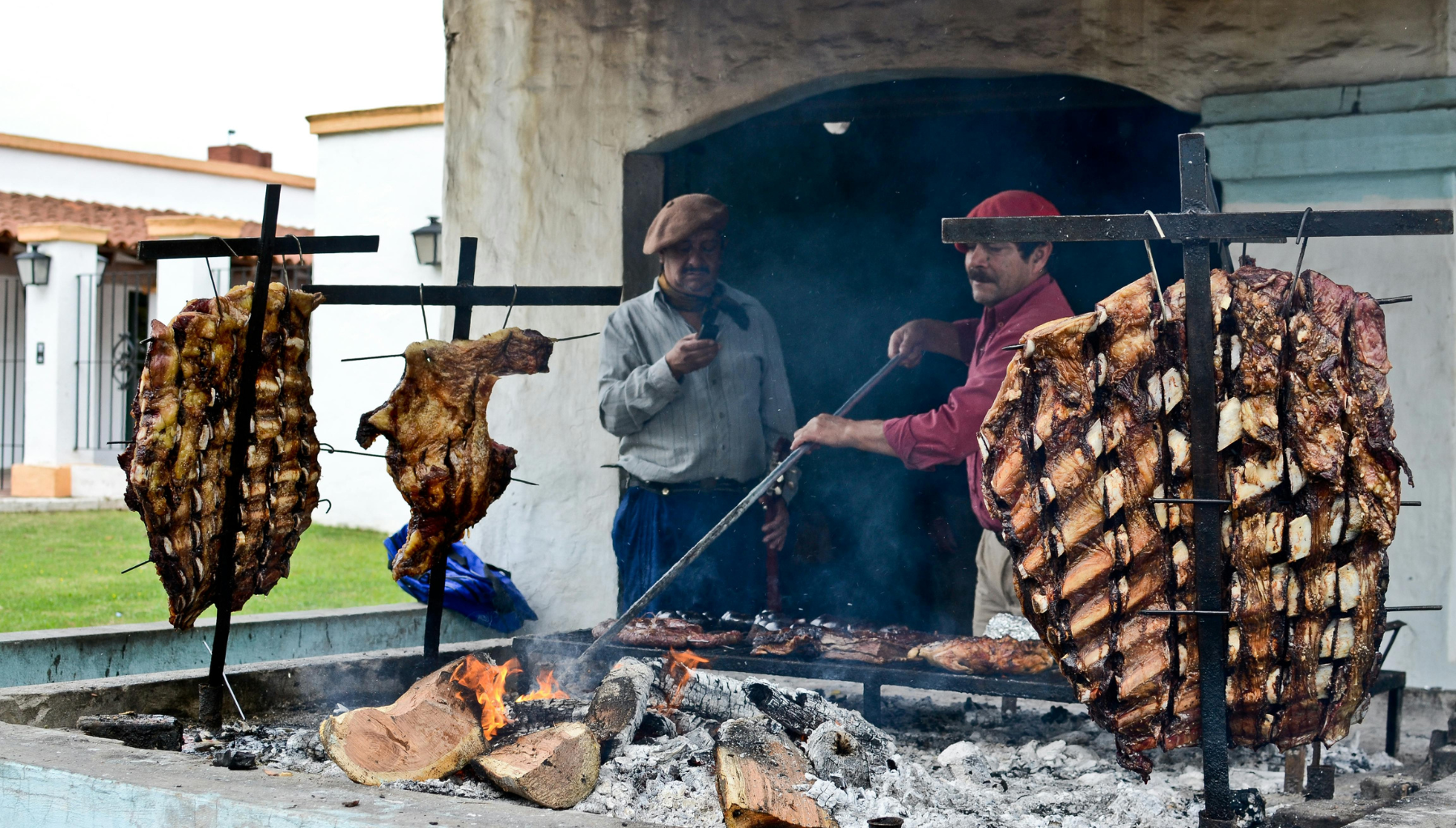
The first thing to understand about an Argentine asado is that it is not a barbecue. A barbecue is a cooking method with high heat and a short timeline. An asado is a schedule for an entire afternoon, in which meat is one of the components and the other components are conversation, wine, and a refusal to be anywhere else.
The second thing to understand is that it has an order. Almost every confusion a visitor has at a parrilla comes from not knowing the sequence, ordering everything at once, and then wondering why four kilos of beef arrived simultaneously.
The Fire Comes First, and It Takes Its Time
An asador starts the fire an hour or more before anyone expects to eat, usually with quebracho charcoal or hardwood, and then waits. The wood burns down to embers, the embers are moved under the grill with a shovel, and heat is managed by adding or removing embers rather than by turning anything up. There is no dial.
This is why the answer to "when do we eat?" is always a shrug. The fire is not consulted on human scheduling.
The Sequence: What Actually Arrives, and In What Order
First, the achuras
The opening act is offal and sausages, served as things come off the grill rather than as a plated course.
- Chorizo, usually split and eaten in bread as a choripán
- Morcilla, blood sausage, softer and sweeter than most European versions
- Mollejas, sweetbreads, crisp outside and rich inside, the best thing on the grill for many Argentines
- Chinchulines and riñones, small intestine and kidney, the two that divide the table
Provoleta, a disc of provolone grilled until it collapses under a crust with oregano, sits alongside this. Order it. It is the single most persuasive argument for the whole system.
Then, the main cuts
- Bife de chorizo, thick sirloin, the default steak
- Asado de tira, short ribs cut across the bone, the cut that shares its name with the meal
- Vacío, flank, chewier and deeply flavoured
- Entraña, skirt, thin and fast and increasingly the connoisseur's pick
- Ojo de bife, ribeye, the closest thing to what a North American diner expects
The doneness guide
- Jugoso: juicy, pink in the middle. What most visitors actually want
- A punto: medium, the local default
- Bien cocido: well done, and more common here than you would guess
If you say nothing, expect something closer to a punto or beyond. Argentine beef is grass-influenced and cooked slower, and the result at medium is not the same as medium elsewhere. Ask for jugoso if you like pink.
What Goes Alongside
The sides are deliberately modest, because the point is the meat. Ensalada mixta of lettuce, tomato and onion. Papas fritas. Sometimes provoleta doubling as a starter and a side.
Two sauces matter. Chimichurri, parsley, garlic, oregano, vinegar and oil, is for the meat. Salsa criolla, diced tomato, onion and pepper, is for the choripán. Neither is spicy. Argentina does not do heat, and asking for something picante will produce a bottle of something imported and apologetic.
There is no barbecue sauce. There will never be barbecue sauce.
The best parrillas are spread across four barrios and the wine is not optional. Our drivers handle the getting there and the getting back.
>
BOOK A PRIVATE DRIVER →
What to Drink
Malbec is the reflex, and it works because the tannins cut the fat. But a Cabernet Franc or a Bonarda will do the same job with more interest, and the coastal whites of Buenos Aires Province are worth a detour of their own, as we cover in our guide to wineries near the city.
Fernet with cola is the other national answer, bitter and medicinal and beloved beyond reason, particularly by anyone from Córdoba.
Beer is fine and nobody will judge you, though the wine is better value here than almost anywhere on earth.
The Etiquette
The asador is in charge and does not want help. Offering to turn the meat is the equivalent of reaching over a pilot to adjust something.
Compliment the fire, not just the meat. The fire is the skill.
Do not ask for the meat to be hurried, do not ask for ketchup, and do not leave before the coffee. A lunch that starts at one and ends at five has not gone long. It has gone correctly.
Timing: Sunday lunch is the canonical slot, and restaurants fill from around one. Dinner in Buenos Aires starts late, and a parrilla at nine o'clock is early by local standards.
How to Avoid the Tourist Version
The traps cluster where the tour buses stop. A menu in four languages at the door, photographs of the food, and a person outside inviting you in are all reliable signals that you are about to eat something forgettable at twice the price.
The alternative is straightforward: eat where the tables are full of people speaking Spanish, at the hours locals eat, from a menu written in one language. Our list of the best parrillas in Buenos Aires has nine of them, with checked addresses across Palermo, Belgrano, Chacarita and San Telmo.
Give It the Afternoon
The asado is the closest thing Argentina has to a national ceremony, and it is not performed for visitors. You are simply allowed to sit at the table while it happens.
Come hungry, arrive without a plan for the evening, and let the fire set the pace.
[Buenos Aires Transfers · buenosairestransfers.net · Available 24/7]