3 DAYS IN BUENOS AIRES · ITINERARY · 2026
Two days give you the city. The third is the one that changes the trip, because an hour north of the traffic the streets turn into rivers and nobody has a street address.
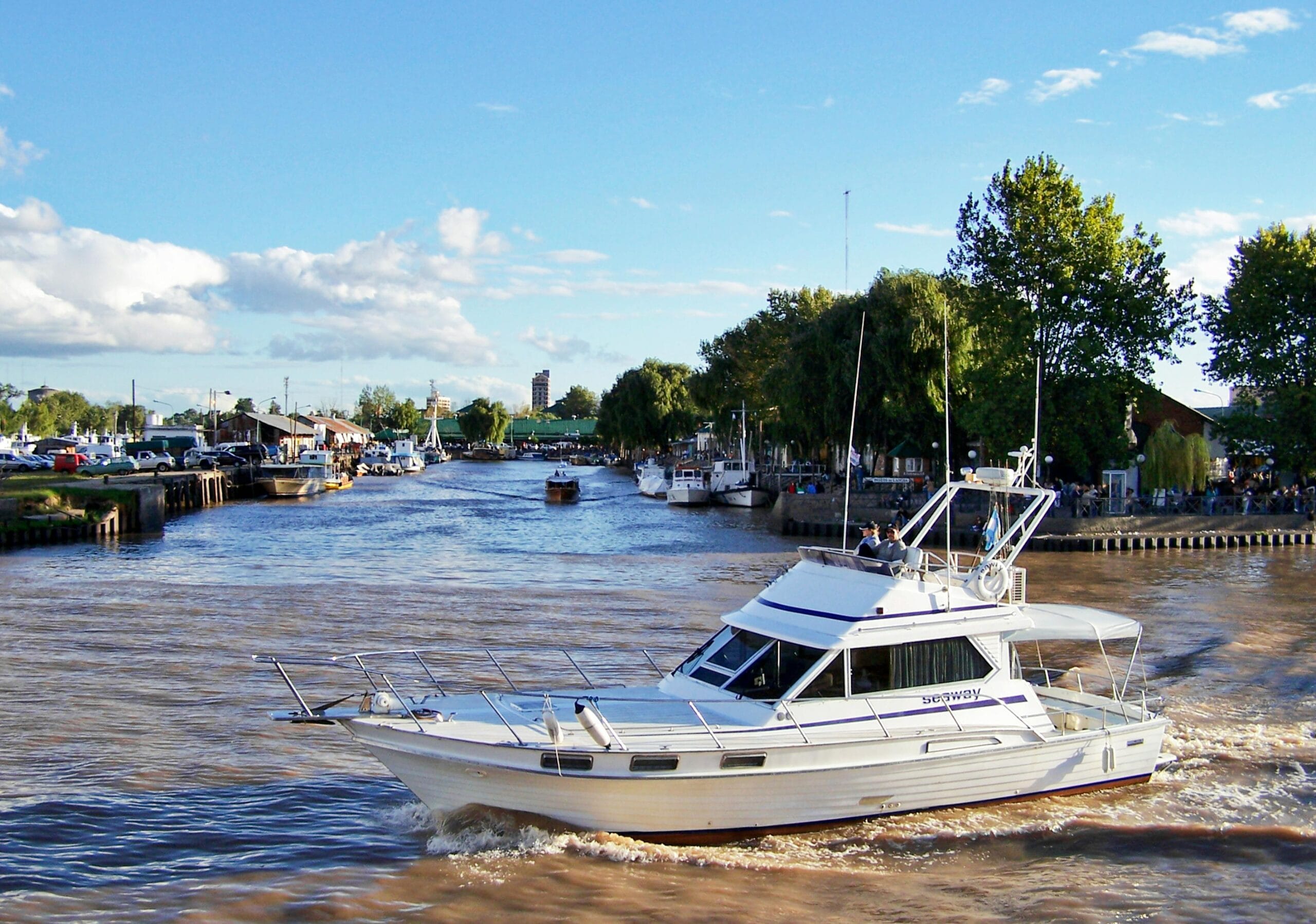
There is a specific moment on a three day trip to Buenos Aires when people stop taking photographs of buildings. It usually happens on the third day, on a boat, somewhere in the second or third channel of the Parana Delta, when it becomes clear that the houses on either side have no road to them and never did, and that the sign at the landing is not decoration: it is the address.
That moment is the entire argument for a 3 day Buenos Aires itinerary. Two days is enough for the city and it is a good trip. Three days is a different kind of trip, because the third one is not more city, it is the thing the city sits next to.
Here is how the three days fit together, built around real opening times and real distances.
The three days at a glance
Day one, the historic arc: San Telmo, Plaza de Mayo, the Teatro Colón, Recoleta, and the Palermo parks at the end of the light. The spine of the city, and the day that has to obey the clock.
Day two, water and colour: La Boca and Caminito early, Puerto Madero at midday, and an open afternoon in Palermo or one museum, ending late.
Day three, out of the city: Tigre and the Delta, north along the river, with a boat through the channels.
The order matters. Day three is the long one, so it goes last, when you already know the city and are ready to leave it. Putting the day trip first is the classic mistake: you spend it comparing the Delta to a city you have not met yet.
Before you fix the days, check the calendar
Two constraints shape everything. The Teatro Colón gives its English tours at four fixed times a day, so pick yours before you order the days. And if a Sunday falls inside your three days, give it to San Telmo, because the fair takes over the neighbourhood and eats the morning whole. The exact times, the Sunday logistics and the museum traps live in our two day itinerary: the first two days below are that plan in summary, because this article is really about the third.
Days one and two: the city, in brief
Day one is the historic arc, south to north. San Telmo and its iron and glass market in the morning, Plaza de Mayo, the Teatro Colón tour in the early afternoon, then Recoleta, where the cemetery closes at 17:00 sharp and now charges foreign visitors about ARS 25,400 (September 2026; Argentine residents enter free), and the Palermo parks for the last of the light. The hour by hour version, built on the real opening times, is in the two day itinerary, and its skeleton in the one day version.
Day two is water and colour. La Boca early, before the tour buses, staying on the marked streets around Caminito and moving by car; Puerto Madero and its docks at midday, fifteen minutes and a world away; and an afternoon left deliberately open, for Palermo Soho or one museum done properly (check its closing day: MALBA closes on Tuesday, while the Museo Nacional de Bellas Artes and the Museo Evita close on Monday). Dinner late, tango if you want it.
That is the city, and it would already be a good trip. Now the part this article is for.
Day three: Tigre and the Delta
This is the day people remember, and it needs the whole day. Ours runs five or seven hours door to door, and the shape of the day is simple: a drive north with one worthwhile stop, a river town, and then the water.
The drive north. You cross the northern suburbs and stop in San Isidro, where the neo gothic cathedral presides over a well preserved historic centre. It was built between 1895 and 1898 by a Swiss and a French architect and consecrated in 1906, its tower is just under 69 metres, and it became a cathedral in 1957. If it interests you, Villa Ocampo, the house of Victoria Ocampo, one of the great figures of Argentine letters, is also there. She left it to UNESCO in 1973 and it is open Fridays through Sundays and holidays, with guided visits at fixed times and tickets bought online, so it needs planning rather than improvising.
Tigre town. The Puerto de Frutos, which opened in 1938 as the market where the island fruit was landed and is now a craft market of some 500 stalls across fifteen galleries, and the riverside promenade. The Museo de Arte Tigre, in a former social club on the water, is optional and worth it if the group likes buildings.
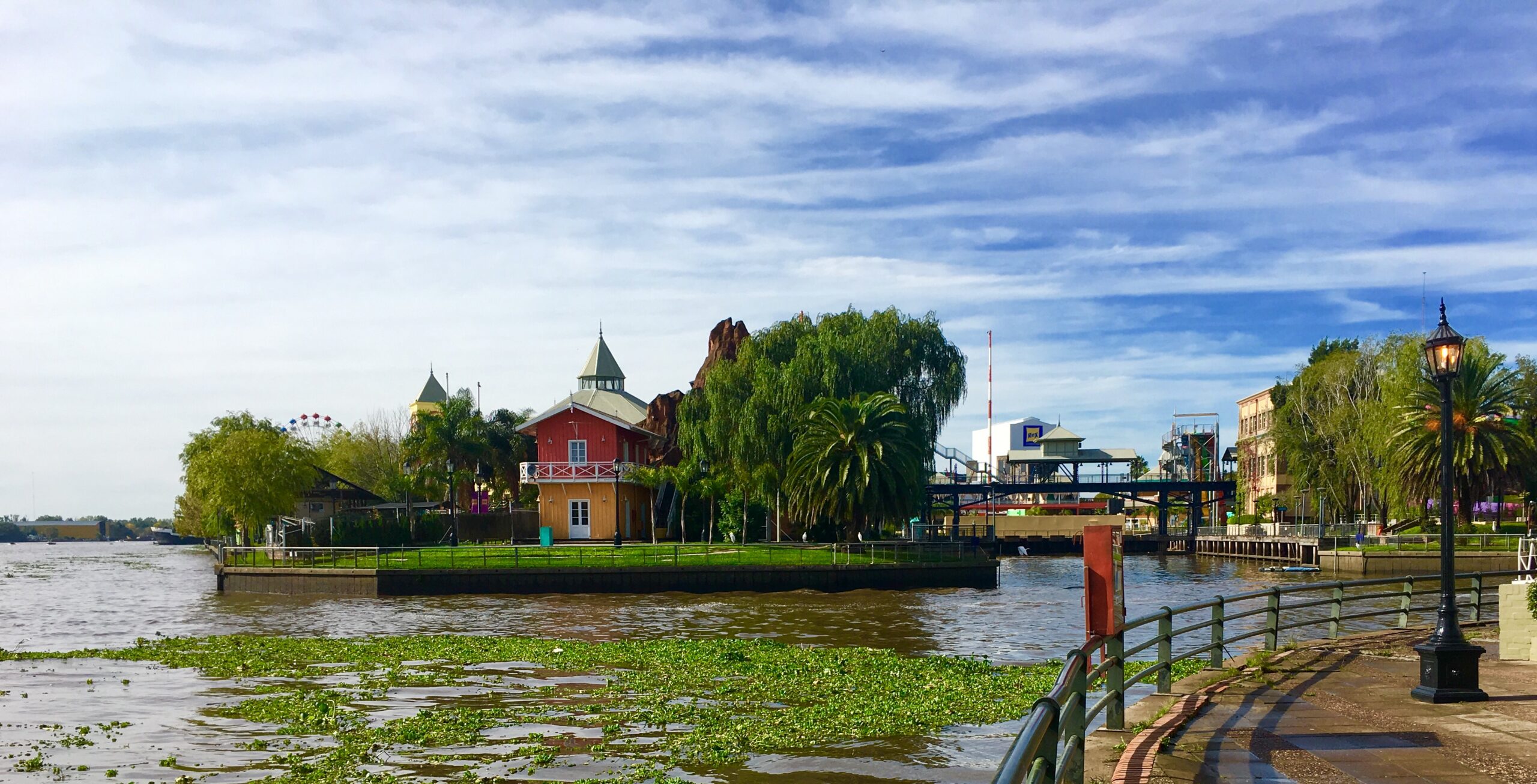
Photo: Mauro Cacciola, CC BY 2.0, via Wikimedia Commons

The boat. Then the part that justifies the day: navigating the channels between wooden houses on stilts, small landings and dense green. The first section of the Delta covers 221 square kilometres and more than 350 rivers and streams, and it is a working place rather than a park. Supplies arrive by boat, the grocery shop is a boat, and children reach school by boat: the province runs school launches for exactly that reason. There are no streets, so an address here is the name of the river plus the name of the house, and the post is delivered the same way, which is why nearly every house has its name on a sign at the landing.
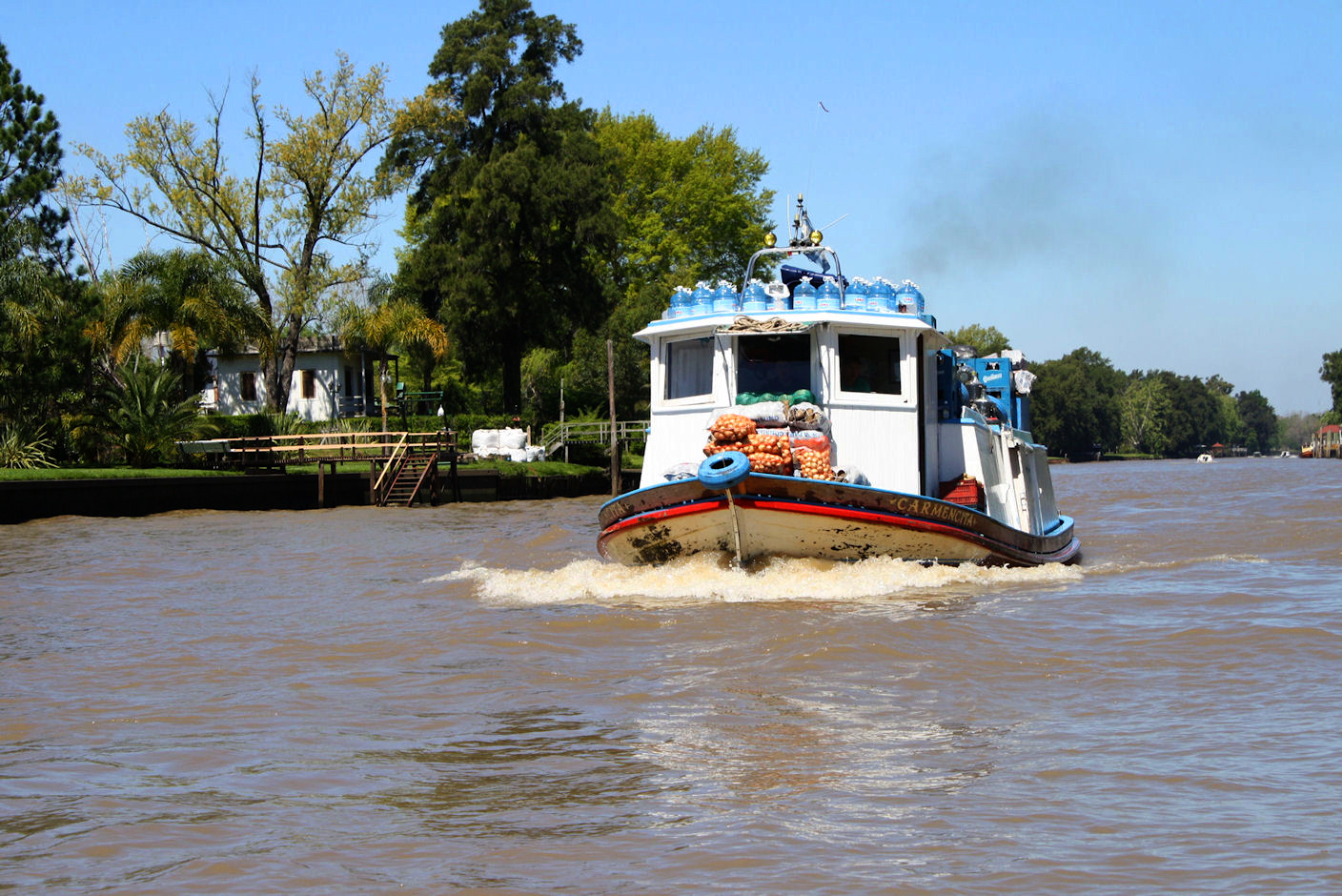
Photo: Robert Cutts, CC BY 2.0, via Wikimedia Commons

One practical detail: the ride is on a scheduled passenger boat rather than a private launch, and on our tour the boat ticket is included. You do not need to arrange anything before you travel: your guide handles the tickets, the queue and the timetable at the pier. Lunch by the river is optional. The tour is priced for the whole group, vehicle, guide and boat ride included, from USD 395 for two.
Five hours or seven?
The two versions visit the same places; what the longer one buys is the removal of the clock. On the five hour day, San Isidro is a stop and the optional visits stay optional because there is no room for them. The seven hour day is the same day without the constant editing: time to actually go into Villa Ocampo on the days it opens instead of admiring the gate, a boat ride you do not spend checking your watch, and lunch by the river that is a meal rather than a refuel. If the weather is good and the group likes being outdoors, the seven hour version is the one people come back talking about.
Doing day three without a tour
Fair question, and the answer is yes. The Mitre line train from Retiro reaches Tigre in a little over an hour (about 67 minutes on the current timetable), the 60 bus does it more slowly and more cheaply, and the public boats leave from the Estación Fluvial. It works, and plenty of people do it that way.
What you give up is the sequence and the reading of it: San Isidro on the way out (by train it needs a separate detour), the boat timed so the day flows instead of queues, and someone who can tell you what you are looking at while you are looking at it, in your language. The Delta is a place where almost everything interesting is invisible without context: that launch is a school bus, that sign is an address, that boat is a grocery shop. You can float past all of it in an hour and see only trees.
The geography, in one paragraph
Tigre is about 30 kilometres north of the centre, half an hour by the Autopista del Sol according to the municipality, which is optimistic once traffic is real. And one thing that catches people out: you cannot drive into the Delta. The islands have no roads. You reach them by boat from the Estación Fluvial in Tigre, which is why the day is a drive plus a sailing rather than a drive.
What three days still does not cover
Even at three days, some things do not fit, and it is better to know which:
- An estancia day in San Antonio de Areco. The gaucho day is a full day out and it competes directly with the Delta. Choose one, or come back.
- Colonia del Sacramento, in Uruguay. A ferry crossing and a different country. It needs its own day and its own timetable.
- Two day trips in three days. Technically possible, and it turns the trip into transport.
The gaps, again
Across three days this itinerary covers roughly the same ground as most published two day plans, but with the time between stops actually accounted for. Days one and two are roughly 25 kilometres of movement between stops, measured on the actual route. Day three is about 30 kilometres of road each way to Tigre, plus the water.
Done by car with a guide, the two city days lose around ninety minutes total to transfers instead of several hours, and the Delta day becomes a single continuous thing instead of four disconnected errands.
The private city tour covers days one or two in 4, 6 or 8 hours, from USD 250 for the whole vehicle. The Tigre and Delta day covers day three in 5 or 7 hours, from USD 395 for two with the boat ride included. Both are private and both include hotel pickup; the city tour is priced by vehicle, and on the Tigre day the boat ticket is USD 20 per person on top of the group price, so a smaller group pays less.
Frequently Asked Questions
Is three days enough for Buenos Aires?
Three days is the first amount of time that covers the city and gets you out of it. Two days is city only. Three lets you add the Delta, which is the closest thing to a different world within an hour of the centre.
Should the day trip go first or last?
Last. You appreciate the Delta more once you know the city it contrasts with, and the long day is easier when you have found your feet.
Tigre or an estancia day, if I only have one?
Tigre if you want landscape, water and a working river culture. The estancia if you want horses, open country and an asado. They are both full days and they do not combine.
Is the boat ride included in the tour price?
Yes. The ride is on a scheduled passenger boat rather than a private launch, and the ticket is included: your guide handles the tickets, the queue and the timetable at the pier. The tour price covers the vehicle, the guide and the boat ride for the whole group.
Three days, and a river
Buenos Aires is a city that rewards a second day and changes on the third. The first two days give you the arc, the contrast and the neighbourhoods. The third takes you an hour north, puts you on the water, and shows you the thing that was there before the city: a delta where the streets are rivers and always were.