Art & Culture · Buenos Aires · April 2026
When you land in Buenos Aires and step out of your Buenos Aires Transfers vehicle, you are not just entering a city; you are entering a giant, open-air living room. The first sensory shock isn’t the tango or the steak, it’s the intoxicating aroma of dark roasted beans and the rhythmic clinking of small metal spoons against porcelain. In this city, coffee is the fabric of our social life.
While the rest of the world has embraced the frantic, plastic-cup “to-go” culture, Buenos Aires remains a sanctuary for the “sit-down.” Here, a single cup of coffee buys you an entire afternoon of reflection. It is an act of resistance against the modern rush. To understand the Porteño (the inhabitant of the port city), you must sit where they sit.
Café Tortoni
The cathedral of Argentine culture
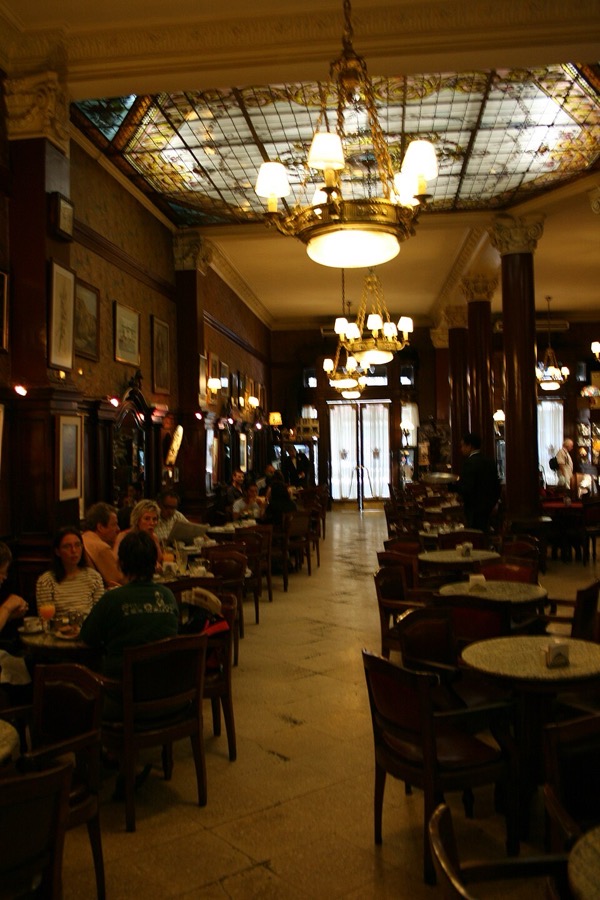
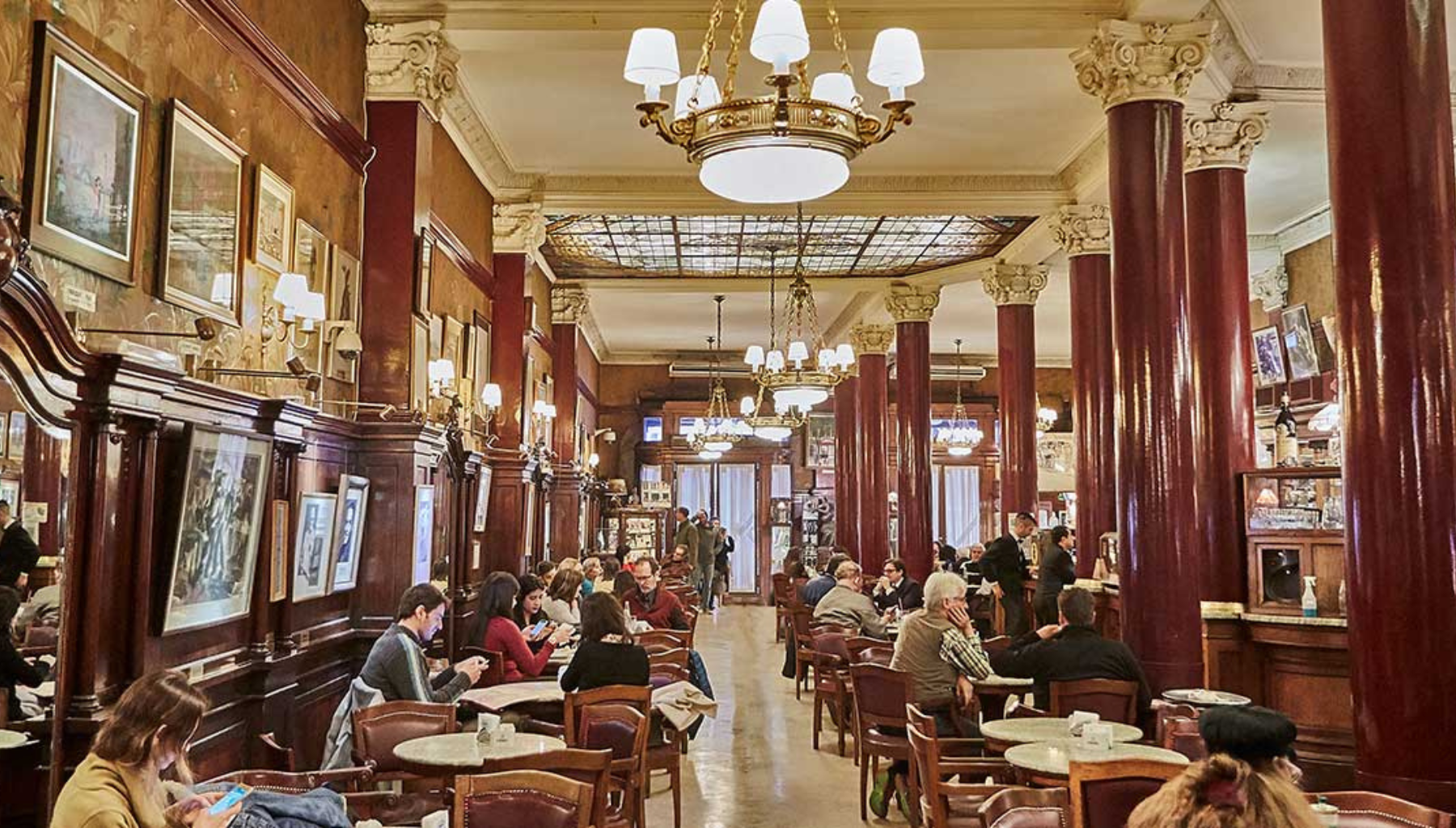
Founded in 1858 by French immigrant Jean Touan, who named it after the legendary Café Tortoni in Paris, this is the oldest and most storied café in the country. Its history is inseparable from Celestino Curutchet, a Basque Frenchman who married into the Touan family and, in 1879, took the helm of this cultural institution.
It was Curutchet who, in 1894, opened the iconic entrance on Avenida de Mayo and became a pioneer by placing tables and chairs on the sidewalk, a radical move that would define Buenos Aires café culture. With its Tiffany-style glass ceilings, oak-paneled walls, and the imponente facade designed by architect Alejandro Christophersen in 1898, Tortoni has hosted everyone from Albert Einstein to Jorge Luis Borges.
Carlos Gardel had a reserved table here, tucked away on the right side, by the window. Today, the basement hosts nightly tango and jazz performances, keeping the flame of Argentine artistry alive.
Las Violetas
A symphony in French stained glass
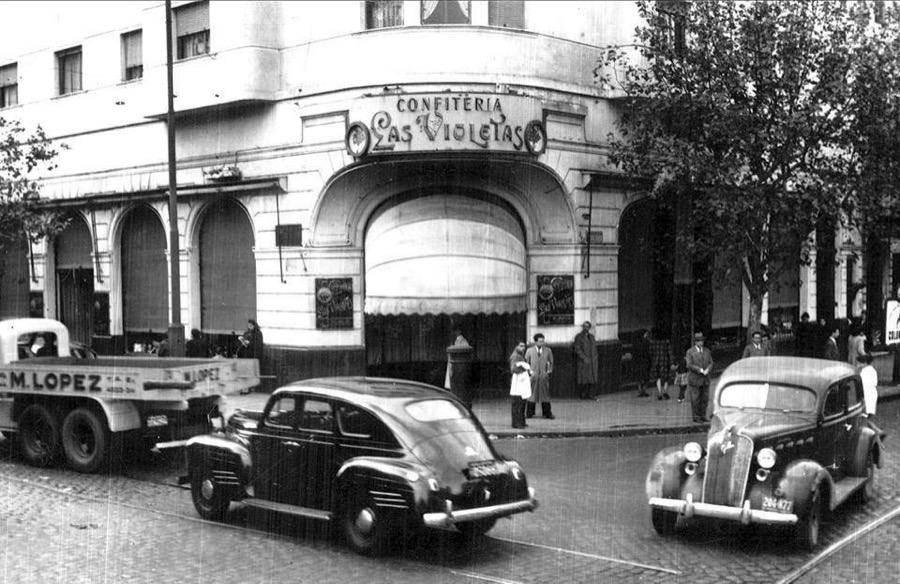
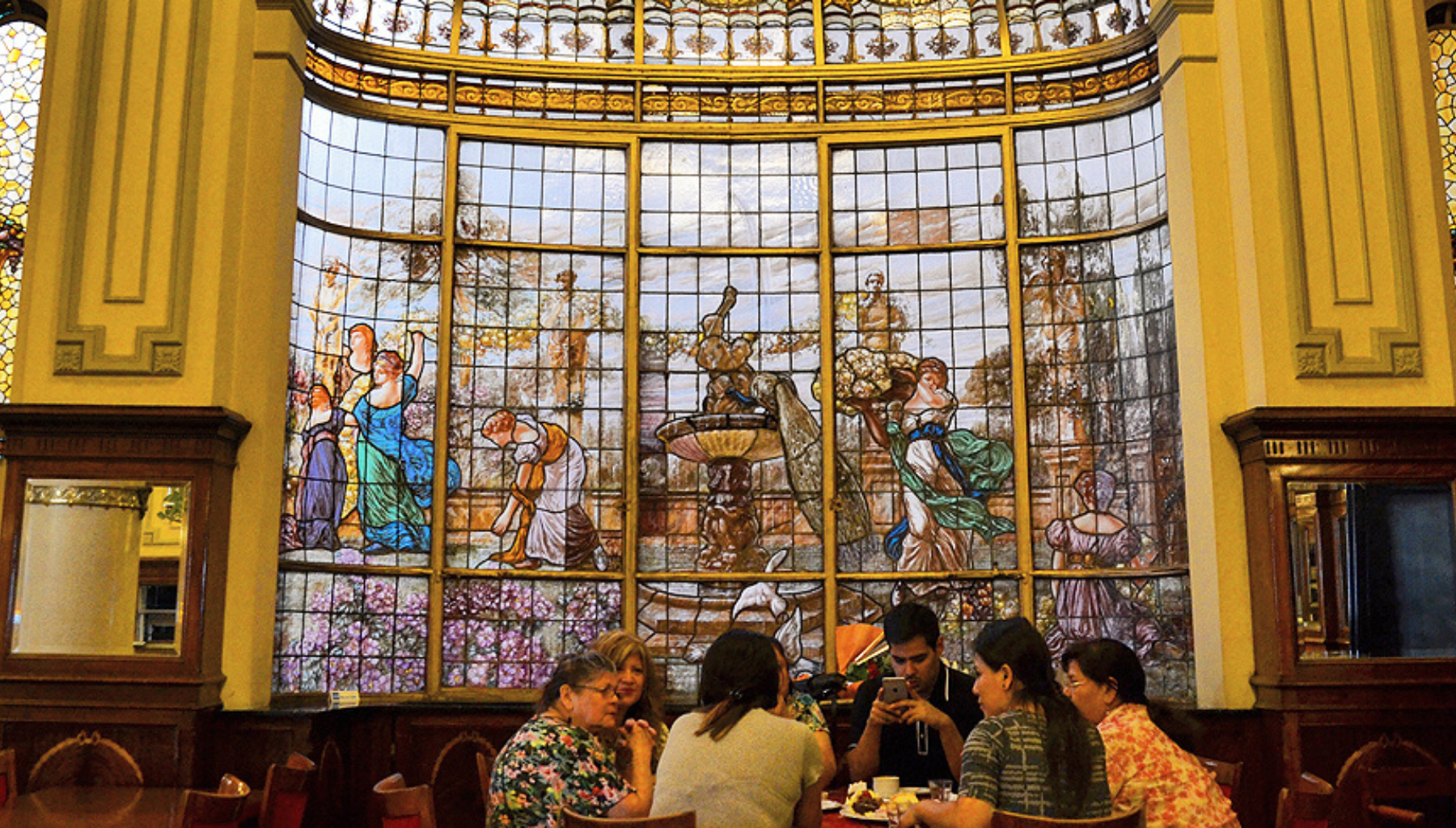
Inaugurated on September 21, 1884, Las Violetas represents the era when Buenos Aires was unabashedly the “Paris of the South.” The then-minister Carlos Pellegrini, future president, arrived at the opening in a special tramway, accompanied by his distinguished friends, setting the tone for a place that would host politicians, artists, and writers for over a century.
The café spared no expense: fine boiserie, magnificent French stained-glass windows, Italian marble floors and counters from Carrara, and furniture imported from Paris. In the 1920s, it was remodeled with curved glass doors and windows that bathe the space in violet and golden light.
The poetess Alfonsina Storni, a neighbor from Almagro, was a regular. Writer Roberto Arlt and legendary jockey Irineo Leguisamo also graced these tables. After closing in 1998, the Buenos Aires Legislature declared it an “área de protección histórica,” and it reopened in 2001. In 2017, it was voted the best Café Notable in the city.
Bar El Federal
Bohemian echoes on cobblestone streets
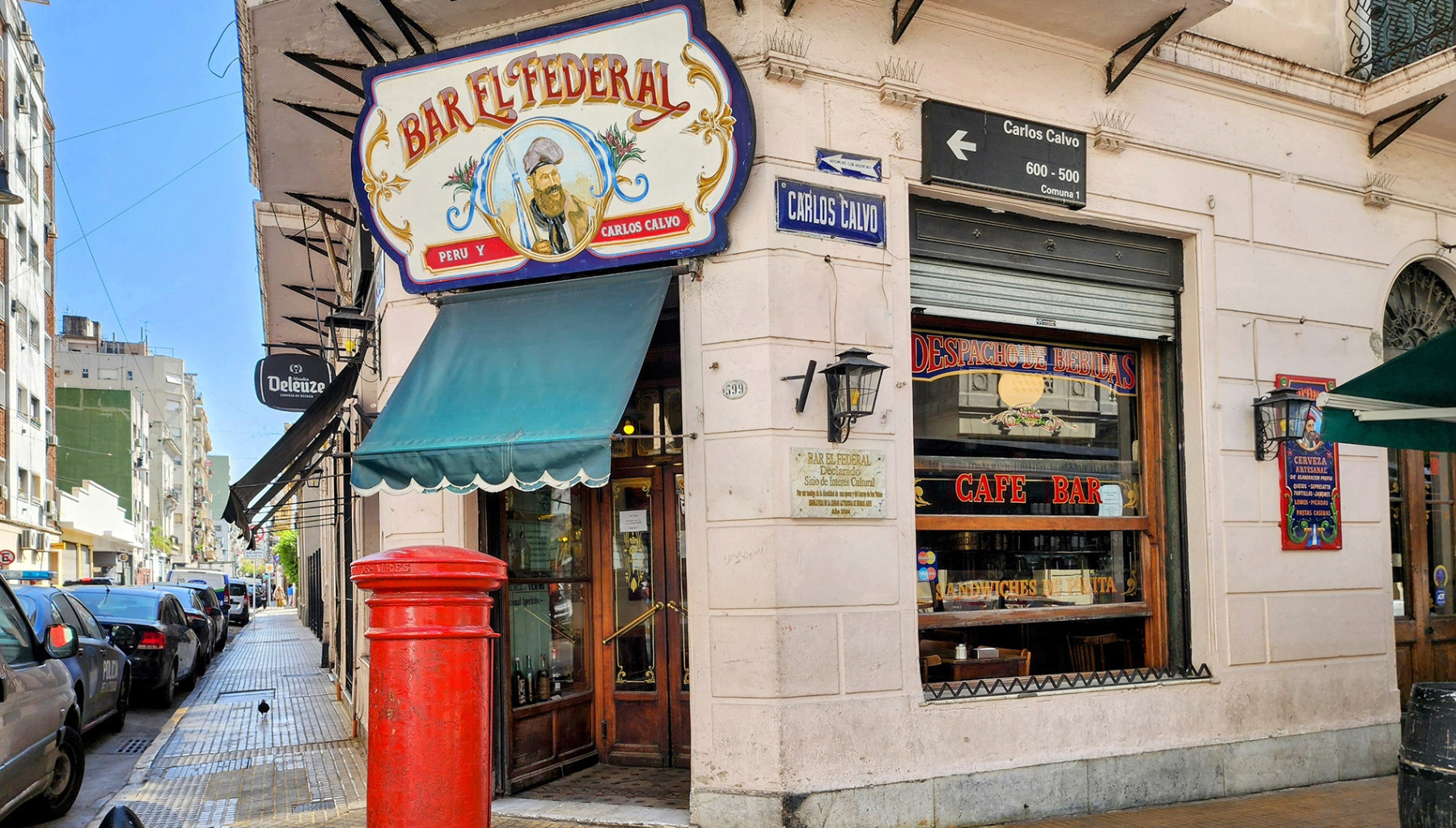
On the corner of Perú and Carlos Calvo, in the heart of San Telmo, stands El Federal, a café-bar that once functioned as a classic late-19th-century Buenos Aires almacén con despacho de bebidas (grocery store with a drinking counter).
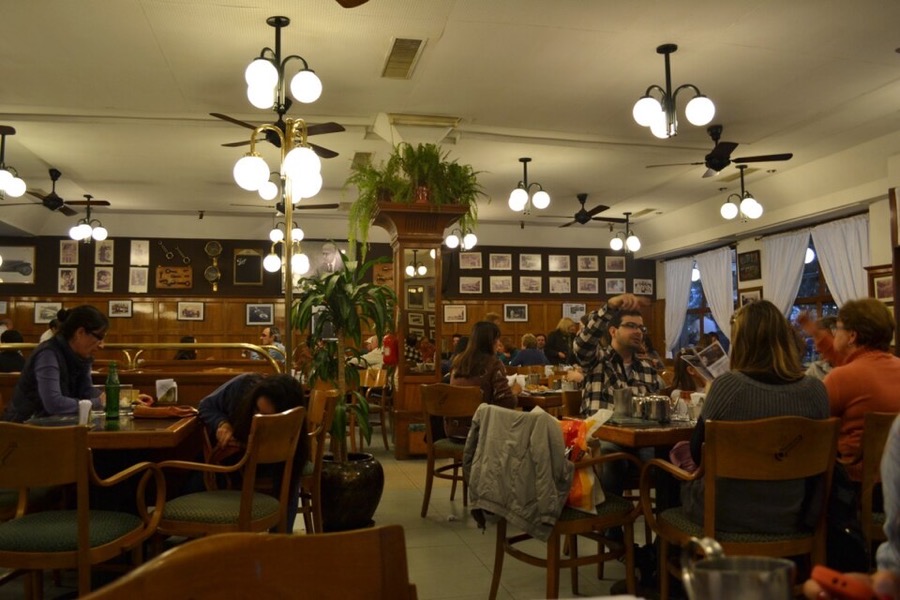
Its two salons house an evocative Porteño exhibition: vintage advertisements from the 1920s and 30s, old tricycles, colored glass siphon bottles with metal tops, and paintings honoring legends of urban music like Roberto Goyeneche, Edmundo Rivero, Homero Manzi, Osvaldo Pugliese, and Héctor “Chupita” Stamponi.
The original low wooden bar anchors the first room, where you can enjoy house specialties like picadas, tortillas, sandwiches, and homemade ravioli. Legend has it many tango lyrics were scribbled on napkins here by poets inspired by the dim amber light. If Tortoni is the cathedral, El Federal is the neighborhood chapel, intimate, authentic, and deeply loved.
The Silent Protagonist: The “Mozo”
In Buenos Aires, a waiter is not just a server; he is a Mozo. This is a career professional, often a philosopher in a white tuxedo jacket who has worked at the same establishment for forty years. The relationship between a regular and their mozo is sacred.
He knows your name, your preferred table, and exactly how much milk you like in your coffee. He practices “calculated indifference”, he will never bring you the bill unless you ask for it. In his eyes, you have the right to occupy that table for as long as you need to solve the world’s problems.
How to Order: The Linguistic Spectrum
To truly immerse yourself after your transfer arrives, you must master the vocabulary of the local coffee menu, which is a spectrum of milk-to-coffee ratios:
- Cortado: The most popular. An espresso “cut” with a splash of milk.
- Lágrima: For those who want mostly milk with just a “tear” of coffee.
- Café con Leche: The king of the morning, served in a large cup with 50/50 ratio.
- En Jarrita: A double espresso for those who plan to stay for hours.
Confitería La Ideal
A time capsule of Belle Époque grandeur
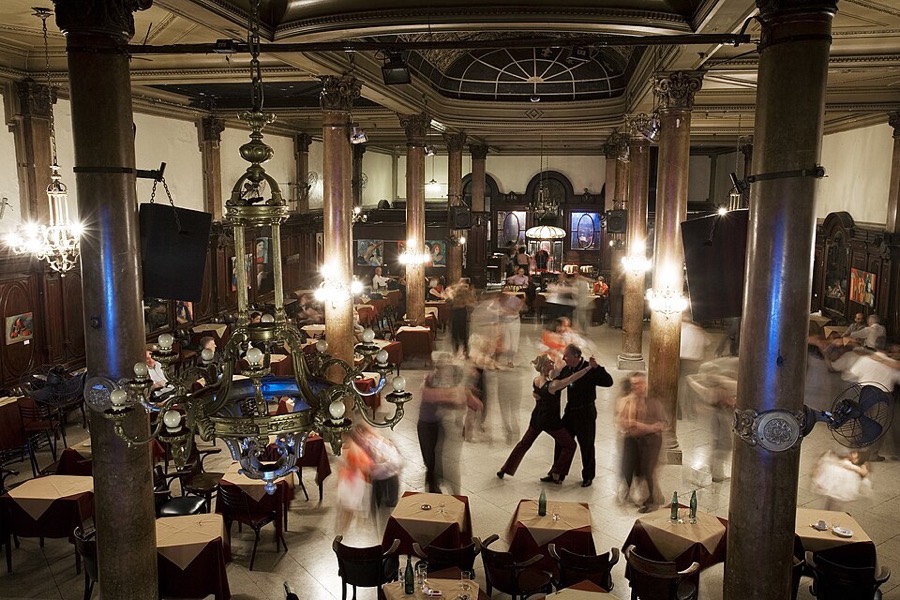
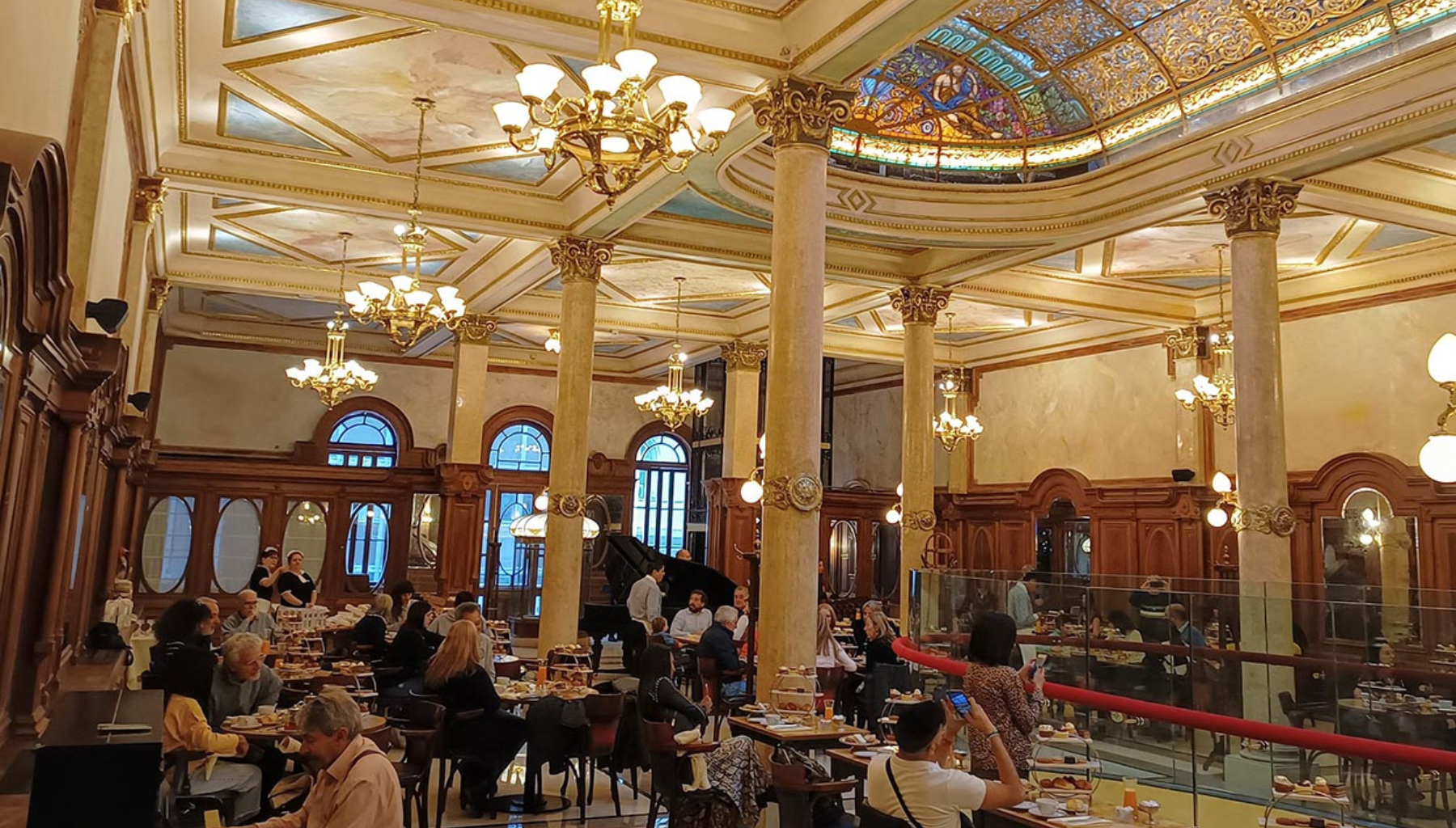
Founded in 1912 by Spanish immigrant Manuel Rosendo Fernández, La Ideal was conceived with all the opulence of early 20th-century Buenos Aires. Its architecture is pure Belle Époque: a centenarian dome composed of 60 stained-glass panels crowned by a cartapesta molding that takes your breath away.
After closing in 2017, a monumental restoration project brought specialists in bronze, wood, stucco, gold leaf, and stained glass to revive over 2,000 square meters of cultural patrimony. The original chandeliers were lowered, polished, and reinstalled. The elevators were disassembled and renewed. Even the bombonera on the first floor was lovingly restored.
In the 1970s, the first floor became a legendary milonga (tango dance hall). Hipólito Irigoyen, Arturo Frondizi, Jorge Luis Borges, Carlos Gardel, and even Yoko Ono sat at these tables. Director Alan Parker was so dazzled that he filmed scenes for the movie Evita here. Everything consumed here, pastries, bread, chocolates, is made in-house.
Ready to start your ritual?
Don’t worry about the traffic or the maps. Our professional drivers will take you from Ezeiza directly to the doorstep of these historic gems.
La Biela
Where racing legends meet literary giants
This café began as a small bar called “La Viridita” with only 18 tables on a narrow sidewalk. The name came from a neighbor who would shout, “Don’t park the motorcycle there, you’ll break my little glass!” It later became “Aerobar” in honor of the Aeronautics pilots whose offices were across the street.
Around 1950, history took a turn when a group of speed-loving friends started racing through the neighborhood. One day, Beto Mieres’ car broke down on that very corner, his biela (connecting rod) snapped. He stopped for coffee, and soon Juan Manuel Fangio, Froilán González, Charlie Menditeguy, and other racing legends adopted it as their headquarters. The Asociación Argentina de Automóviles Sport had no official office, so they joked that La Biela was “the secretariat.”
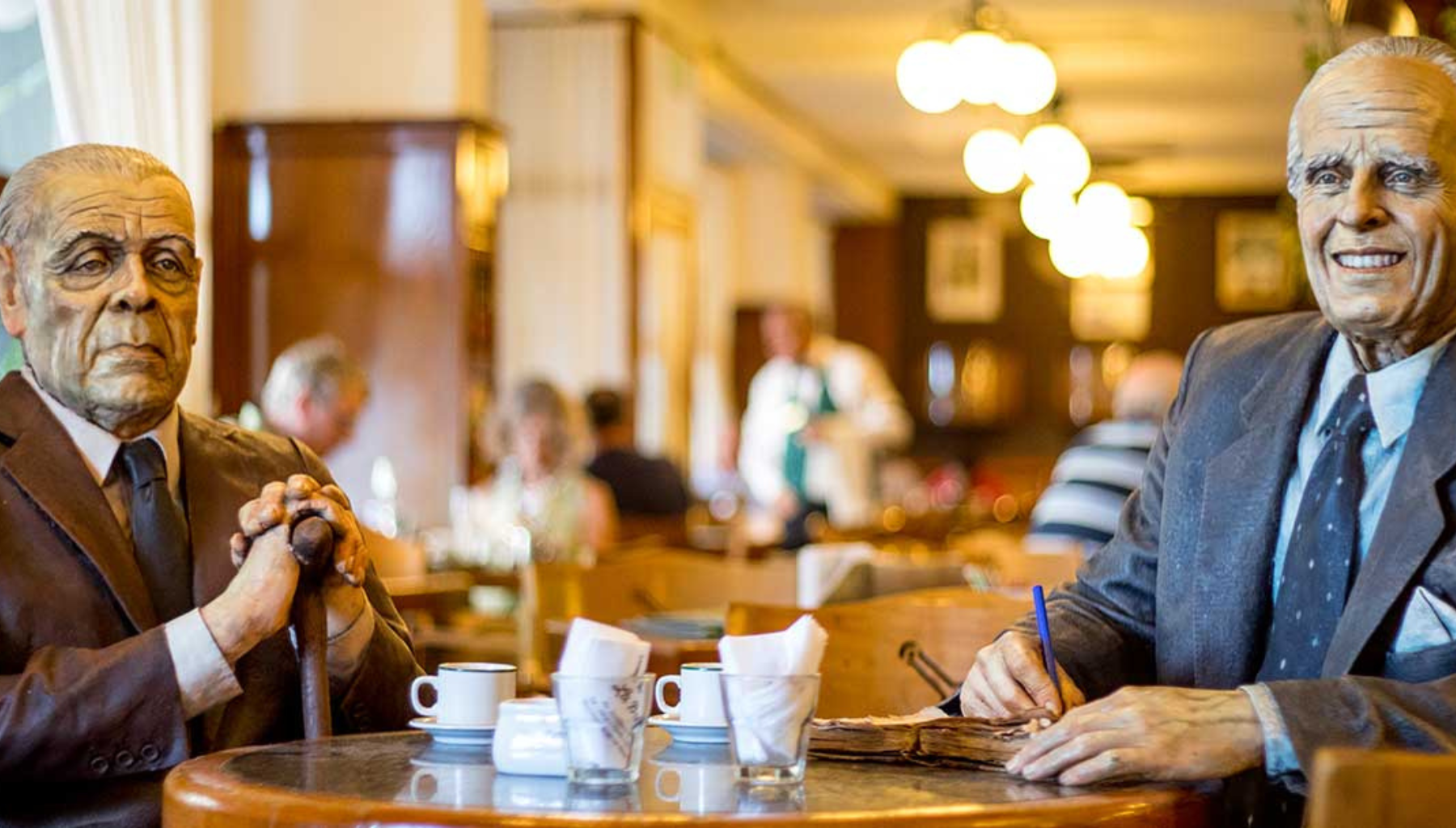
Today, at table 20, the corner of Junín and Quintana, you’ll find life-size statues of Jorge Luis Borges and Adolfo Bioy Casares by sculptor Fernando Pugliese. This was Bioy’s reserved table, where he would lunch and write. Notice the photographs above the bar: Bioy himself took them for a book by Borges.
Florida Garden
The vanguard hangout of the Swinging Sixties
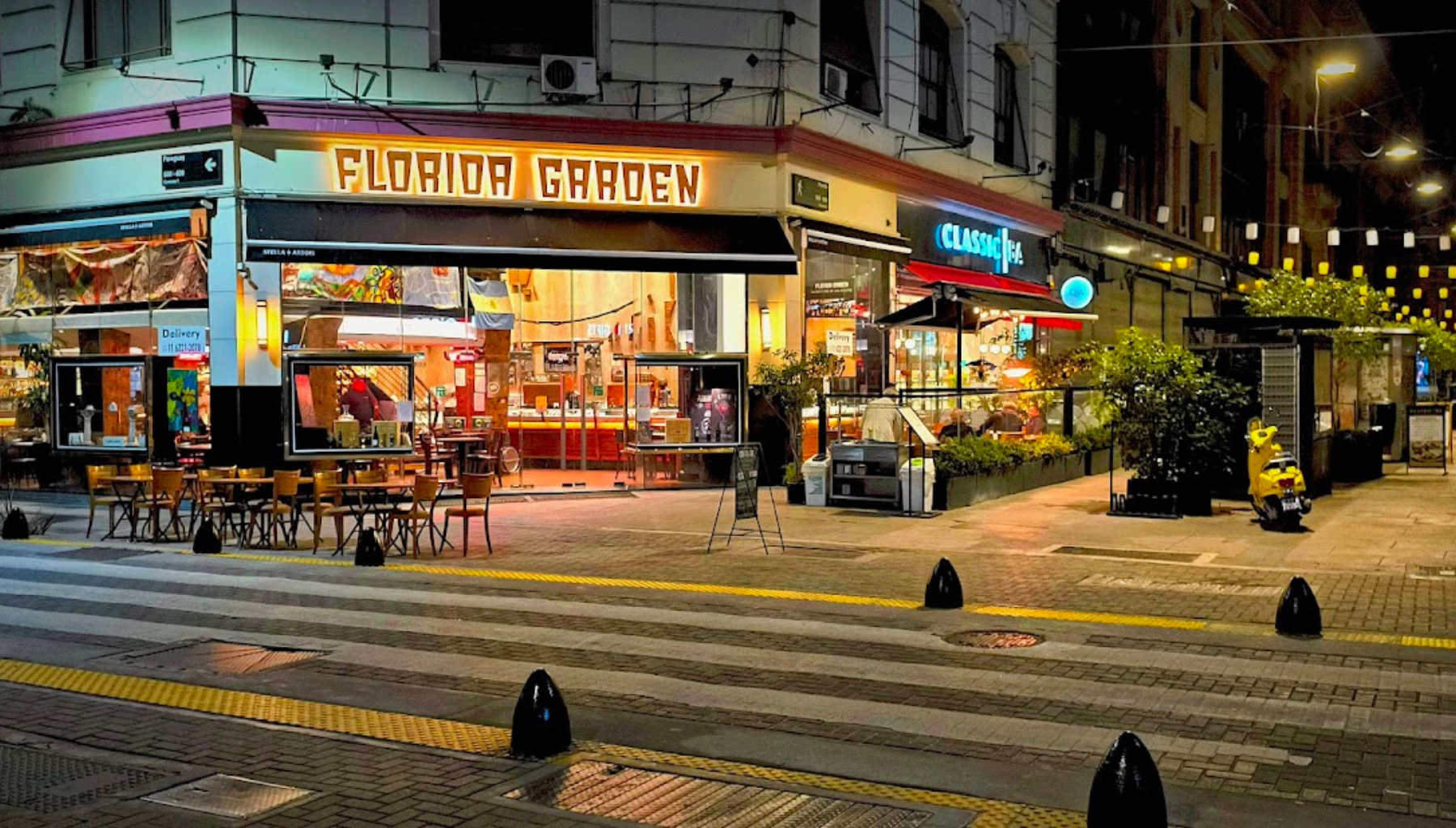
Inaugurated in 1962 by a group of Asturian, Galician, and Italian immigrants, Florida Garden was architecturally radical: the first all-glass-fronted café in Buenos Aires. Its curved staircase appears to float in mid-air, copper-clad columns rise to a double-height ceiling, and an abstract sculpture behind the bar invites endless interpretation.
During the 1960s, Florida Garden became the epicenter of the “Happening Porteño”, the Argentine Flower Power. Artists spilling out of the legendary Instituto Di Tella (just a block away) would gather here: Marta Minujín, Federico Peralta Ramos, Pérez Celis, Rogelio Polesello, Luis Felipe Noé. The walls seemed to vibrate with creative energy.
Today, the café receives around 1,000 customers daily. Mozos in white jackets with black bow ties, some with over 40 years of service, still practice the art of the stand-up espresso at the bar. The house specialty is the legendary torta de queso (cheesecake), light and airy, with “FG” dusted on top in powdered sugar. The motto printed on every napkin says it all: “La identidad de una esquina” (The identity of a corner).
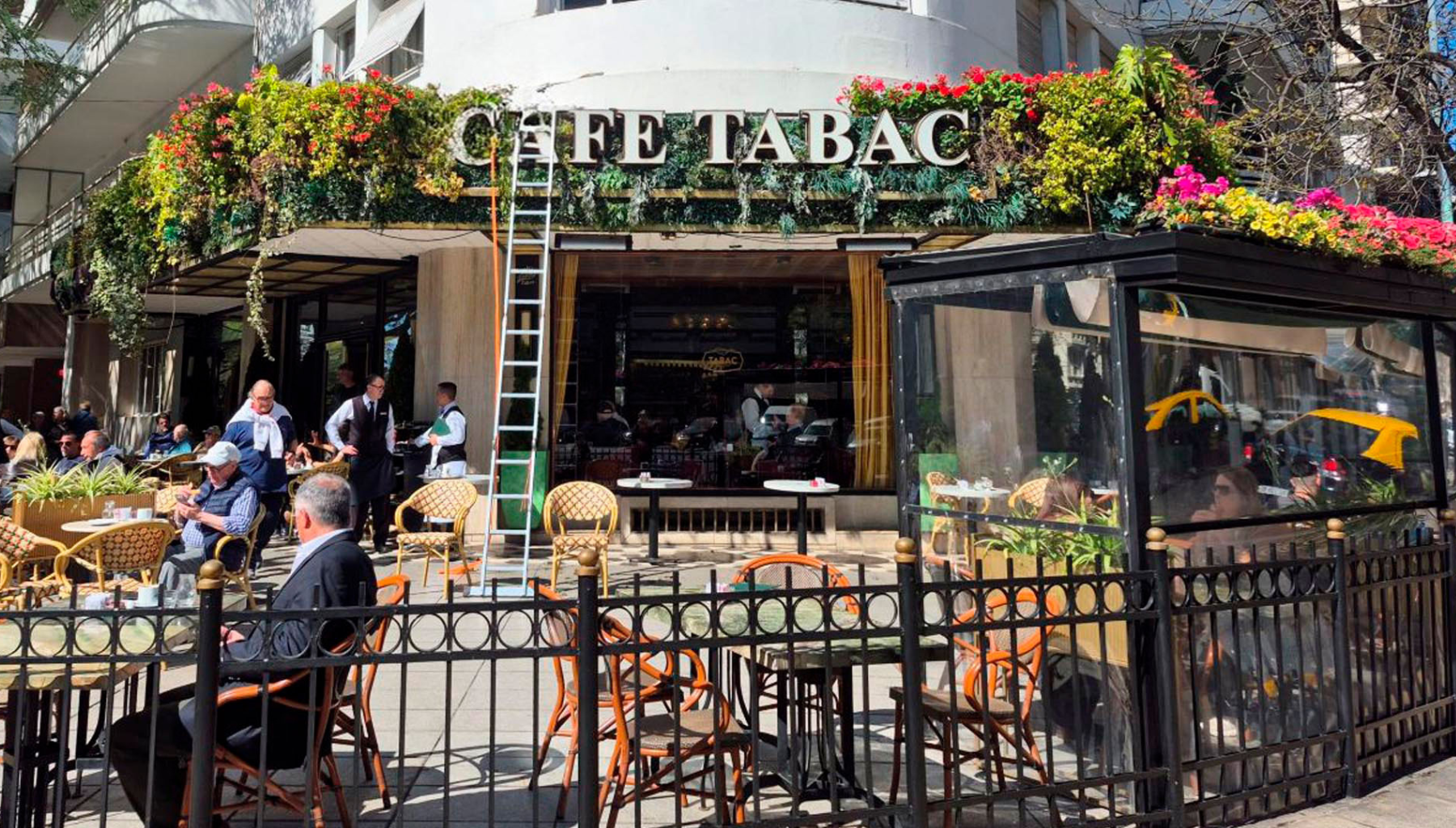
Caffé Tabac
Where political secrets are whispered over cortados
Since 1969, at the elegant corner of Avenida del Libertador and Coronel Díaz, the exact border between Recoleta and Palermo, Caffé Tabac has held a unique place in the city’s collective memory. Its luminous salon, subtle ceiling curves, bronze chandeliers, and double curtains (red and natural, trimmed with passementerie) create an atmosphere of refined discretion.
It was here, on a winter midnight in 1989, that one of Argentina’s great political mysteries began to unravel. Writer Tomás Eloy Martínez received a call from Colonel Héctor A. Cabanillas, the man who managed the secret relocation of Eva Perón’s embalmed body. They met at Tabac, along with Ambassador Jorge Rojas Silveyra and a mysterious witness. Over coffee, they handed Martínez all the documentation they had kept hidden for decades. “El secreto los ahogaba” (The secret was drowning them), Martínez later wrote. That conversation became the foundation for his novel Santa Evita.
Today, Tabac’s loyal clientele, many greeted by name by the waiters, enjoy the “Té del Encuentro”: coffee or tea with fine pastries, brownies, toasted bread, jam, nut cake, English pudding, cake, and savory options.
The Geography of the Soul
Every neighborhood offers a different flavor of the ritual. In Monserrat, Tortoni’s grand history wraps around you like a velvet curtain. In San Telmo, El Federal’s bohemian soul pulses with tango’s heartbeat. Almagro’s Las Violetas drowns you in stained-glass light. Centro’s La Ideal transports you through a century of elegance. In Recoleta, La Biela sits beneath the ancient rubber tree, while Tabac holds secrets in its corners. And in the busy Microcentro, Florida Garden’s mod aesthetic still shocks and delights.
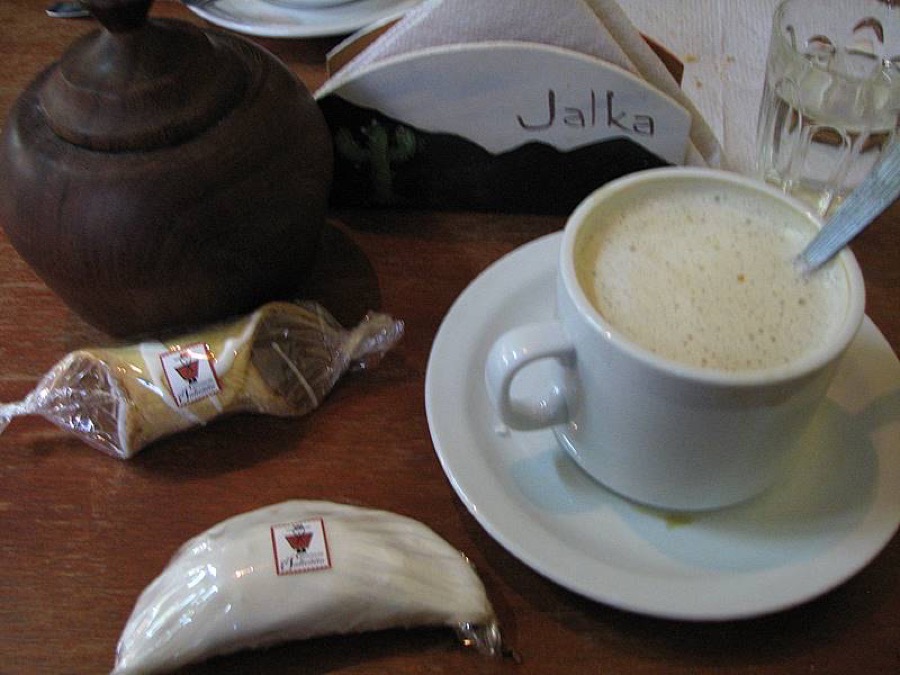
But no matter where you go, the ritual remains the same: a glass of sparkling water arrives unasked, a tiny cookie rests on the saucer, and a moment opens up to simply breathe.
Traveling can be exhausting. The logistics of flights and luggage can leave you disconnected from the very place you came to experience. The coffee ritual is the antidote. It is the moment you stop being a tourist and start being an observer, a temporary Porteño.
At Buenos Aires Transfers, we believe your journey shouldn’t just be about moving from point A to point B. It should be about arriving at the heart of the culture. Our drivers are locals who love their city. They are your first point of contact with this wonderful madness we call home. Feel free to ask them for their personal favorite café near your hotel.
So, after we drop you off and you’ve checked into your room, head to the nearest corner, find a table with a view, and simply say: “Un cortado, por favor.”
Welcome to Buenos Aires. Your table is waiting.