CITY GUIDE · FIRST VISIT · 2026
The city reveals itself slowly, by neighborhood, by detail, by the small rules nobody thinks to explain.
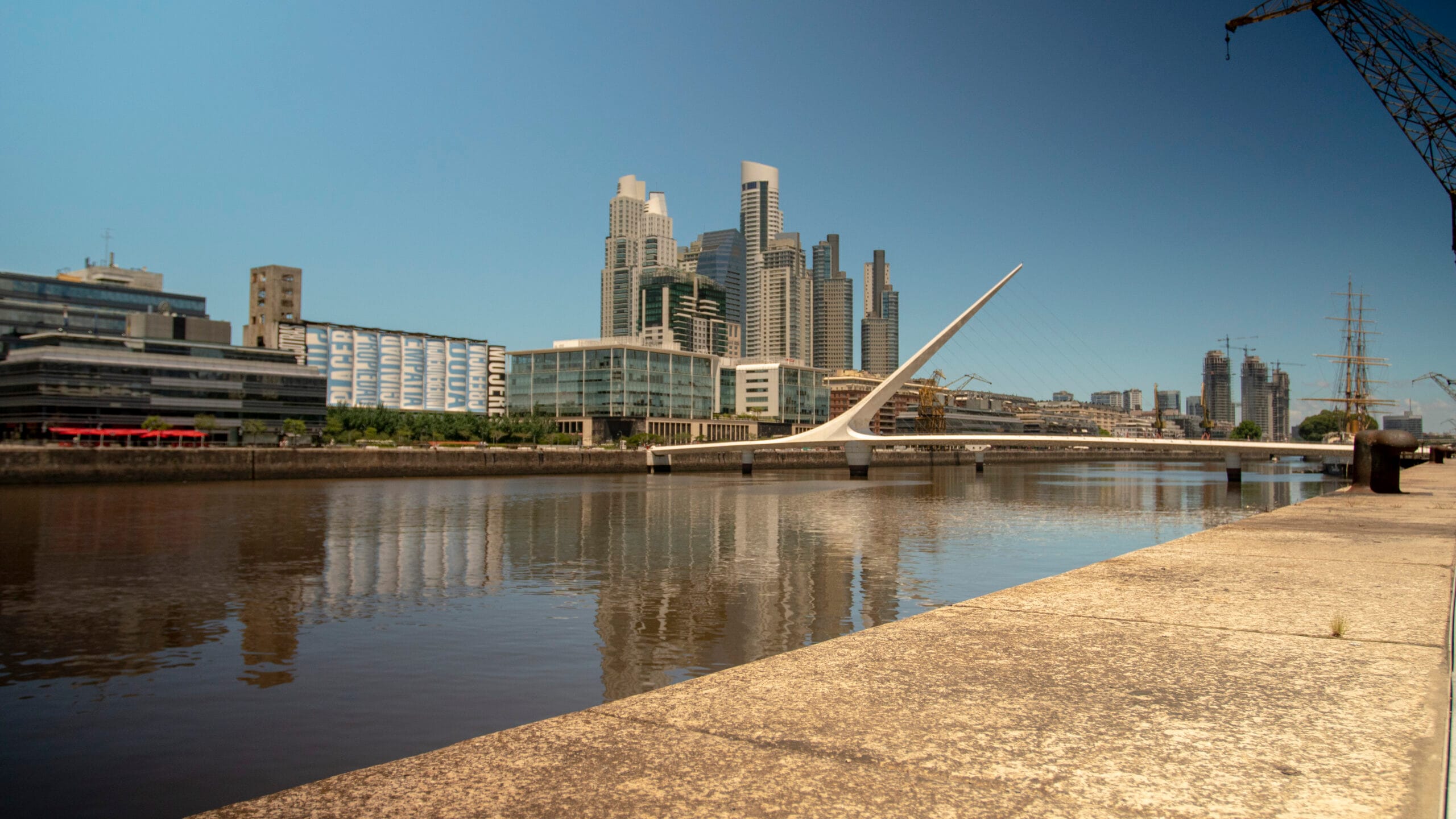
Nobody arrives in Buenos Aires neutral. The city has been described to you for years: the tango, the steak, the European boulevards at the wrong end of the map. What the descriptions miss is the practical texture of the place, the dozen small habits that separate a visitor who is fighting the city from one who is moving with it.
We meet first-time visitors at Ezeiza almost every day at Buenos Aires Transfers, and the same questions come up in the car on the way into town. How does the money work now. Why is nobody at dinner. Is it safe to walk here. So we wrote the answers down. These are the eight things we end up explaining on that first ride, the briefing that turns a nervous first day into an easy one.
Read them before you land, and you will arrive already knowing how the city breathes.
01 · MONEY: Cards now work in your favor (but carry some cash)
For years Argentina ran on parallel exchange rates, and travelers arrived with bricks of foreign cash to change in the street, chasing the so called blue dollar. That math has largely faded. The gap between the official and parallel rates has narrowed sharply, and foreign Visa and Mastercard payments are now charged at a fair, close to market rate. You can tap your card with confidence in restaurants, supermarkets, pharmacies and most taxis, and skip the old ritual of hunting down a better rate in the street.
Cash still has its place at the edges of the city. Keep a modest stash of pesos for the feria stall, the empanada window, the kiosko, the bus and the tip you leave on a café saucer. When you need more, withdraw small amounts at a time, since local ATMs still charge high fees and cap each withdrawal at a low limit, or change a little at a casa de cambio in the center rather than at the airport, where the rate is built for people with no other option.
The short version: tap your card for almost everything, carry a little cash for the small and the charming.
02 · TIME: Dinner is at 9 PM and that is non-negotiable
Buenos Aires lives about ninety minutes later than you do, and nowhere is this clearer than at the table. Restaurants open for dinner around eight, begin to fill near nine thirty, and hit their peak past ten. Walk in at seven and you will dine alone while the staff fold napkins and finish their own lunch. It is not unfriendly, it is simply the wrong hour.
The trick locals use to bridge the long afternoon is the merienda, a coffee and a couple of medialunas around five or six in the evening. It is the small meal that explains how porteños stay sharp until midnight and beyond. Shows, milongas and bars follow the same late clock, so resist the urge to force your home schedule onto the city. Nap if you must, eat your merienda, and let the evening arrive on local time.
The short version: push everything later, and treat the 6 PM coffee as a real meal.
03 · NEIGHBORHOODS: Stay in Palermo or Recoleta, explore everywhere
For a first visit, sleep where the evenings are walkable and the streets stay lively after dark. Palermo is leafy, green and gastronomic, a sprawl of parks, design shops and the best concentration of restaurants in the city. Recoleta is its elegant older sibling, calm, central and lined with the grand facades that earned Buenos Aires its Paris comparison. Either one puts you within easy reach of the rest.
From that base, the city opens up by mood. The southern barrios of San Telmo and La Boca hold the oldest, most photographed corners, San Telmo rewarding a slow Sunday at its antique fair and La Boca asking for a guarded morning visit. Puerto Madero offers a flat riverside walk past the docks. The Microcentro is fascinating by day and hollow by night, a place to visit at noon rather than sleep in. Knowing which barrio suits which hour is half of understanding Buenos Aires.
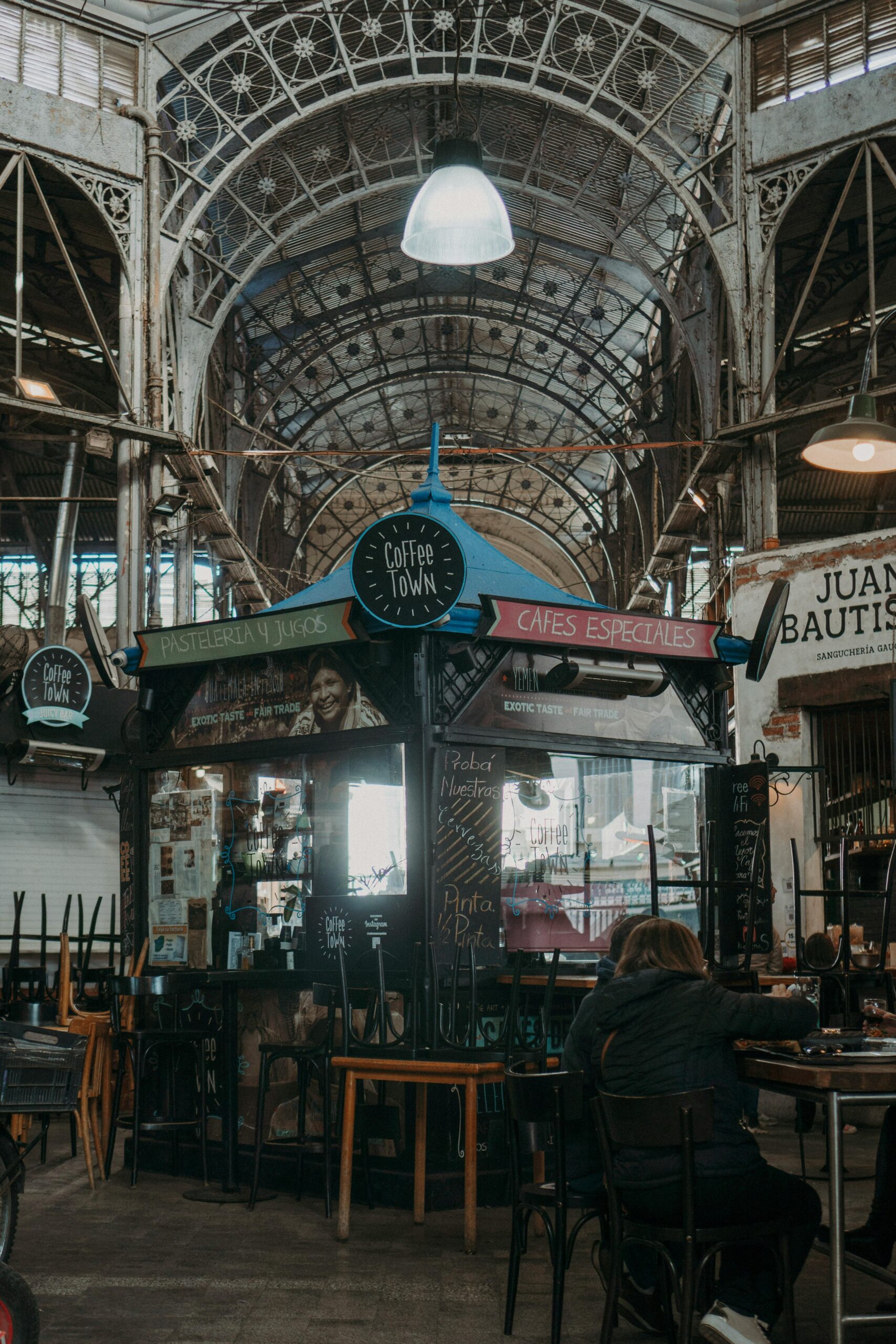
The short version: base yourself in Palermo or Recoleta, then range out by neighborhood and by time of day.
04 · SAFETY: Big-city rules, not war-zone rules
Buenos Aires asks for the same street sense you would use in Rome, Barcelona or any large European capital, no more and no less. The classic incident is opportunistic: a phone lifted from a café table, a bag left hanging on the back of a chair. Keep your phone off the table when you are not using it, wear your bag strap crossed over your body, and stay a little more alert around crowded transport and tourist crush points.
A couple of porteño specifics worth knowing. Use a booked car or a ride app at night rather than flagging unknown cars in the street, and if a stranger points out a mysterious stain on your jacket and offers to help clean it, walk on, because the stain and the kindness are both part of an old distraction trick. That genuinely is the whole briefing. Millions of visitors walk this city happily every year, and a little ordinary caution is all the city asks in return.
The short version: guard your phone and bag, use apps or booked cars at night, and relax.
Your first hour sets the tone for everything above. Skip the taxi queue and the unmarked cars at arrivals: book a private pickup, find your name on a sign, and spend the ride into town asking a local driver every question on this list. Buenos Aires Transfers does airport transfers, city tours and day trips with English speaking drivers and fixed, agreed prices.
05 · LANGUAGE: Ten words of Spanish open every door
English will carry you through hotels and the more touristy restaurants, but Buenos Aires warms dramatically to even a small effort in Spanish. A handful of words does most of the work: buen día for good morning, gracias for thank you, la cuenta, por favor to ask for the bill, permiso to slip past someone, and the magic che, the all purpose porteño way of saying hey, friend.
There is one quirk that will surprise your ear on day one. Porteño Spanish sings its double L and its Y as a soft sh, so calle sounds like CA-shay and playa like PLA-sha. It is your first audible clue to how deeply Italian and immigrant the city's blood runs, and locals find genuine delight when a visitor tries to copy it. You will not be fluent by Friday, and nobody expects you to be. The point is the gesture, and the gesture is always returned.
The short version: learn five polite words and embrace the sh sound, and doors open.
06 · TRANSPORT: The SUBE card, the Subte, and when to skip both
Your single most useful purchase is a SUBE card, a contactless travel card you buy at almost any kiosko and top up with pesos. It unlocks the entire bus network and the Subte, the underground metro, for a tiny fraction of what a taxi costs. The Subte is quick across the center by day, and the colectivo buses double as slow, accidental sightseeing tours for pocket change once you learn to read their route signs. If tracking down the physical card eats into your first morning, ask your transfer driver where to buy one nearby, since we pick them up all the time.
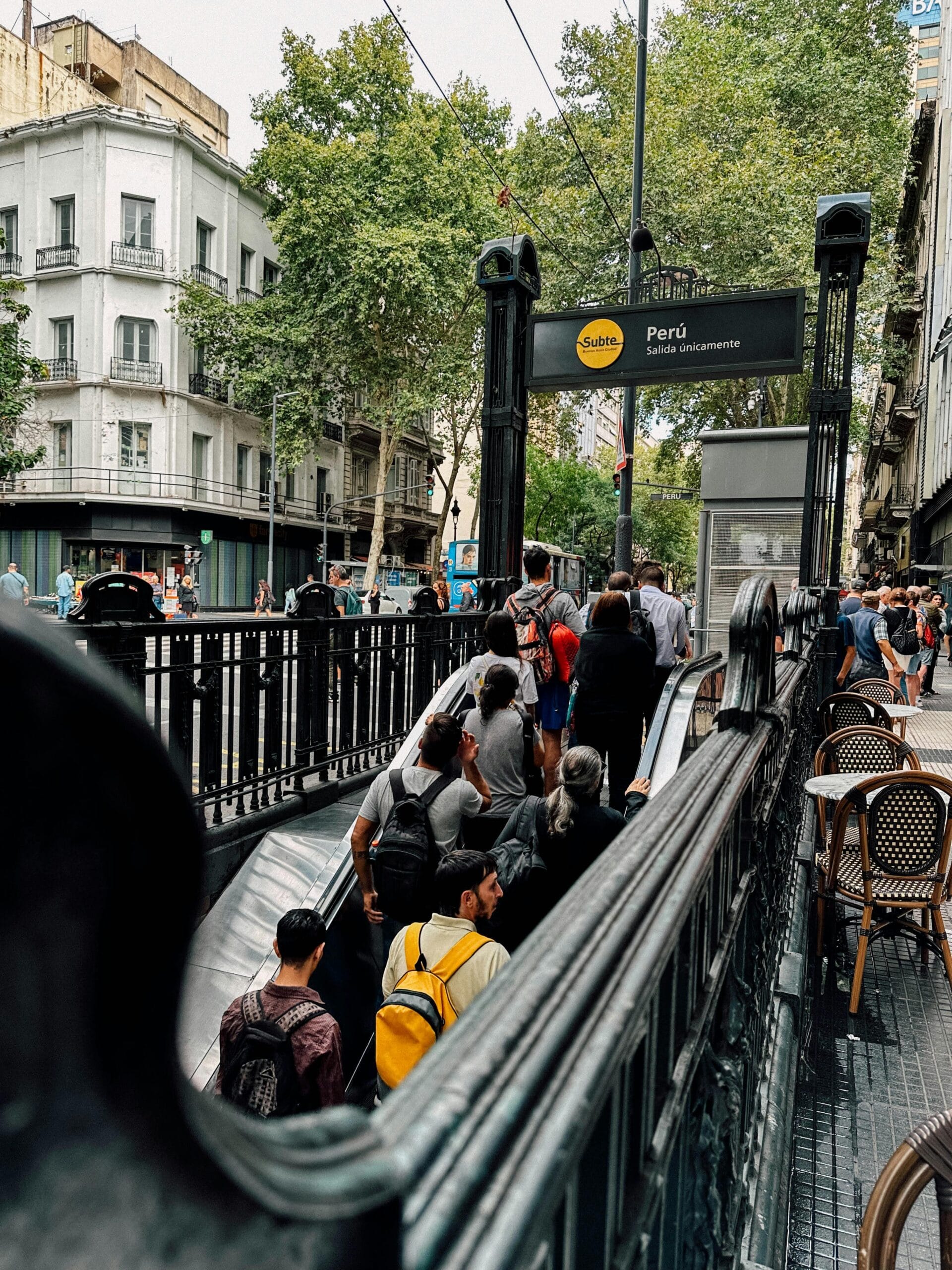
The logic changes at three moments: at night, when you have luggage, and when you are heading to or from the airport. There the variables stack up, distances are deceptive, and a booked private car is inexpensive by global standards while removing every uncertainty at once. Use this rough guide to pick the right tool for each trip:
- Airport to hotel: a private transfer, for a fixed price, door to door, with someone waiting for you by name.
- Crossing the center by day: the Subte, fast and very cheap with a SUBE card.
- Exploring one barrio: on foot or a short bus, slow travel at street level for pocket change.
- Late night return: a ride app or a booked car, predictable and comfortable after midnight.
The short version: buy a SUBE card for daytime hopping, book a car for nights, luggage and the airport.
07 · FOOD: Order beyond the steak
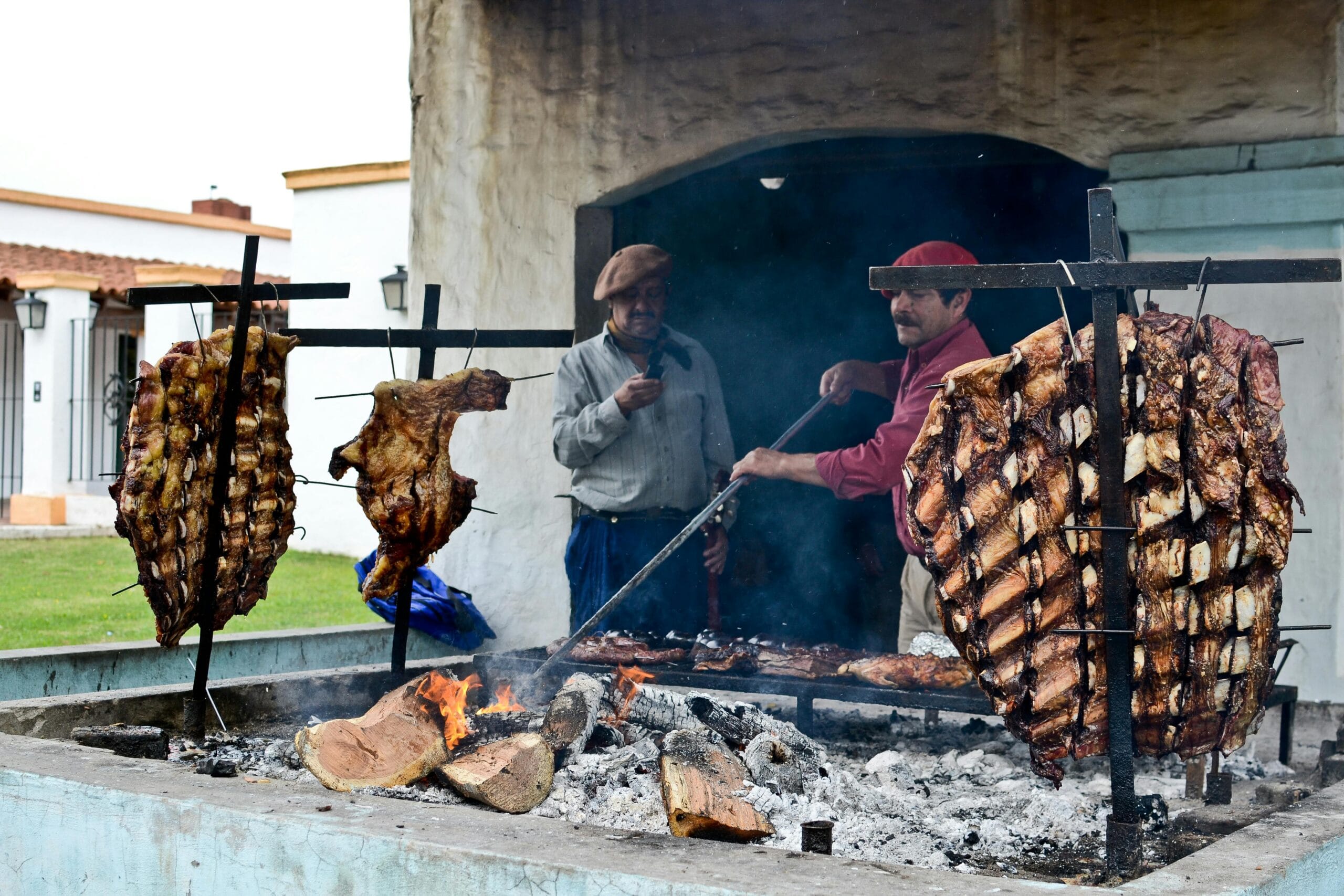
Yes, eat the bife de chorizo, and eat it at a proper parrilla where the fire does the talking. But the real soul of the city lives just past the famous cut. Order the milanesa, a breaded escalope the size of a vinyl record, the empanada eaten standing at the counter, the fugazzeta heavy with onion and cheese, and the provoleta that arrives blistered straight from the grill. A traditional asado, where the meat cooks slowly over open coals, is less a meal than an afternoon, and it is the closest thing the country has to a national ritual.
Leave room for the sweet and the slow. Heladerías serve some of the best ice cream in the world well past midnight, and one order of dulce de leche granizado will quietly recalibrate your standards. Coffee culture deserves its own unhurried afternoon, since the historic cafés are living rooms that happen to serve cortados. Eating well here is rarely about finding the rare table. It is about ordering one dish past the obvious and slowing down to enjoy it.
The short version: go one step beyond the steak, and never skip the ice cream.
08 · RHYTHM: Schedule less than you think
The classic first-timer mistake is treating Buenos Aires as a checklist of sights to be cleared. The city does have its monuments, but its real gift is atmosphere, and atmosphere refuses to be rushed. The long lunch that drifts into the afternoon. The bench under the jacarandás when they bloom violet in spring. The bookshop still open and full at eleven at night. The milonga where nobody is in any hurry and the last song is always negotiable.
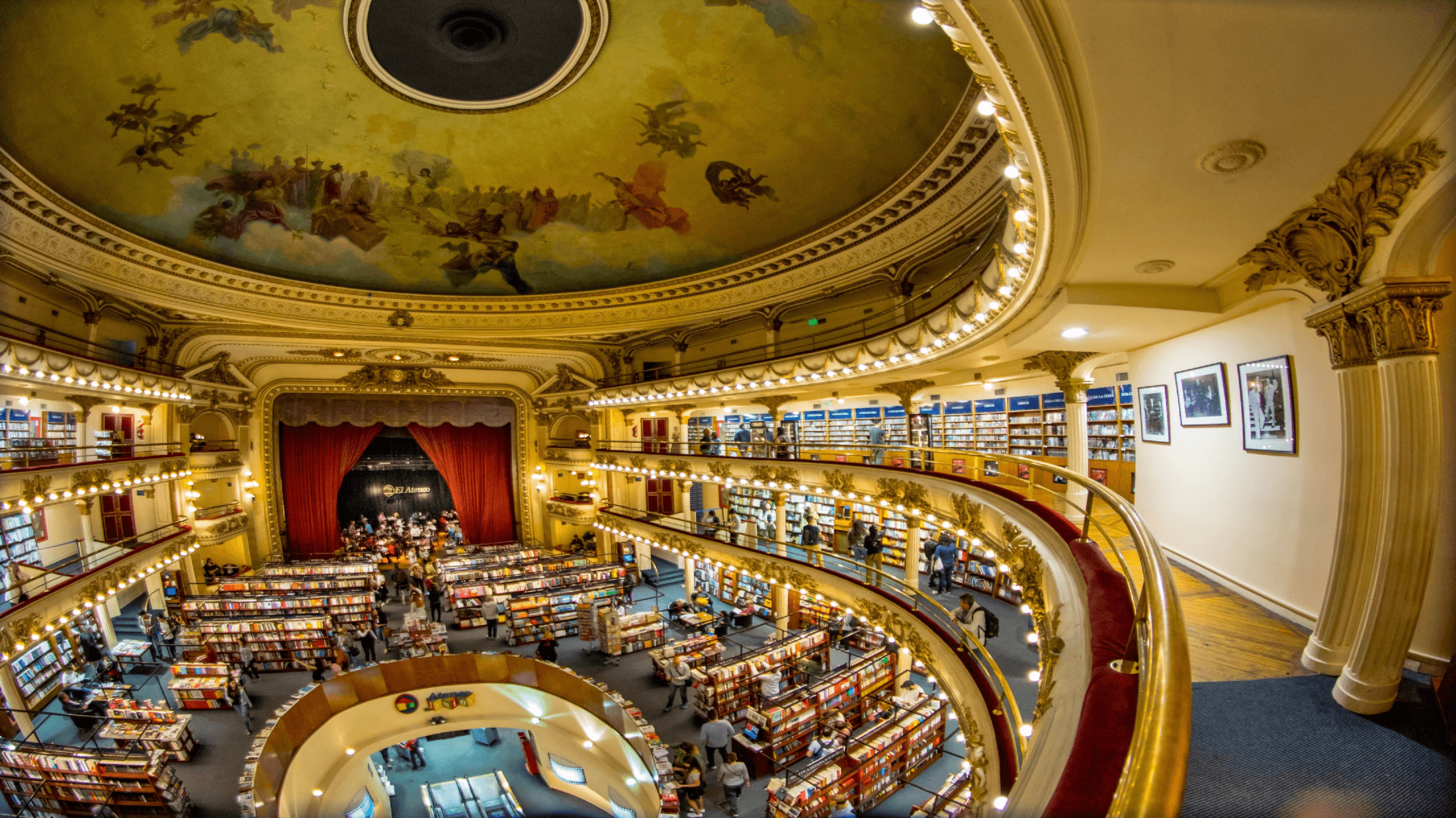
Plan one firm anchor per day, a private city tour, a museum, a football match, a dinner reservation, and then leave the hours around it loose. The best afternoons here are the ones you did not plan, the café you fell into, the street musician you stopped for, the wrong turn that became the highlight. Give the city room and it will fill the space better than any itinerary could. It has been doing this to visitors for a very long time, and it knows exactly what to do with your time.
The short version: book one thing a day and leave the rest to Buenos Aires.
Frequently Asked Questions
Is Buenos Aires safe for first-time visitors?
Yes, with the same street sense you would use in any large city. Keep your phone off the café table, wear your bag crossed over your body, and use a ride app or a booked car late at night. Petty theft is the main risk, and serious trouble is rare on the usual visitor routes.
Do I need cash in Buenos Aires, or can I pay by card?
You can pay by card for almost everything now, since foreign cards are charged at a fair, close to market rate. Carry a little cash for small things like fairs, kioscos, buses and tips, and withdraw modest amounts at a time, because local ATM fees are high.
What time do people eat dinner in Buenos Aires?
Late by most standards. Restaurants begin to fill around nine thirty in the evening and stay busy well past midnight. Bridge the long afternoon with a merienda, a coffee and medialunas around six, then arrive for dinner on local time.
What is the best way to get from Ezeiza airport into the city?
A private transfer is the simplest option, a fixed price from door to door with a driver waiting for you by name. Public buses and ride apps cost less but are slower and less predictable after a long flight, especially with luggage in tow.
Arrive Like You Have Been Here Before
Every tip above gets easier when the first hour goes right. Land at Ezeiza, find your name on a sign, and let the city start the moment you step out of arrivals rather than an hour later in a taxi queue. Buenos Aires Transfers handles airport pickups, private city tours and day trips with English speaking drivers and fixed prices, so your first Buenos Aires conversation happens before you have even dropped your bags.
Tell us your flight and where you are staying, and we will be there. The city has been waiting for you. Welcome.