TRAVEL GUIDES · RECOLETA · 2026
In Recoleta, the avenues are wide enough to dream in, the marble is always cold, and the dead are the most famous neighbours in the city.
There is a moment, somewhere between the jacaranda shade on Avenida Alvear and the first glimpse of a sculpted marble mausoleum, when Buenos Aires stops feeling like a city and starts feeling like a memory. Recoleta does this to visitors. It borrows its grammar from Paris and Hausmann, its light from the Río de la Plata, and its drama from a century of Argentine ambition, grief, and reinvention. This is the barrio where presidents were mourned, fortunes were built, and tango pianists once played for the families of the oligarchy.
Most travellers arrive in Recoleta without a plan and leave with photographs but no context. The neighbourhood rewards those who slow down, who know which courtyard to enter and which corner to linger on. If you are arriving in Buenos Aires from Ezeiza or Aeroparque, the team at Buenos Aires Transfers can deliver you directly to your hotel in Recoleta, so that your first hours in the city begin with a walk rather than a commute.
What follows is not a list of attractions. It is a sequence of places, offered in the order that makes the most sense on foot, each one capable of holding your attention long enough to make the afternoon feel earned.
01. Cementerio de la Recoleta
The city within the city
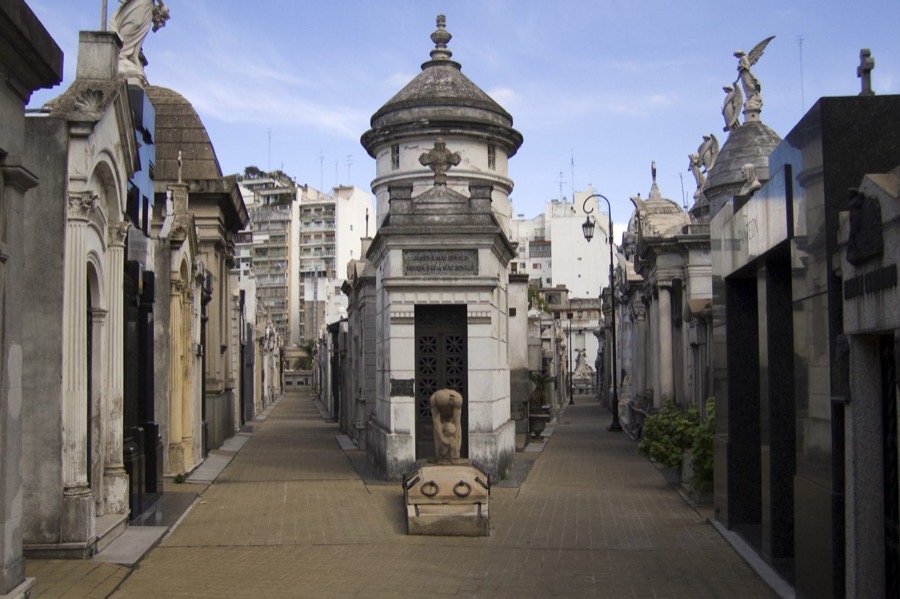
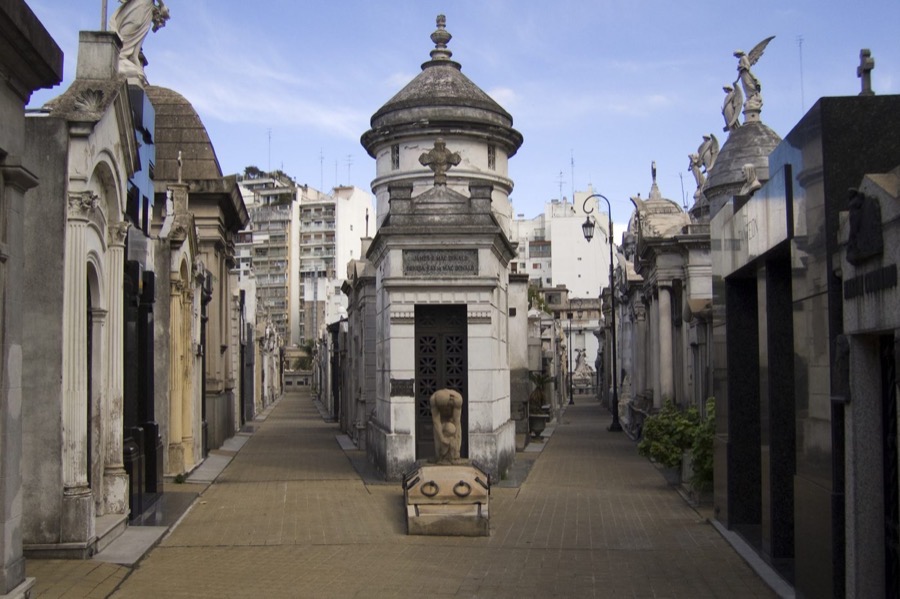
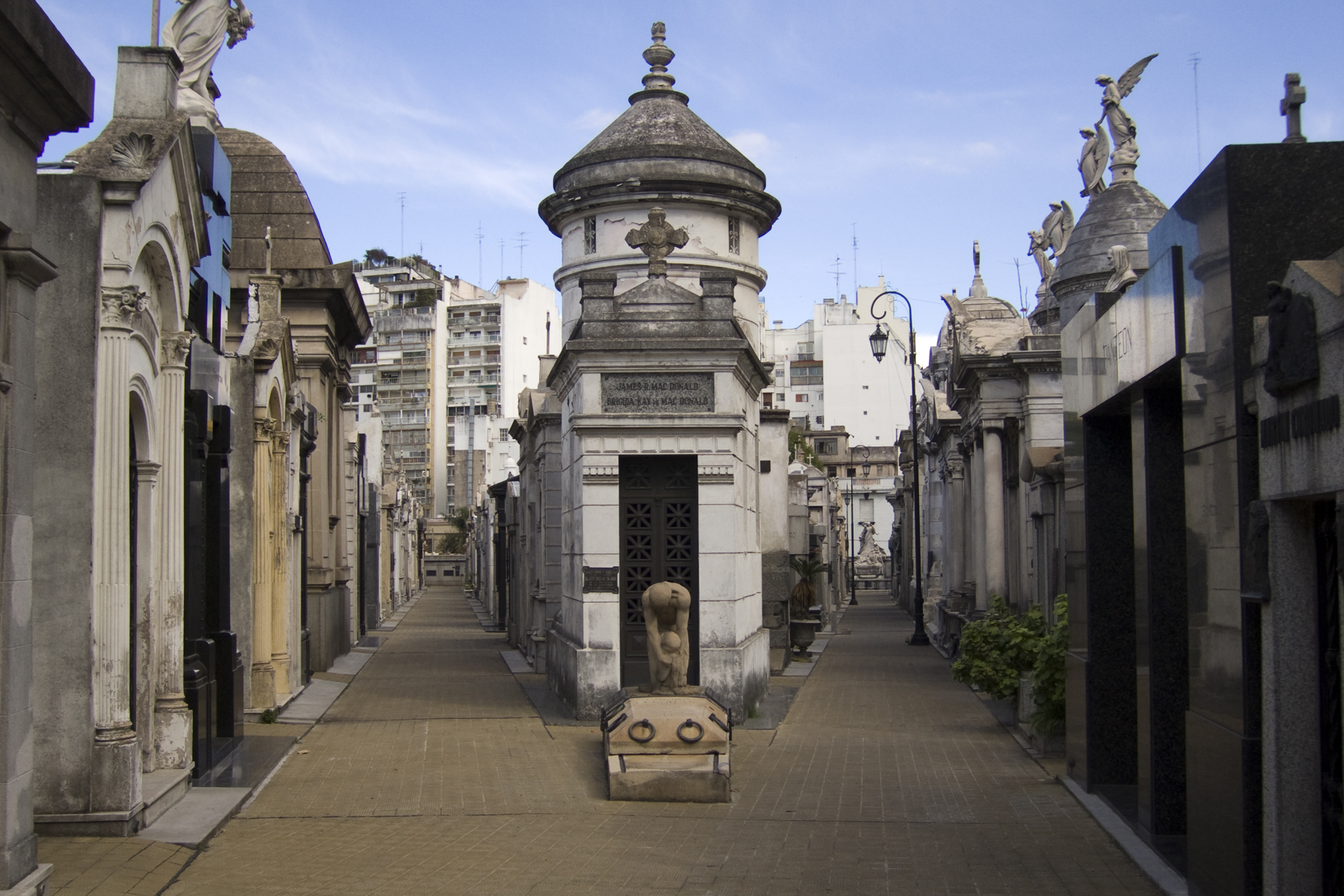
No Recoleta Buenos Aires guide can begin anywhere else. The cemetery is not morbid. It is, in the most literal sense, a miniature city: thousands of tombs arranged along avenues with street corners, presided over by cats who regard tourists with appropriate disdain. The architecture spans Greek Revival, Art Nouveau, and Italianate eclecticism, and the effect is less graveyard than open-air museum where the exhibits happen to contain people.
Evita is here, of course, in the Duarte family vault, marked by a small plaque that accumulates flowers daily. But walk deeper and you will find the tomb of Facundo Quiroga, the caudillo who frightened a generation of Argentine writers into exile; the mausoleum of Luis Ángel Firpo, the wild bull of the Pampas who knocked Jack Dempsey out of the ring in 1923; and dozens of families whose names still appear on the city's bank facades and hospital wings.
Allow ninety minutes. Hire a guide at the entrance if you read no Spanish; the stories inside the marble are worth more than the marble itself.
→ JUNÍN 1760, RECOLETA
02. Basílica Nuestra Señora del Pilar
White walls, three centuries of witness
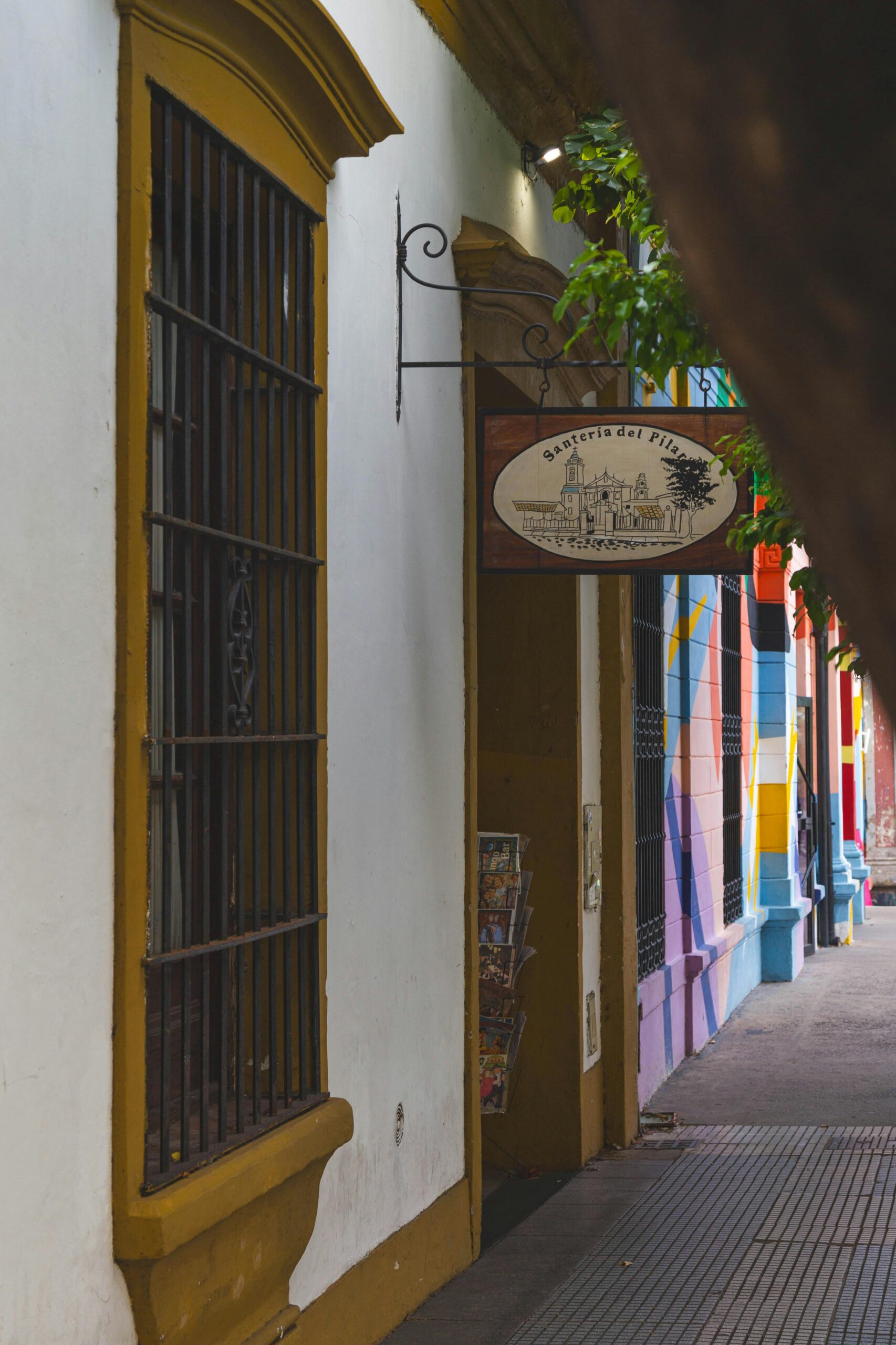
The church predates the cemetery by a hundred years, its white colonial facade a deliberate contrast to the baroque excess of the tombs directly behind it. Built by Franciscan monks in 1732, the Basílica del Pilar is one of the oldest surviving buildings in Buenos Aires, and its interior, cool and dim even in January, contains a silver altarpiece that arrived from Peru in the colonial period.
Stand outside at midday when the light falls directly on the white render. The effect, framed by palms and the iron fence of the cemetery, is one of the most photographed angles in the city. Wait until the tourist groups move on, then go inside. The silence costs nothing.
→ JUNÍN 1898, RECOLETA
03. Centro Cultural Recoleta
From convent to cultural engine
Attached to the basílica and occupying what was once the Franciscan convent, the Centro Cultural Recoleta is Buenos Aires' most important contemporary arts centre and one of its best-kept mid-afternoon secrets. Entry to most exhibitions is free. The programming runs from video art installations to design retrospectives, and the courtyard, a colonial cloister with uneven flagstones and a ficus that has been growing for longer than most countries have existed, is one of the finest places in the city to sit and read for an hour.
Check the current programme on arrival. The centre also hosts a weekend artisan market in the adjacent plaza that attracts designers and craftspeople from across the country.
→ JUNÍN 1930, RECOLETA
04. Café La Biela
The terrace where Buenos Aires has always argued
La Biela opened in 1850, and for a period in the mid-twentieth century it was the preferred table of Juan Manuel Fangio and his racing contemporaries. The name, biela, is a connecting rod, a piece of engine architecture, and the racing memorabilia on the walls makes the reference clear. But La Biela is less a museum of motorsport than a theatre of porteño social life: politicians, architects, journalists, and retired professors have been arguing across these marble tables for five generations.
Order a cortado and a medialunas. Take a table under the giant rubber tree on the terrace. Watch Avenida Quintana. This is one of the scenes Borges would have recognised without effort.
→ AV. QUINTANA 596, RECOLETA
Exploring Recoleta on a private tour? Our professional drivers and local guides can design a half-day circuit through Recoleta and the adjacent barrios of Palermo and San Telmo, moving at your pace, with commentary that goes beyond the guidebook. Discover our Buenos Aires city tours →
05. Museo Nacional de Bellas Artes
Free admission, world-class collection
The MNBA, as locals call it, houses the largest art collection in Latin America, with more than eleven thousand works spread across two floors of a neoclassical building that was originally a water-pumping station. The permanent collection traces European art from the medieval period through to the Impressionists, with Rodin bronzes, El Greco portraits, and a Gauguin that surprises visitors who were not expecting him this far south.
The Argentine rooms on the ground floor are the reason to linger. Prilidiano Pueyrredón's portraits of mid-nineteenth-century Buenos Aires, Eduardo Sívori's unflinching social realism, and the modernist experiments of Xul Solar together form an alternative history of Argentina that no textbook captures quite so well. Admission is free. The museum is closed on Mondays.
→ AV. DEL LIBERTADOR 1473, RECOLETA
06. Floralis Genérica
Steel petals that open with the sun
Eduardo Catalano's monumental steel flower, installed in Plaza de las Naciones Unidas in 2002, is one of those pieces of public sculpture that earns its place in a city's visual memory. The petals, each one several metres tall and constructed from stainless steel and aluminium, open at dawn and close at dusk, a mechanism powered by hydraulics and a solar sensor. The effect at sunrise, when the petals first catch the light, is genuinely moving, the kind of thing that appears in Argentine architecture books with the caption "optimism."
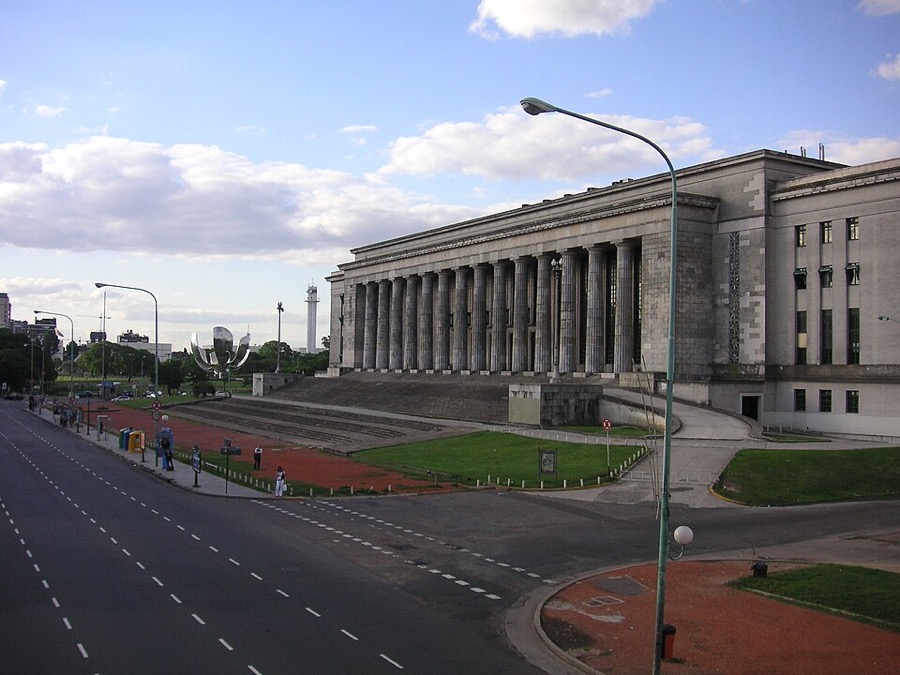
Come in the late afternoon and watch the shadow lengthen across the reflecting pool. The nearby Facultad de Derecho building, a vast modernist structure that would look at home in Rome, frames the view from the south.
→ PLAZA DE LAS NACIONES UNIDAS, RECOLETA
07. Avenida Alvear
The most elegant kilometre in Argentina
Alvear is not a monument or a museum. It is a standard by which other streets are quietly judged. The avenue runs for just over a kilometre between Avenida 9 de Julio and the Recoleta Cemetery, and along its length you will find the Alvear Palace Hotel (inaugurated 1932, still the address by which Buenos Aires measures luxury), the French Embassy in a mansion that arrived from Paris in prefabricated sections, and a sequence of boutiques, galleries, and apartment buildings whose cornices carry the initials of families who shaped the republic.
Walk it slowly, ideally on a weekday morning when the avenue belongs to dog-walkers and delivery drivers rather than tour groups. The architecture of Recoleta along Alvear is the closest Buenos Aires comes to making its Parisian ambitions visible without apology.
→ AV. ALVEAR, RECOLETA
Frequently Asked Questions
Is the Recoleta Cemetery free to visit?
Yes. Entry to the Cementerio de la Recoleta is free, and it opens every morning. You can walk the avenues of mausoleums at your own pace; hiring a guide at the entrance is optional and worthwhile for the stories behind the tombs.
How much time do you need for Recoleta?
A focused visit to the cemetery takes about ninety minutes. To add the Basílica del Pilar, the Centro Cultural, a coffee at La Biela and the Bellas Artes museum, plan a relaxed half day.
Is Recoleta a safe neighborhood?
Recoleta is one of the most comfortable barrios in Buenos Aires for visitors, well-lit and busy by day and evening. The usual city awareness applies, but it is a calm, residential part of town.
The Right Way Into Recoleta
There is a version of this neighbourhood that you see from a taxi window and a version you understand on foot, with time, with context, and ideally with someone who can tell you which door to enter and which story belongs to which facade. A morning in Recoleta followed by an afternoon in Palermo's botanical garden and design market covers the full register of Buenos Aires elegance, from the nineteenth century to the present.
Buenos Aires Transfers designs private half-day and full-day tours of the city that move through these neighbourhoods at the pace of genuine curiosity rather than the rhythm of a group itinerary. Our professional drivers know where to park, our guides know which table at La Biela was Fangio's favourite, and the car is always waiting when the afternoon runs long.
Recoleta does not rush. Neither should you.