TRAVEL GUIDES · BUDGET TRAVEL · 2026
Buenos Aires rewards the unhurried traveler with a generosity that has nothing to do with money.
There is a particular hour in Buenos Aires, somewhere between the last cortado of the afternoon and the first glass of Malbec in the evening, when the city seems to open itself entirely. The boulevards soften in the amber light. Conversations spill from café doorways onto the sidewalk. A bandoneón drifts through the air from a courtyard you cannot quite locate. This is the Buenos Aires that costs nothing, and it is the Buenos Aires that stays with you longest.
Traveling here on a careful budget is not a compromise. It is, in many ways, the more authentic path. The porteños, the city's natural inhabitants, are virtuosos of living beautifully on modest means: long Sunday walks through barrios that read like open-air architecture museums, lunches that stretch into the midafternoon, evenings that begin at midnight and ask nothing but your presence. The city is designed for presence.
The practical foundation, of course, matters. Once you have landed at Ezeiza or Jorge Newbery, a comfortable, fixed-price private transfer with Buenos Aires Transfers removes the first friction of arrival, which means you can begin enjoying the city from the very first kilometer, without negotiating, without luggage in a crowded bus, without the anxiety of an unfamiliar meter ticking. From that moment on, your money is yours to spend slowly and wisely. Here is how.
01 · RECOLETA CEMETERY
The most extraordinary open-air museum in the city
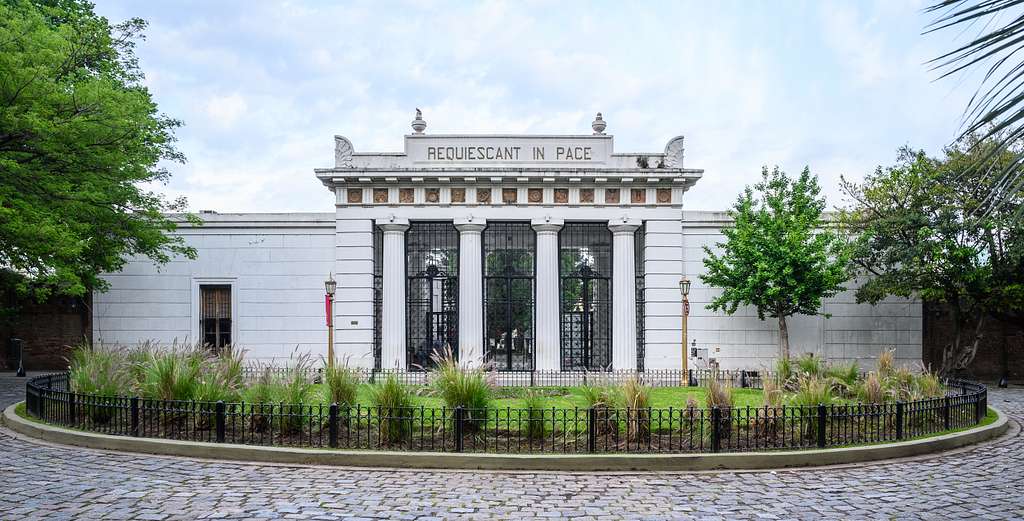
A modest admission for foreign visitors, free for Argentine residents, and free guided tours in Spanish that leave every hour. No audio guide required. Just iron gates that open each morning onto a city of the dead so elaborate it makes the living city feel modest by comparison. The Cementerio de la Recoleta is a labyrinth of marble mausoleums, bronze angels, stained-glass domes, and crumbling French neoclassical facades that the most celebrated architects of the early twentieth century competed to design. Walk slowly. Let yourself get genuinely lost. Every corridor reveals a different century.
Look for the grave of Eva Perón: it is always marked by fresh flowers, though the tomb itself is discreet to the point of understatement. Look also for the Art Nouveau pavilions, the families of cats that patrol the central alleys, and the free guided tours that leave hourly from the main entrance for anyone who prefers a little context to reading the inscriptions alone.
→ JUNÍN 1760, RECOLETA · Modest admission for foreign visitors, free for residents · Open daily 9:00–17:00
02 · SAN TELMO MARKET
A Sunday in the oldest barrio in Buenos Aires
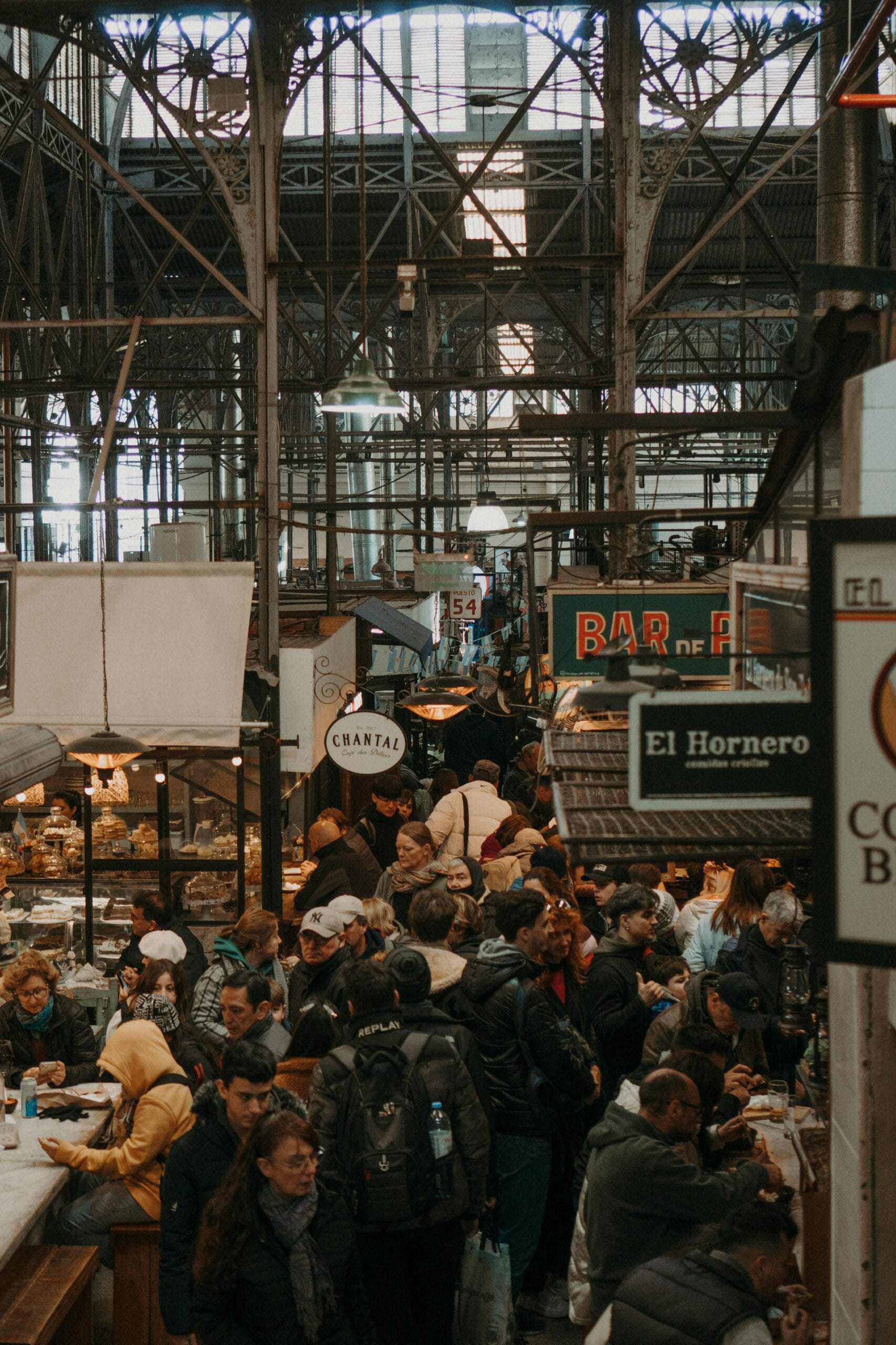
The Mercado de San Telmo operates every day of the week inside a remarkable iron-and-glass market hall from 1897, but on Sundays the entire surrounding neighborhood transforms into something more theatrical. The Feria de San Telmo stretches the length of Defensa Street from Avenida San Juan all the way to the Plaza Dorrego: antique dealers, tango dancers who perform for no fee and accept no obligation, street musicians, leather craftspeople, and food vendors whose empanadas cost less than a cup of coffee in any European airport.
Eat here. Wander here. Spend nothing if you prefer, or spend a little on something singular that you will use for years. The atmosphere is the point.
→ DEFENSA Y CARLOS CALVO, SAN TELMO · Market open daily; Feria on Sundays
03 · PALERMO'S FREE PARKS AND GARDENS
An afternoon that costs only your time
The Bosques de Palermo constitute one of the great urban parks of South America, a sequence of lakes, rose gardens, a Japanese garden, and long tree-lined avenues that on any Sunday afternoon fill with families, cyclists, joggers, and couples moving at the considered pace of people who have nowhere else to be. The Jardín Japonés charges a modest entrance fee and is worth it for the koi ponds and the tea house alone. The rest of the park is entirely free.
Pack a picnic from any neighborhood almacén: cheese, bread, a small bottle of local wine. Lie in the grass. Watch the city be, for a few hours, entirely gentle.
→ AV. INFANTA ISABEL 400, PALERMO · Open daily, dawn to dusk
04 · MUSEO NACIONAL DE BELLAS ARTES
World-class art, no admission charge
Argentina's national fine arts museum holds one of the most significant collections in Latin America: Rodin sculptures, Goya etchings, Van Gogh paintings, and an entire wing dedicated to Argentine art from the colonial period to the contemporary. The permanent collection costs nothing to visit. Nothing at all. The building itself, a converted waterworks facility overlooking the Recoleta parkland, is a pleasure before you even cross the threshold.
Go on a weekday morning when the galleries are quiet enough to hear your own footsteps.
→ AV. DEL LIBERTADOR 1473, RECOLETA · Free entry · Closed Mondays
Exploring Buenos Aires on a budget is easier when you start your trip right. A private transfer from Ezeiza or AEP to your hotel eliminates hidden costs from the very first moment. View our airport transfer rates and arrive as you mean to go on.
05 · LA BOCA AND THE CAMINITO
Color, drama, and the origins of tango
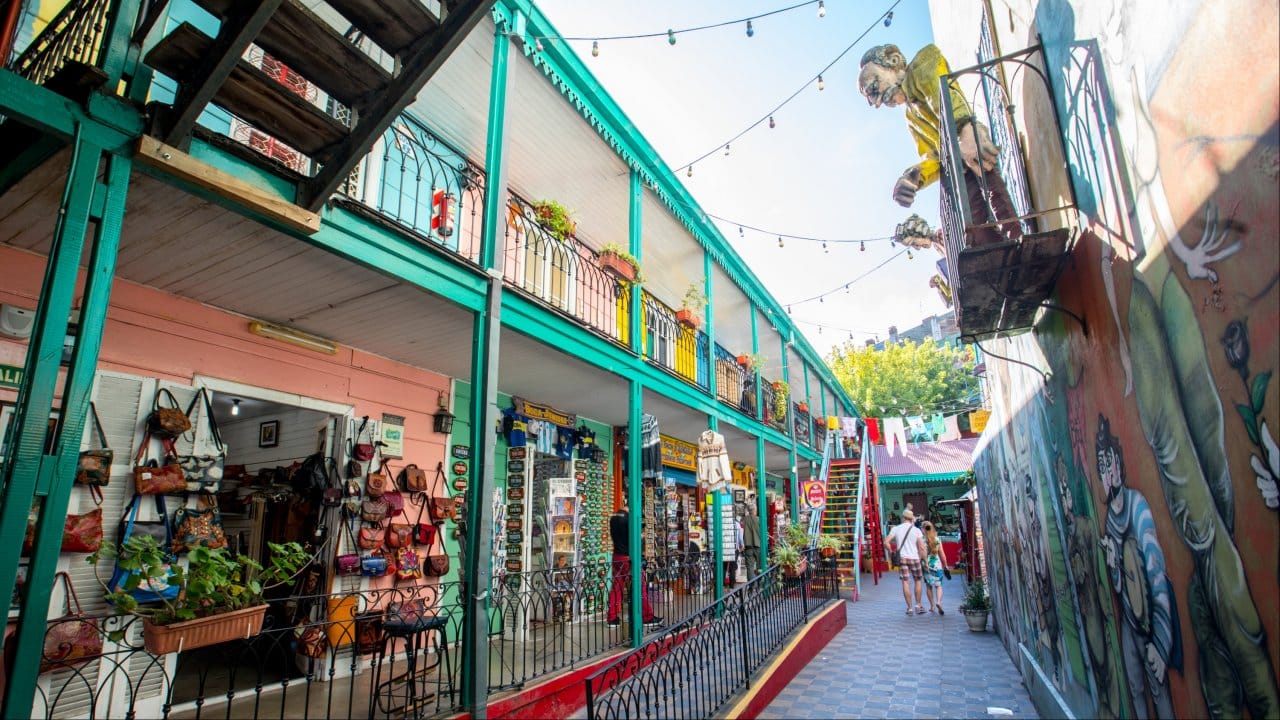
No neighborhood in Buenos Aires is more immediately photogenic than La Boca, and none requires more of a traveler's good judgment. The famous Caminito, a pedestrian street of corrugated-iron houses painted in bold primary colors, exists today as a managed tourist zone that is lively, theatrical, and genuinely beautiful in the early morning before the crowds arrive. The surrounding streets, which most visitors never see, reveal the working-class dockside neighborhood that was here before the art galleries: quieter, more worn, and more honest.
Tango was born somewhere in these streets, in the late nineteenth century, from the meeting of Italian immigrants, African rhythms, and the particular loneliness of people very far from wherever they had started. That origin gives the music its quality of melancholy that no amount of tourist performance can entirely dissolve.
Come for the color. Stay for the context.
→ EL CAMINITO, LA BOCA · Free to walk · Best visited 9:00–11:00
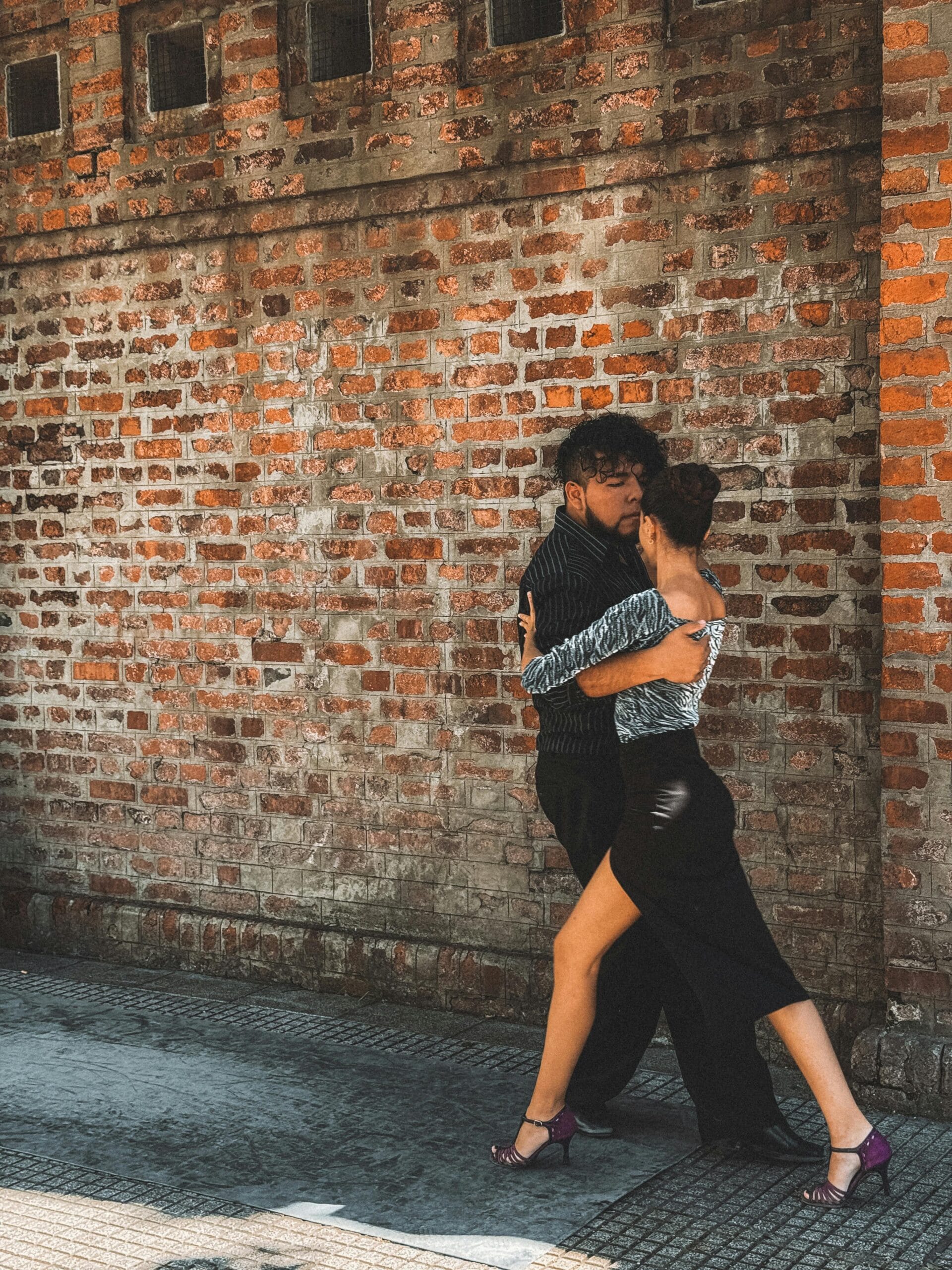
06 · TANGO IN THE STREET AND THE MILONGAS
The most affordable cultural experience in the city
The social milonga, where porteños of every age and background dance until three in the morning, is one of the world's great democratic institutions. Entry fees are modest, typically between five and ten US dollars, and the experience is entirely genuine: no performance, no choreography, only the conversation between two people and the music. Several venues in San Telmo, Almagro, and Villa Crespo run milongas on different nights throughout the week. Ask your hotel, or search the local milonga listings online.
If you prefer to watch before you participate, the street performances in San Telmo on Sunday afternoons and in the Caminito on weekday mornings cost absolutely nothing.
07 · BUDGET EATING IN BUENOS AIRES
Where the city's real food culture lives
The parrilla is Argentina's cathedral, but it need not be expensive. Neighborhood parrillas away from the tourist circuits of Palermo and Puerto Madero serve enormous plates of grilled meat, salad, bread, and house wine at prices that would constitute theft in most other cities. Look for the tenedor libre, the Argentine all-you-can-eat buffet format, which at lunchtime in working neighborhoods offers a remarkable amount of food for a fixed and modest price.
For something quicker, the medialunas from any corner confitería, eaten standing at the bar with a café con leche, constitute one of the great small pleasures of Buenos Aires mornings. The ritual is worth repeating daily.
08 · VILLA CRESPO AND CHACARITA
The new Buenos Aires, at yesterday's prices
While Palermo has become expensive and San Telmo has gentrified at its edges, the neighboring barrios of Villa Crespo and Chacarita continue to run on the older Buenos Aires economy: independent bookshops, small recording studios, bakeries that have not changed their signage since the 1970s, wine bars where a good glass costs two dollars. The Chacarita cemetery, less visited than Recoleta and far larger, contains the tomb of Carlos Gardel and a quietness that feels earned.
Walk without a map. Ask for recommendations in whichever language you can manage. The city will meet you there.
→ AV. CORRIENTES Y THAMES, VILLA CRESPO · No entry fee · Best explored on foot
Frequently Asked Questions
Is Buenos Aires expensive for tourists?
Buenos Aires can be very affordable, especially for travelers paying in foreign currency. Many of the best experiences, the parks, markets and street tango, are free or nearly free, and neighborhood parrillas serve generous meals for modest prices.
What can you do for free in Buenos Aires?
Plenty: the Museo Nacional de Bellas Artes, the parks of Palermo, the Sunday feria in San Telmo, Caminito in La Boca by day, the Chacarita cemetery, and street tango performances all cost nothing.
What is the cheapest way to get around Buenos Aires?
The subte and colectivos, paid with a SUBE card, are the cheapest options. For groups, a private transfer split between travelers can cost about the same per person as separate rides, with a fixed fare.
Your Buenos Aires Begins at the Airport
The city you have just read about is patient, layered, and extraordinarily generous to travelers who arrive with curiosity rather than checklists. But the journey into that city begins the moment you land, and the first hour sets the tone for everything that follows.
Buenos Aires Transfers provides fixed-price private transfers from Ezeiza International Airport (EZE) and Jorge Newbery Aeropark (AEP) to any address in the city, with professional drivers who know the barrios, the traffic, and the best way to ease you into a place that is about to become, for a while, yours. No meters, no surprises, no starting your trip with the wrong kind of negotiation.
The rest of your Buenos Aires is free. Let us handle the first part.