BUENOS AIRES IN 2 DAYS · ITINERARY · 2026
One day in Buenos Aires forces a choice between the south and the north. Two days is the first amount of time that does the city justice, because the second day is not a bonus round, it is where the city stops being a checklist.
Most people arrive in Buenos Aires with a list and leave with the feeling that they saw the list. That is what a single day does to this city: it turns it into a sequence of photo stops with traffic in between.
Two days gives the south and the north each their own morning, and that is a different trip entirely. The second day is not for adding four more sights to the first: it is for letting one afternoon go slightly unplanned, which is when this city tends to actually happen to you.
Here is how we build Buenos Aires in 2 days, and where the usual two day plans go wrong.
The two days at a glance
Day one, the historic arc: San Telmo, Plaza de Mayo, the Teatro Colón, Recoleta, and the last of the light in the Palermo parks. This is the spine of the city, and it is the day that has to obey the clock.
Day two, water and colour: La Boca and Caminito in the morning, Puerto Madero and the waterfront at midday, and an open afternoon in Palermo or the museums, ending with tango or a long dinner.
The logic is geographic, not thematic. Day one runs up the middle of the city from south to north. Day two takes the eastern edge, where the port and the river are. Splitting it any other way means crossing the city twice a day, and in Buenos Aires that is where hours go to die.
First, check what day it is
Before anything else, look at the calendar. Two days in Buenos Aires can be excellent or frustrating depending on which two.
The Teatro Colón runs guided tours every day except 1 May, 24, 25 and 31 December and 1 January. English tours go at 11:00, 12:00, 13:00 and 15:00, and they last fifty minutes. If a Colón tour matters to you, build the day around one of those four times rather than hoping to fit it in.
There are only four English departures a day, against Spanish ones every fifteen minutes, so if the tour matters to you, book ahead rather than trusting the walk up window. If English is gone for your date, the Spanish tours run constantly and the building does most of the talking anyway.
If one of your days is a Sunday, put San Telmo there. The fair runs every Sunday of the year from 10:00 to 17:00, around Plaza Dorrego and down Defensa, which becomes pedestrian for the day, with something like 270 stalls. It is one of the genuine set pieces of the city and it also swallows a morning whole, so give it the morning and shift the rest of day one later.
And check the museum you care about individually, because the folk wisdom here is wrong. Most Buenos Aires museums do close one weekday, but it is not the same one: the Museo Nacional de Bellas Artes and the Museo Evita close on Mondays, while MALBA and the Museo Moderno close on Tuesdays, and the Moderno is open on Mondays. Turning up at MALBA on a Tuesday because you read that museums here close on Mondays is a genuinely common way to lose an afternoon.
Day one, morning: start in the south
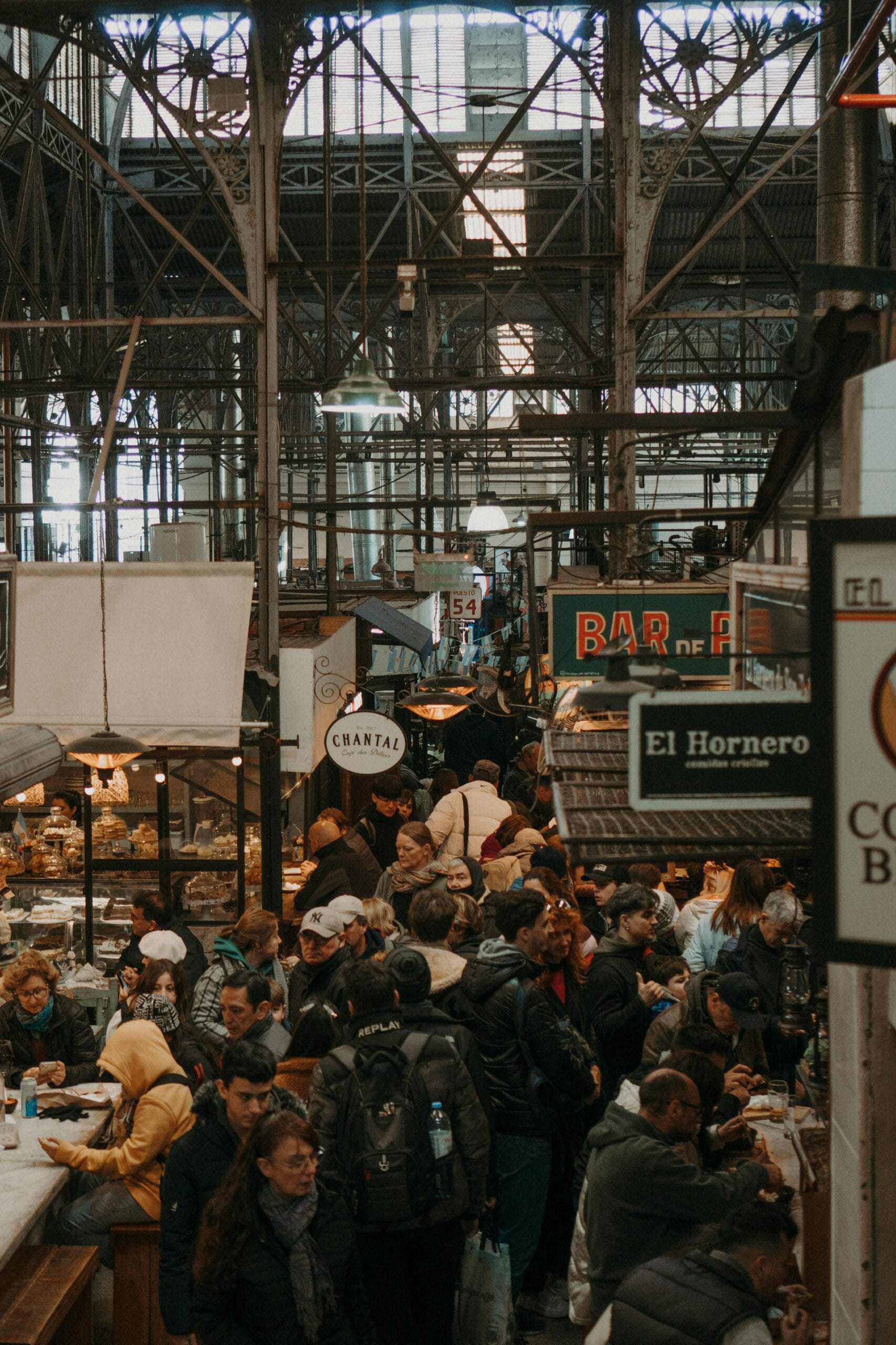
Begin in San Telmo, on foot. Give the first ninety minutes to the streets and the Mercado de San Telmo, inaugurated in 1897 and built by the architect Juan Antonio Buschiazzo: a hall of iron pillars and glass where locals still buy vegetables beside vintage record stalls. The neighbourhood reads best slowly, which is exactly what a two day trip can afford and a one day trip cannot.
Sixteen minutes north on foot is Plaza de Mayo, with the Casa Rosada at one end, the Cabildo at the other and the Metropolitan Cathedral on the corner. Twenty minutes covers the square itself.
From there the Teatro Colón is the anchor of the early afternoon. Take the 13:00 English tour if your morning ran long, or the 12:00 if it did not.
Day one, afternoon: Recoleta and the last of the light
After lunch, head north to Recoleta. The cemetery is open from 09:00 to 17:00 every day, and that closing time is the single hardest constraint of the day, so treat it as a wall rather than a suggestion. It also charges admission now for foreign visitors, which surprises people who read older guides describing it as free: about ARS 25,000 as of August 2026, with residents entering free, and the price updates often enough that it is worth checking before you go.
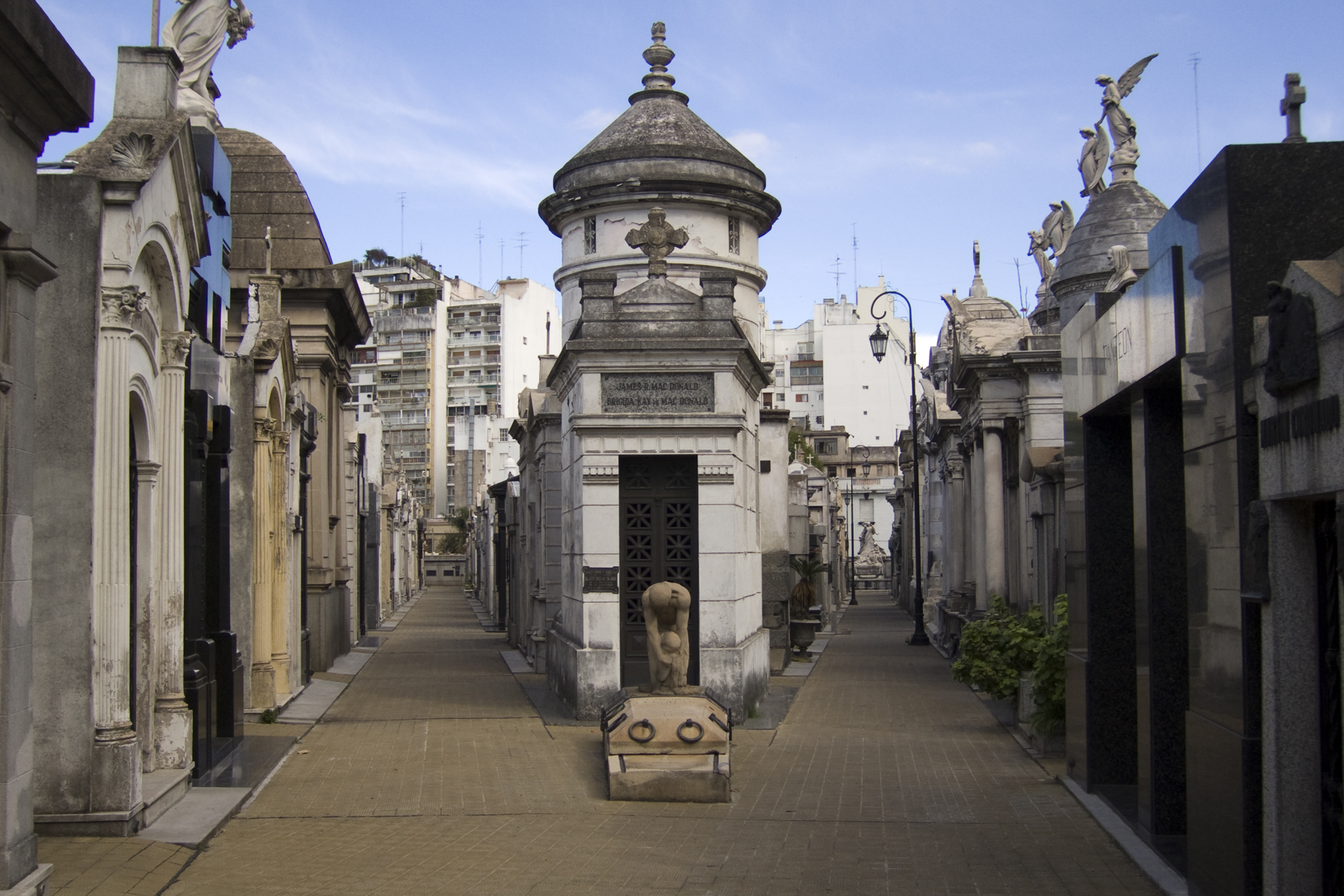
Photo: Andrew Currie, CC BY 2.0, via Wikimedia Commons

Fifteen minutes away on foot, about a kilometre down towards Avenida Santa Fe, is El Ateneo Grand Splendid, which opened as a theatre in May 1919 and has been a bookshop since December 2000. It is a five minute look or a forty minute browse depending on the person.
End the day in the Bosques de Palermo, the open parkland with lakes and long avenues of trees, with the Rosedal rose garden inside them. From El Ateneo it is over three kilometres, roughly forty minutes on foot, which is the point in the day where most people are glad to be in a car.
Day two, morning: La Boca and Caminito
Day two starts in the deep south, in La Boca, and it starts early for two reasons: the light is better on the painted facades of Caminito, and the crowds arrive with the tour buses later in the morning.
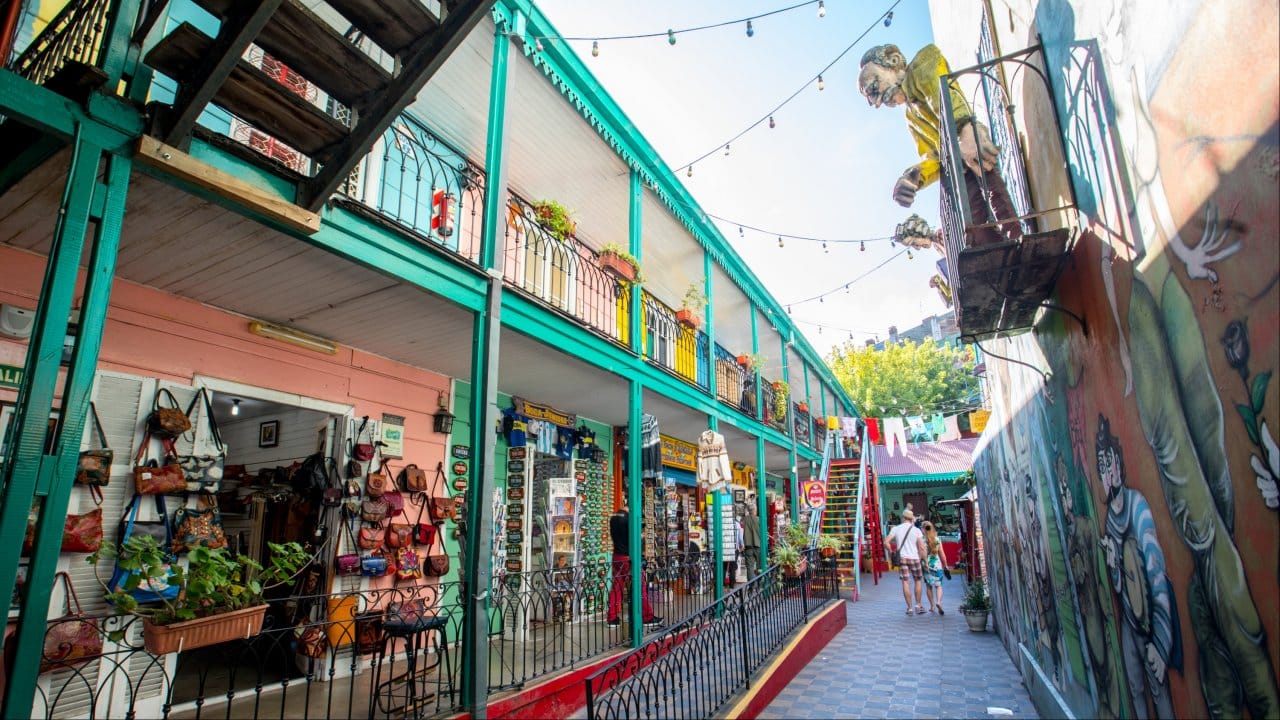
La Boca is the neighbourhood the immigrants built out of the port, in corrugated metal and timber salvaged from the docks, and the old story is that they painted it with whatever ship paint was left over. That is the origin of the habit. The colours you actually photograph at Caminito, though, are not a survival of it: they were chosen by the painter Benito Quinquela Martín, who set the palette of these facades when the Teatro Caminito opened in 1957 and inaugurated the open air street museum on 18 October 1959. When the city restored Caminito in 2022 it worked from photographs of 1958 and 1959 to recover his exact colours.
It is unapologetically a tourist street now, and it is still worth the visit, but it is small: an hour is generous.
One practical note that locals will all give you: stay on the marked streets around Caminito and the riverside, and take a car in and out rather than wandering off the strip on foot. This is standard advice for the neighbourhood, not a reason to skip it.
Day two, midday: Puerto Madero and the water
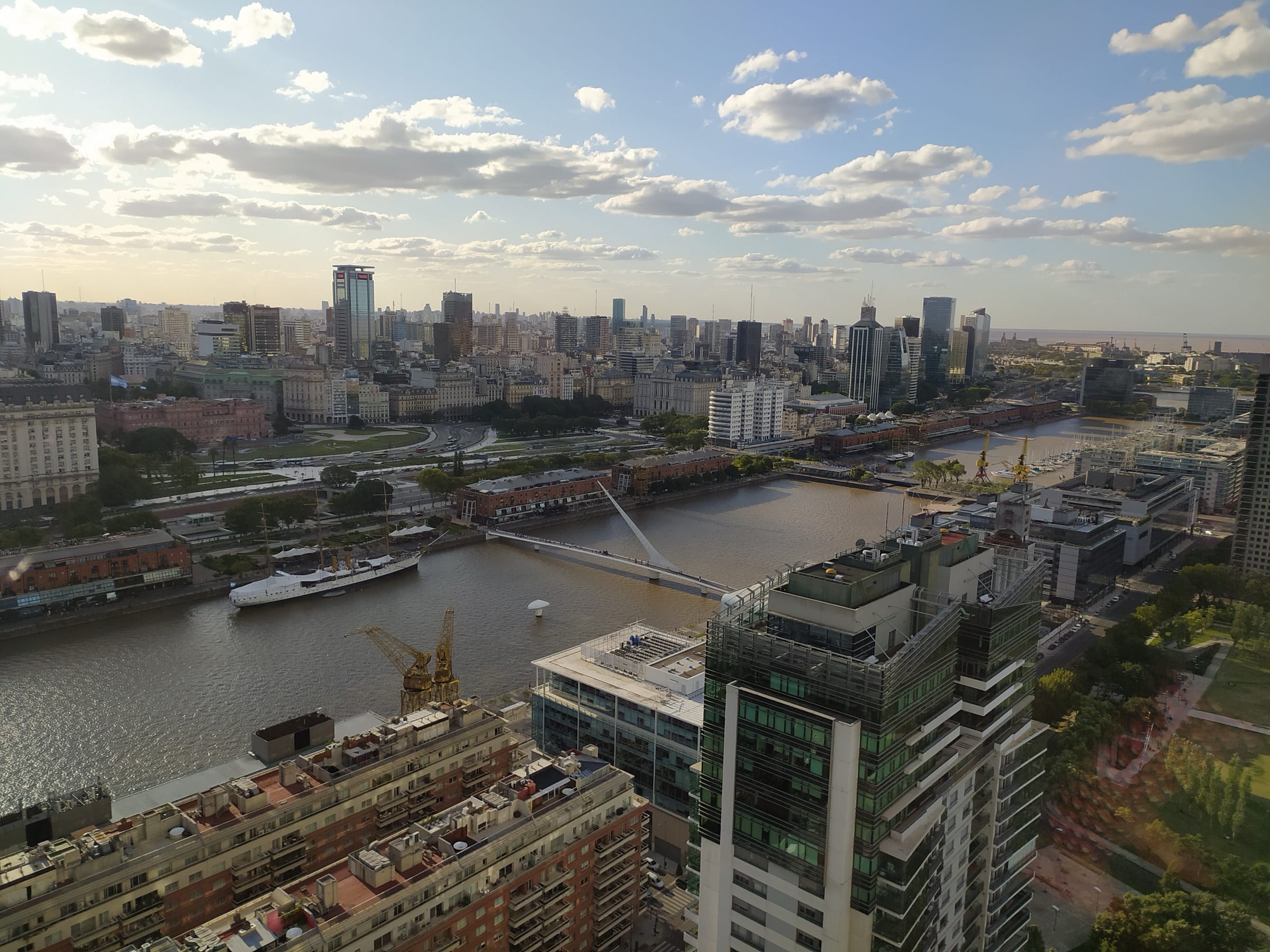
From La Boca, follow the water north into Puerto Madero, which is the exact opposite of the morning: restored brick docks, glass towers, and the white ribs of the Puente de la Mujer, the Santiago Calatrava footbridge inaugurated in December 2001 and his first work in Latin America. The contrast in the space of fifteen minutes of driving is one of the things this city does best.
Puerto Madero is also where a two day itinerary gets its easiest lunch: it is built for it, it is on the water, and it puts you back in the centre for the afternoon.
Day two, afternoon: the part you leave open
Here is the argument of this whole itinerary: on a two day trip, one afternoon should not be planned.
Three good ways to spend it, depending on the person:
- Palermo, properly. Not the parks again, but the streets: Palermo Soho for design and cafes, Palermo Hollywood after dark. This is where you find the Buenos Aires that people move here for.
- One museum, not four. Pick a single one and give it two hours instead of speedrunning a list.
- Nothing at all. A cafe, a book, and an hour of watching the city go by is a legitimate use of an afternoon here, and after two mornings of walking it is often the right one.
Then dinner, on porteño time, which means later than you think: restaurant owners here will tell you the strong service starts at 21:00 and peaks between 21:00 and 22:00. That is shifting a little, and you will now find places offering earlier European style seatings from 19:00 or 20:00, which is useful if you have been awake since a red eye. If you want a tango show, this is the night for it, since day three does not exist and you can afford a late one.
What to cut, on purpose
Two days is not three, and pretending otherwise is how itineraries fail:
- Tigre and the Delta. It is genuinely one of the best things near the city, but it is a full day out, five or seven hours door to door. On a two day trip it eats one of your two days. Save it for a third day.
- A day trip to Colonia, in Uruguay. Same problem, plus a ferry timetable.
- More than one museum per day. The city has excellent ones, and none of them survives being squeezed into forty minutes between two other stops.
The part nobody plans for: the gaps
Two days of this itinerary is roughly 25 kilometres of movement between stops, measured on the actual route. On foot and by public transport, that is a large fraction of both days spent getting places, and it assumes you never wait, never queue and never take a wrong turn.
By car it is about three quarters of an hour of actual driving in light traffic; even budgeting generously for the real thing, call it ninety minutes across the two days. That difference, three to four hours recovered across the trip, is the whole reason a private tour exists for this kind of trip: not luxury, but the recovery of the afternoon you would otherwise lose on the way to it.
Our private city tour runs 4, 6 or 8 hours, with your own driver and bilingual guide, and prices are for the whole vehicle rather than per person, from USD 250 for four hours. On a two day trip the useful shape is usually one guided day for the arc that has to obey the clock, and one free day for the part you want to wander.
Frequently Asked Questions
Is two days enough for Buenos Aires?
It is enough to see the city properly and not enough to see the region. Two days covers the historic centre, the south, the waterfront and the parks without rushing. It does not cover Tigre, the Delta, an estancia day or Colonia.
What is the best order for two days?
South to north on day one, following the historic spine, and the eastern waterfront on day two. Split it geographically rather than by theme, so you are not crossing the city twice a day.
Should I book a tour for one of the two days?
It is the most common shape and the one we would suggest: one guided day for the timed, spread out sights, one free day on foot for the neighbourhood you liked most.
Is La Boca safe to visit?
Caminito and the marked riverside streets are the visited area and are busy through the day. The usual advice is to stay on those streets and arrive and leave by car rather than exploring the surrounding blocks on foot.
Two days, two halves
One day in Buenos Aires makes you choose. Two days lets you stop choosing and start noticing: that the south is a different city from the north, that the water changes everything, and that the best hour of the trip is usually the one you did not schedule.