TRAVEL GUIDES · GETTING AROUND · 2026
Buenos Aires rewards the traveler who moves through it with intention, not the one who leaves it to chance.
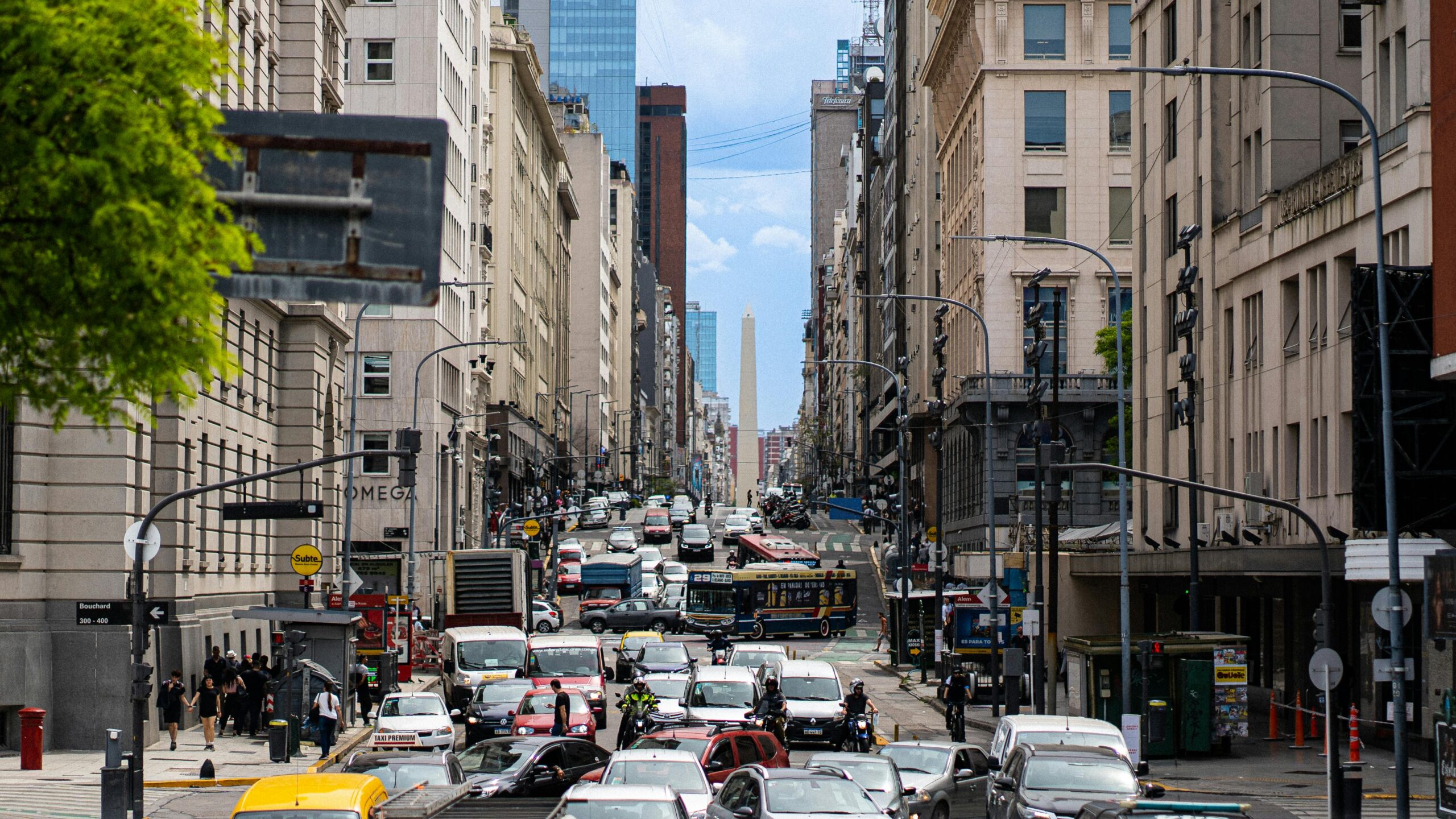
There is a particular kind of freedom that settles over you the moment you understand a city's rhythms. In Buenos Aires, that understanding comes not through a map, but through movement: the warm amber glow of a Subte station tiled in hand-painted ceramics, the diesel exhale of a colectivo turning sharply onto Corrientes, the silent glide of a private car crossing the Río de la Plata at first light. This is a city built at a scale that commands engagement, forty-eight sprawling barrios stitched together by avenues so wide they seem to belong to a different era of civic ambition.
Knowing how to get around Buenos Aires is, in many ways, the difference between a trip and an experience. For arrivals from Ezeiza or Jorge Newbery, Buenos Aires Transfers provides private, door-to-door service that removes the friction entirely, depositing you at your hotel before the city has had a chance to disorient you. But the porteño metropolis has more than one register of movement, and each mode of transport carries its own character, its own texture, its own encounter with the city's layered soul.
What follows is not a logistical checklist. It is a considered guide to six distinct ways of moving through Buenos Aires, ranked neither by price nor prestige, but by what each one reveals about a city that has been called, with some justice and some irony, the Paris of South America.
01, PALERMO / RECOLETA
Private Transfer: The Standard of Arrival
There are arrivals, and then there are arrivals. The difference, more often than not, is what happens in the forty-five minutes between the airport gate and the hotel door. Buenos Aires Ezeiza (EZE) sits some thirty-five kilometres from the city centre, and the road in, Autopista Riccheri, passes a landscape of pampa flatness and industrial fringe that tells you very little about what awaits. A professional driver who knows the traffic patterns, the alternate routes, the exact entrance to your boutique hotel in San Telmo: that is context before it is convenience.
Private transfers from Buenos Aires Transfers operate from both EZE and the domestic Aeroparque Jorge Newbery (AEP), with fixed rates, no meters, and no negotiation at the curb. For families, for travelers with serious luggage, for anyone arriving after midnight, this is the only option that asks nothing of you at the end of a long flight.
Ezeiza airport transfer guide · AEP to Buenos Aires city centre
02, SAN TELMO / MONTSERRAT
The Subte: The City's Underground Memory
→ LÍNEA A, ESTACIÓN PERÚ, MONTSERRAT
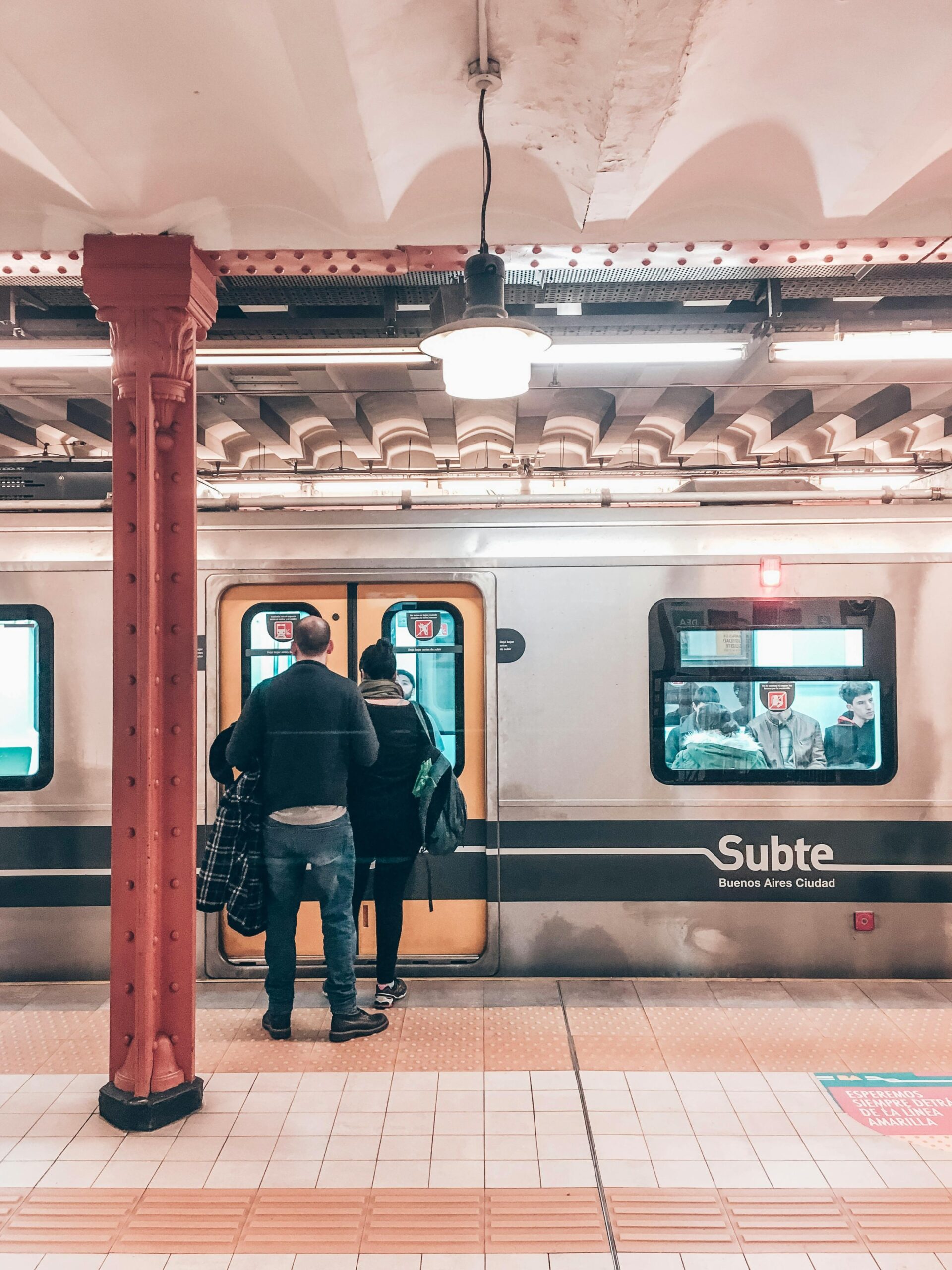
Opened in 1913, Buenos Aires' Subte is the oldest underground railway in the Southern Hemisphere, and Line A follows a route that has barely changed in a century. To descend at Perú station is to step into a different Buenos Aires entirely: terracotta tiles, arched ceilings, the particular echo of a platform built before the age of air conditioning.
The Subte has six lines (A, B, C, D, E and H) and covers the central barrios well. For a traveler based in Palermo, Recoleta, or San Telmo, it is genuinely useful. The fare, loaded onto a rechargeable SUBE card, is among the cheapest in any capital city in the world.
Its limitations are equally notable. The network thins out toward the northern riverside barrios, and it closes before the milongas reach their peak. Buenos Aires, famously, does not eat dinner until ten.
03, PALERMO / VILLA CRESPO
Colectivos: The Fabric of Daily Life
→ LÍNEAS 39, 55, 140, BARRIOS PARES
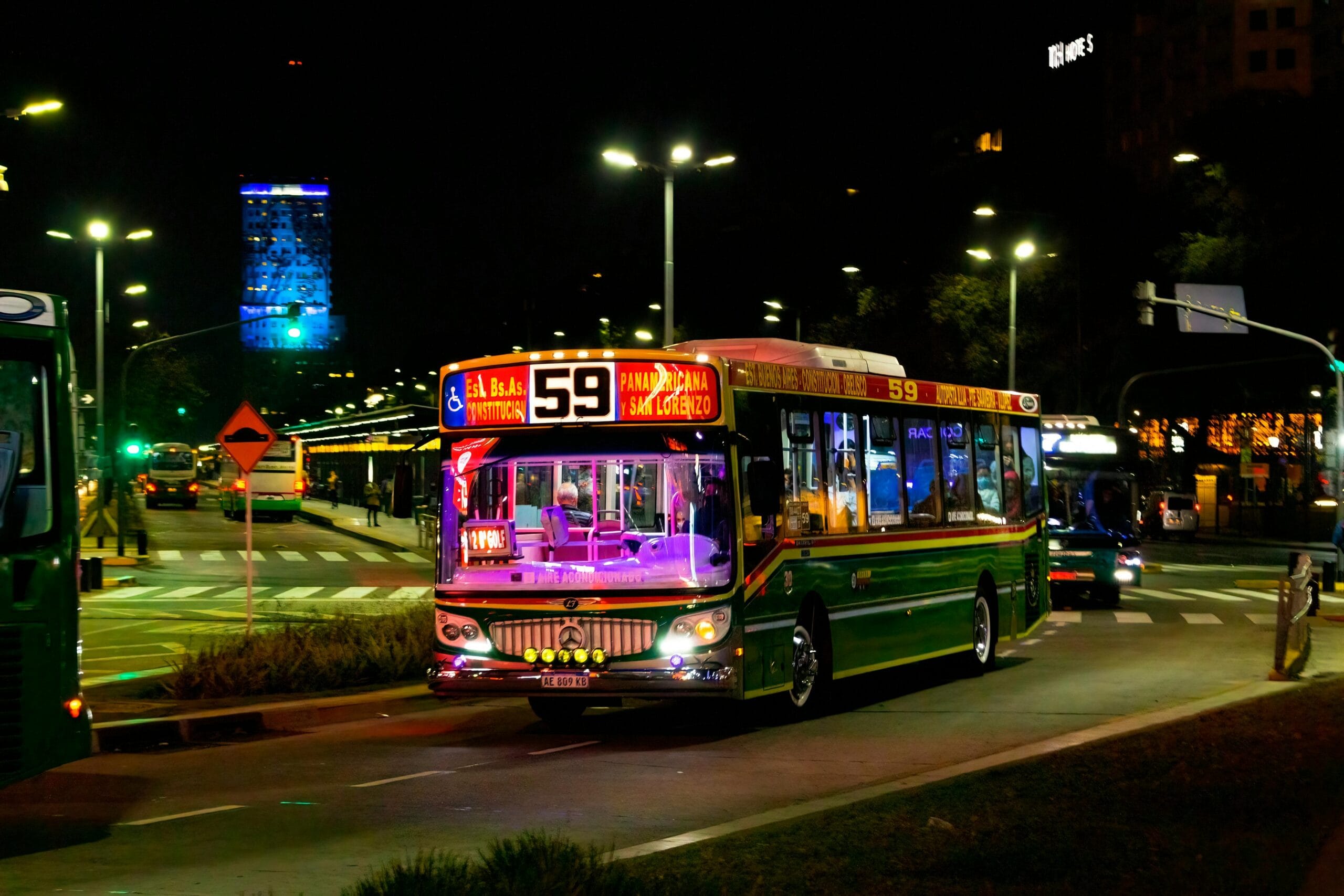
There are over 140 colectivo lines cresting and turning through Buenos Aires at any given hour, and between them they reach nearly every corner of the city with a frequency that shames many European networks. The bus, locally a colectivo, is how the city's working population moves, and boarding one carries an implicit invitation into that dailiness.
Payment requires a SUBE card. Routes are searchable via the Cómo Llego feature on Google Maps or the BA Cómo Llego app, and the city's newer fleet is air-conditioned and GPS-tracked. The challenge for a visitor is not the system but the city's own complexity: stops are not always labeled, the numbering is historical rather than spatial, and the driver will not remind you of your stop.
For the traveler with time and curiosity, a long colectivo ride through Palermo into Villa Crespo and out toward Flores is as good a portrait of the city as any museum.
Traveling between barrios for a day tour or a shore excursion? Buenos Aires Transfers offers private city tours tailored to your pace, your interests, and your schedule, from a half-day in San Telmo to a full sweep from La Boca to Recoleta. No shared vans. No fixed scripts.
>
Book a Private City Tour →
04, PUERTO MADERO
Ride-Hailing: Cab Uber, InDrive, and the Local Alternative
→ APP-BASED PICKUP, PUERTO MADERO AND BEYOND
Uber operates in Buenos Aires, though within a persistent legal grey zone: taxi unions and municipal regulations have created an environment where the app works, but drivers are occasionally reluctant to use it near airports or official taxi stands. InDrive, which allows price negotiation between passenger and driver, has grown considerably in popularity. Cabify, a Spanish-origin platform, is the most regulated and most trusted of the three.
For short to medium distances within the city, particularly at night or in rain, ride-hailing is practical and relatively affordable by international standards. Surge pricing during peak hours, Friday evening and Saturday night, raises fares considerably.
None of these platforms should be used for airport transfers, where fixed-rate private transfers or official taxi remis services offer more predictability and security.
05, RECOLETA / BELGRANO
Taxis: The Yellow-and-Black Institution
→ RADIO TAXI PREMIUM, RECOLETA AND CENTRO
The porteño taxi is a civic institution, as much a part of the city's identity as the obelisco or the dulce de leche facturas sold at the corner bakery at seven in the morning. Buenos Aires taxis are metered, regulated, and driven by men and women who often hold opinions on football, politics, and the economy that they will share with remarkable candor.
The practical guidance: always use Radio Taxi services called from your hotel or hailed from designated stands rather than informal taxis waved down on the street. The city has an app, BA Taxi, which connects to licensed radio taxi fleets. Drivers are required to issue receipts.
For longer journeys across the city, particularly those crossing multiple barrios, the meter accumulates quickly. A private transfer booked in advance will often be comparable in price and significantly superior in comfort and reliability.
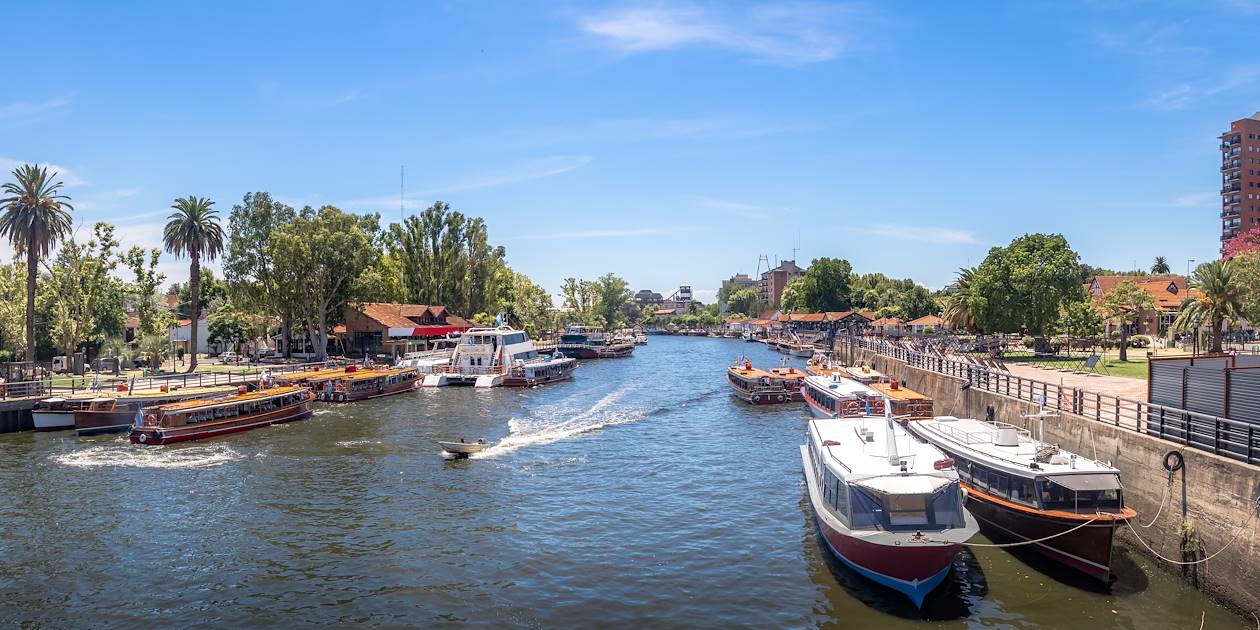
06, TIGRE / SAN ISIDRO
The Tren de la Costa: A Journey for Its Own Sake
→ ESTACIÓN MAIPÚ, OLIVOS · CONNECTS TO TIGRE DELTA
If there is one mode of transport in Buenos Aires that operates as an attraction in its own right, it is the Tren de la Costa: a refurbished rail line running along the Río de la Plata from Olivos north to the Tigre Delta, passing through the elegant riverside suburbs of San Isidro and San Fernando. The wooden platforms, the estancias glimpsed through eucalyptus groves, the sudden opening onto the river at Barrancas station: this is a forty-minute journey that earns its place in any Buenos Aires itinerary.
The train does not serve the city centre directly, and reaching its southern terminus at Maipú requires first taking the Mitre line from Retiro station. See our day trip to Tigre from Buenos Aires. For travelers who want the full experience of the Tigre Delta without the navigation, Buenos Aires Transfers offers private day-trip service that handles both the transfer and the local arrangements.
Frequently Asked Questions
What is the SUBE card?
The SUBE is a rechargeable contactless card used to pay for the subte (metro), colectivos (buses) and commuter trains in Buenos Aires. You buy and top it up at stations and many kiosks, and the fares are very low.
Is Uber legal in Buenos Aires?
Uber operates in Buenos Aires within a persistent legal grey area. Cabify is the most established and regulated app, and InDrive is also widely used. For airport runs, a pre-booked private transfer or an official taxi is more reliable.
What is the best way to get from the airport to the city?
A pre-booked private transfer is the smoothest option: a fixed rate, a driver waiting with your name, and no negotiation. Ezeiza sits about thirty-five kilometres from the centre; Aeroparque is much closer.
Getting Around Buenos Aires, On Your Own Terms
A city of this scale and this temperament cannot be reduced to a transit map. Buenos Aires is best understood through movement, through the particular quality of light on Avenida Santa Fe at midday, the night air in Palermo Soho on a Thursday, the silence of the delta water at Tigre. Each mode of transport in this guide offers a different angle of entry into that experience.
What Buenos Aires Transfers offers is not a replacement for that exploration. It is the architecture around it: the arrivals and departures that happen without friction so that everything in between can happen with full attention. When you are ready to arrive properly, we are here.