SPRING · JACARANDA SEASON · 2026
For four weeks a year the pavements of Buenos Aires are dyed purple, and the whole city walks a little slower to look up.
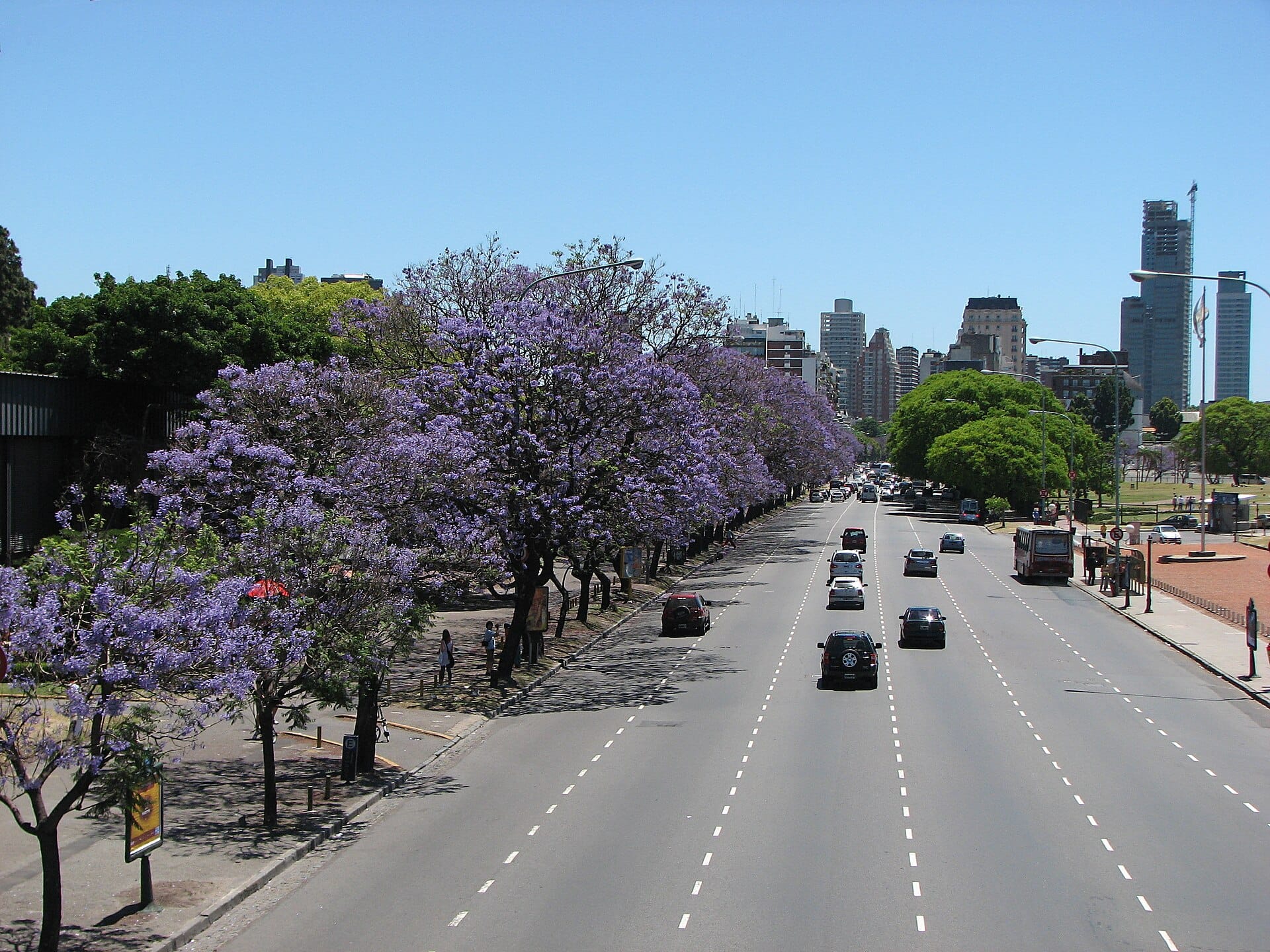
Jacarandas on Avenida Figueroa Alcorta in November. Photo: Raul Antonio Alvarez / Wikimedia Commons (CC BY-SA 2.0).
.jpg)
There is a week in spring when Buenos Aires stops pretending to be Paris and becomes something of its own. The jacarandas open all at once, on bare branches, before the leaves come out, and avenues that were grey on Monday are purple by Friday. Then the flowers fall and the pavements take the colour instead. Porteños photograph it every year as if it had never happened before. So do we: our drivers at Buenos Aires Transfers know which streets are at their best that week, because they drive them every day.
Here is when it happens, why the city has so many of these trees, and the five places with the most of them.
When do the jacarandas bloom in Buenos Aires?
November is the month, with the first flowers often showing in late October. The exact week moves with the temperatures and the rain of each spring, so nobody can promise a date, but the trees flower before they leaf, the flowers stay on the branches for about four weeks, and then they carpet the streets. There is a second, smaller flowering in February or March, easy to miss unless you know to look.
If you are planning a trip to Buenos Aires in November, you are already in the right month.
Why Buenos Aires has so many jacarandas
The tree is Argentine, native to the yungas, the cloud forests of the northwest around Tucumán, Salta and Jujuy. It came to the capital thanks to one man. Carlos Thays, born in Paris in 1849, was appointed Director of Parks and Walks of Buenos Aires in 1891 and held the job until 1920. In those years he designed or redesigned most of the city's green spaces, Parque Tres de Febrero, Plaza de Mayo, Parque Lezama, the Barrancas de Belgrano and the Botanical Garden among them, and planted tens of thousands of street trees.
Thays travelled the country and brought back native species he thought would live well in a city: the lapacho, the ceibo, the palo borracho and the jacaranda. The city's own count puts the jacarandas at more than 14,000, on pavements, in parks and in plazas, which makes it the fourth most common tree in the city's public space. In 2015 the Legislature named it the city's distinctive tree. A French landscape gardener chose it; Buenos Aires adopted it.
Where to see jacarandas in Buenos Aires
The trees are everywhere, but they gather. These five places have the most of them, and they line up, north to south, into one route.
01 · RECOLETA
Avenida Figueroa Alcorta and the Facultad de Derecho
The purple avenue
If you see only one street in jacaranda season, make it this one. Figueroa Alcorta runs wide and straight past the law faculty of the University of Buenos Aires, a building from 1949, and in November the avenue in front of it is the classic postcard of the season. From the faculty steps you look across the flowers to Avenida Sarmiento, which carries the colour on into the parks of Palermo.
→ AV. PRES. FIGUEROA ALCORTA 2263, RECOLETA
02 · RECOLETA
Plaza Francia and Avenida del Libertador
A Thays plaza in purple
A few blocks away, Avenida del Libertador is the other great jacaranda avenue of the north of the city, and Plaza Francia is the place to stop. Thays designed this one too, around a monument called France to Argentina, a gift from the French community for the centenary of 1910, and in spring the lawns fill with people lying under the trees.
→ AV. DEL LIBERTADOR 1400, RECOLETA
03 · PALERMO
Avenida Sarmiento, Plaza Italia and the Botanical Garden
Where Thays lived
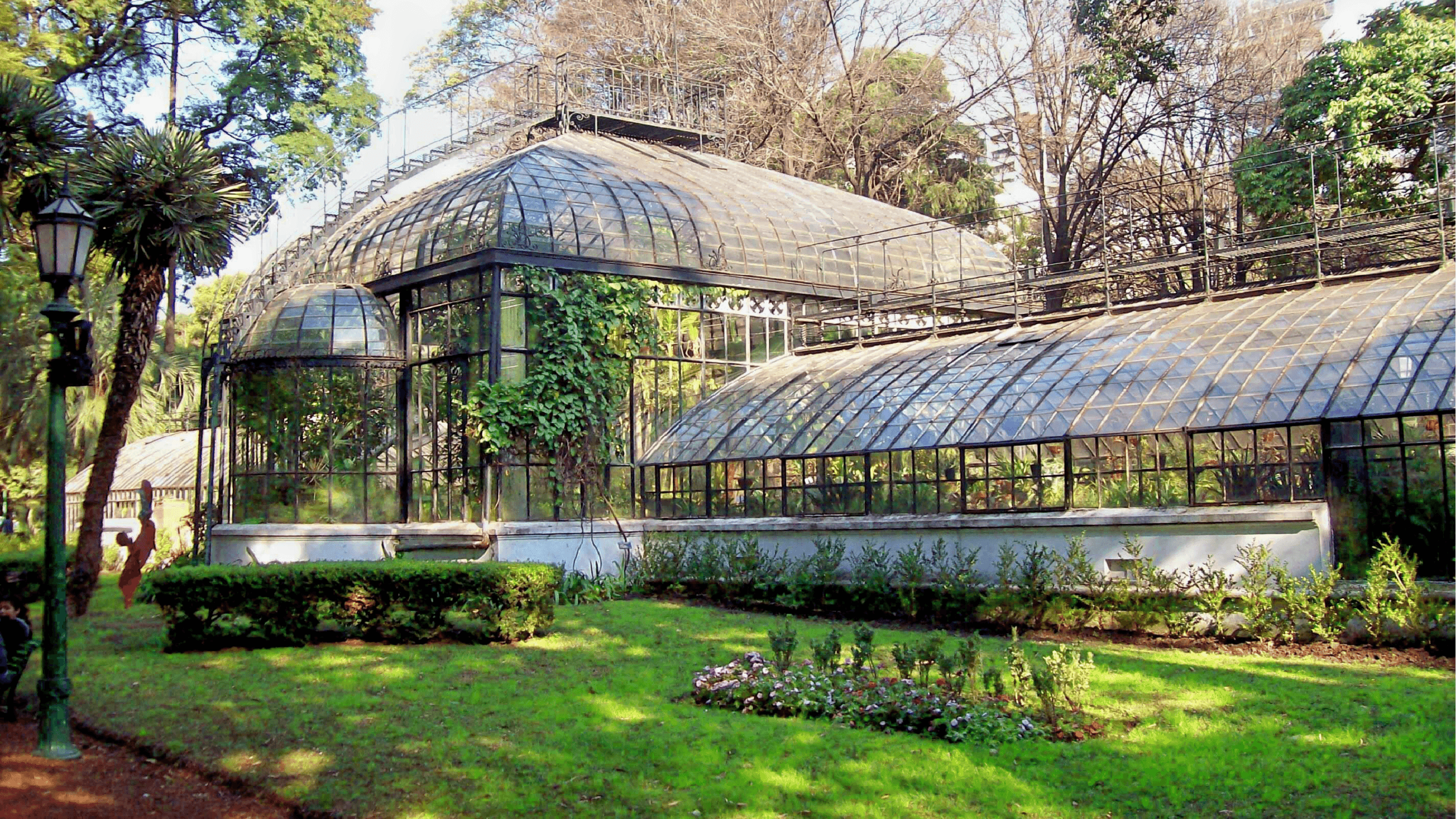
Follow Avenida Sarmiento from Figueroa Alcorta into Parque Tres de Febrero and you are inside Thays' biggest work, the Bosques de Palermo. The avenue itself is lined with jacarandas, and so are the streets around Plaza Italia. Across the plaza is the Jardín Botánico Carlos Thays, opened in 1898, where Thays lived while he ran the city's parks; it now carries his name and, in November, his tree. The iron and glass greenhouse alone is worth the detour.
→ AV. SANTA FE 3951, PALERMO
04 · MONSERRAT
Plaza de Mayo and the diagonals
The oldest square, in purple
The historic centre has its own jacarandas, and they are the ones with the best backdrop. Plaza de Mayo, founded in 1580 and the oldest square in the city, was one of the plazas Thays redesigned, and the trees around it and along the diagonal avenues that leave it flower with the Casa Rosada, the cathedral and the Cabildo behind them. From there the colour runs out along Avenida 9 de Julio and Avenida San Juan, two more avenues the city lists for the season.
→ AV. HIPÓLITO YRIGOYEN AND BALCARCE, MONSERRAT
05 · BELGRANO
Barrancas de Belgrano, Cabildo and Luis María Campos
The river's old shore
Until the middle of the 19th century the Río de la Plata reached the foot of these slopes; today the Barrancas are a park of old trees on a hill, another of Thays' designs, with more than sixty plant species. Avenida Cabildo and Avenida Luis María Campos, the two long avenues of Belgrano, are lined with them. Late in the day, when the light is low, the purple against the barrio's white apartment blocks is the quietest version of the season.
→ AV. JURAMENTO AND 11 DE SEPTIEMBRE DE 1888, BELGRANO
Seeing them all in one afternoon
The five places sit on a line: Belgrano in the north, then Palermo, Recoleta and the centre. On foot it is a full day and a lot of avenue. In a car with a driver by the hour it is an afternoon. The driver picks you up at the hotel, waits at each stop while you walk under the trees, and moves on when you do, with the camera bag in the car. Parque Los Andes in Chacarita, another jacaranda park, fits in on the way back if you have the time.
The car is booked by the hour and per vehicle, not per person, with a three-hour minimum on its own (from one hour when added to a transfer in the same booking). There is no guide in the car: the driver drives. If you would rather have the season explained, with the story of Thays told on the way, our private city tours come with a guide and a driver for four or six hours, and in November the route can follow the trees. Cancellation is free up to 24 hours before either.
Tell us your date and your hotel on WhatsApp at +54 9 11 2404-0448 and we will quote the hours and the vehicle.
When the flowers fall
The season ends the way it begins, all at once. One morning the branches are green with new leaves and the purple is on the ground, on the parked cars, on the steps of the law faculty. If you are in Buenos Aires in November, walk under the trees while they last.
Plan a jacaranda afternoon. Send us your dates on WhatsApp at +54 9 11 2404-0448, or see how a car with driver by the hour works on our last day page. We will be at the door when you come out from under the trees.