🗺️ Explore Buenos Aires with us
No trip to Buenos Aires is complete without exploring its traditional desserts. Argentine cuisine is famous worldwide for its asado and empanadas, but the sweet side of Buenos Aires is just as rich, just as layered, and just as deeply tied to the country’s identity. From the thick caramel embrace of dulce de leche to the delicate crunch of a rogel, Buenos Aires desserts carry centuries of Italian and Spanish immigrant influence, indigenous ingredients, and purely Argentine reinvention.
These aren’t trendy café creations, they are traditional Argentine sweets passed down through generations, eaten every single day across the city, and tied to specific memories, rituals, and social occasions. Understanding them is understanding Argentina.
In this guide: the 6 most iconic traditional desserts you’ll encounter in Buenos Aires, their real history, where to find them, and what makes each one genuinely unmissable. Save room after lunch. You will need it.
🍫 1. Chocotorta, Argentina’s Unofficial National Cake
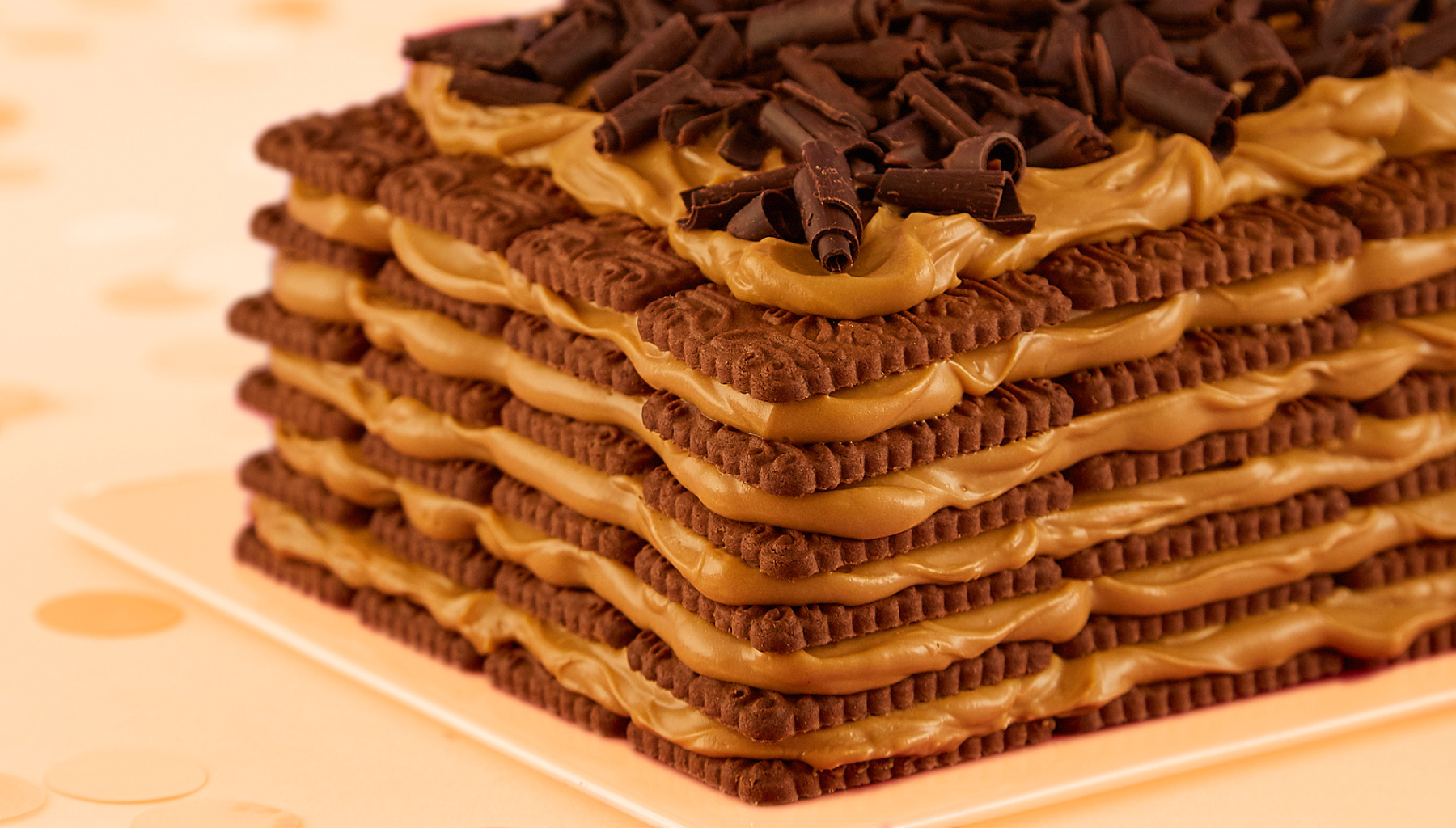
Chocotorta
The no-bake layered cake every Argentine family makes, and everyone loves
Ask any Argentine what their favorite childhood dessert is, and there’s a very good chance the answer is chocotorta. This no-bake layered cake is made from Chocolinas chocolate cookies soaked briefly in coffee or milk, alternated with a luscious cream of dulce de leche blended with cream cheese. The result is something between a tiramisu and a refrigerator cake, but uniquely, unmistakably Argentine. The cookies absorb the liquid overnight in the fridge, softening into a silky, deeply indulgent texture that has no real equivalent anywhere else.
It requires no oven, no special technique, and no culinary experience whatsoever, which is exactly why it has conquered every Argentine household. Birthdays, Christmas Eve, Sunday family lunches after asado, chocotorta is always welcome, always present, and always finished before anyone is quite ready to stop eating it.
📖 Origin, 1982
Chocotorta was invented in 1982 by Marta Roux, a publicist hired by Bagley (the company behind Chocolinas cookies) to create recipes that would drive cookie sales. The recipe appeared on cookie packaging, and within a decade had escaped it entirely, spreading through Argentine households as an oral tradition. During the 2020 pandemic, it went viral internationally when millions of home bakers worldwide discovered its effortless magic. It is now considered Argentina’s unofficial national cake.
Chocotorta was invented in 1982 by Marta Roux, a publicist hired by Bagley (the company behind Chocolinas cookies) to create recipes that would drive cookie sales. The recipe appeared on cookie packaging, and within a decade had escaped it entirely, spreading through Argentine households as an oral tradition. During the 2020 pandemic, it went viral internationally when millions of home bakers worldwide discovered its effortless magic. It is now considered Argentina’s unofficial national cake.
Chocotorta rarely appears on restaurant menus, it’s a home dessert by nature. Your best chance: local bakeries (panaderías) in residential neighborhoods like Chacarita or Villa Crespo, or family-run restaurants. Some traditional cafés prepare it on weekends, ask.
Local panaderías across the city, family-run restaurants in residential neighborhoods, and occasionally at Café Tortoni (Av. de Mayo 825). San Telmo weekend market vendors sometimes sell individual slices.
📍 Where to find it in Buenos Aires Local panaderías across the city, family-run restaurants in residential neighborhoods, and occasionally at Café Tortoni (Av. de Mayo 825). San Telmo weekend market vendors sometimes sell individual slices.
🍮 2. Flan Mixto, The Dessert on Every Buenos Aires Table
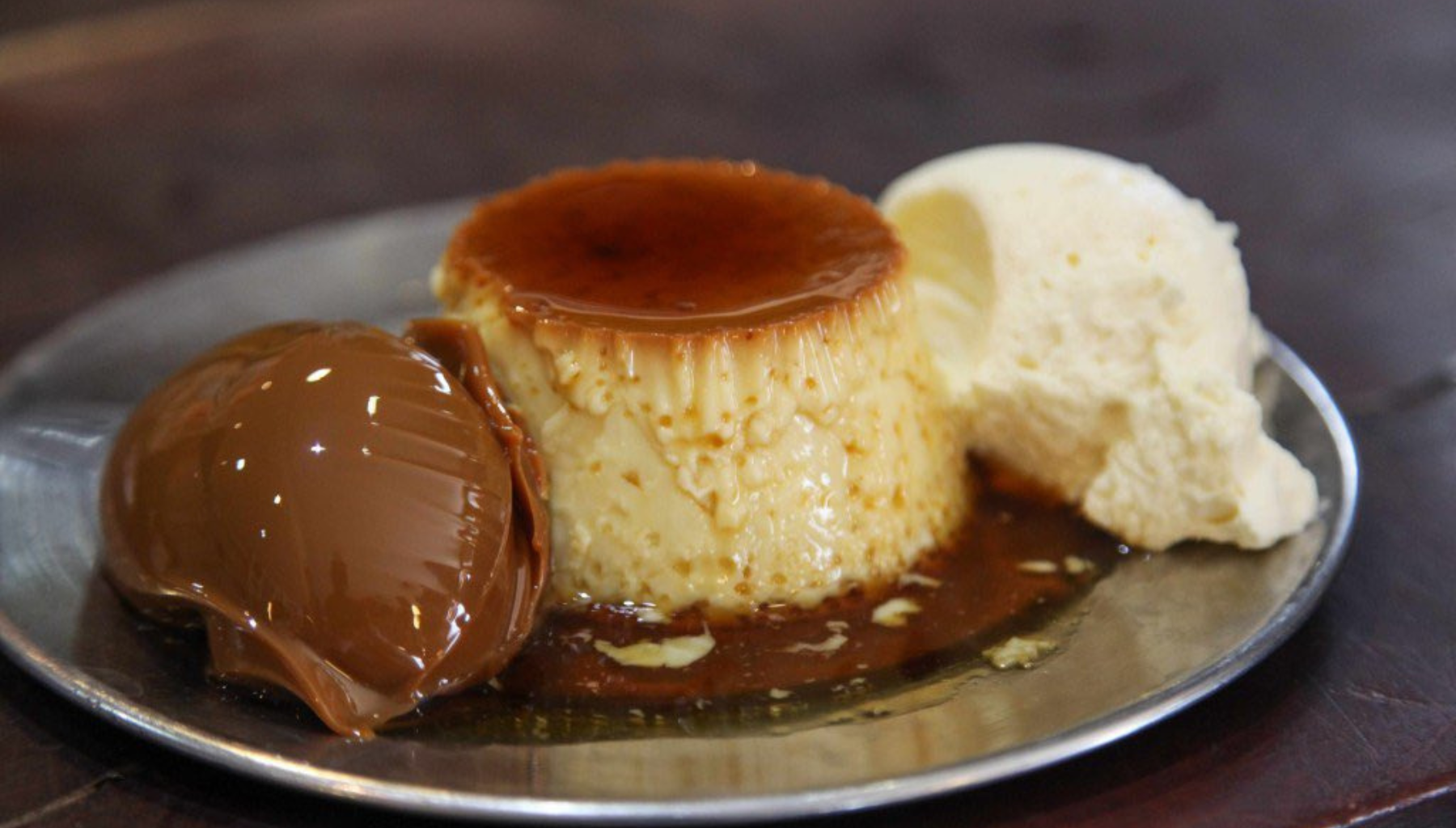
Flan Mixto
The dessert that ends every authentic Buenos Aires meal
If there is one traditional Buenos Aires dessert that defines the city’s restaurant culture, it’s flan mixto. A rich, silky egg-based custard set in a caramel mold, similar to crème caramel, but served the Argentine way: with both whipped cream and dulce de leche piled generously on top. Never one. Always both. That’s not a preference; it’s an unwritten rule. Ordering flan without dulce de leche in a Buenos Aires parrilla will earn you a look of genuine concern from the waiter.
The texture is firm yet trembling, the caramel slightly bitter against the sweet cream, the dulce de leche adding warmth and depth. It’s the kind of dessert that requires no explanation and no occasion, just a table, a spoon, and the willingness to be very happy for four minutes.
📖 Origin, 19th century immigration
Flan arrived in Argentina with Spanish and Italian immigrants during the great waves of 19th and early 20th century immigration. What transformed it into something distinctly Argentine was the addition of dulce de leche, and the unspoken social convention that the “mixto” version (with both cream and dulce de leche) is the only version worth ordering. A plain flan in Buenos Aires feels incomplete in the same way a pizza without mozzarella does. The standard was set sometime in the early 20th century and has never been questioned since.
Flan arrived in Argentina with Spanish and Italian immigrants during the great waves of 19th and early 20th century immigration. What transformed it into something distinctly Argentine was the addition of dulce de leche, and the unspoken social convention that the “mixto” version (with both cream and dulce de leche) is the only version worth ordering. A plain flan in Buenos Aires feels incomplete in the same way a pizza without mozzarella does. The standard was set sometime in the early 20th century and has never been questioned since.
Every traditional parrilla and bodegón in the city. Exceptionally good at: La Brigada (Carlos Calvo 465, San Telmo), El Preferido de Palermo (Jorge Luis Borges 2108), Las Cabras (Fitz Roy 1795, Palermo), and any neighborhood parrilla with checkered tablecloths.
📍 Where to find it in Buenos Aires Every traditional parrilla and bodegón in the city. Exceptionally good at: La Brigada (Carlos Calvo 465, San Telmo), El Preferido de Palermo (Jorge Luis Borges 2108), Las Cabras (Fitz Roy 1795, Palermo), and any neighborhood parrilla with checkered tablecloths.
🥐 3. Rogel, Argentina’s Most Spectacular Layered Cake
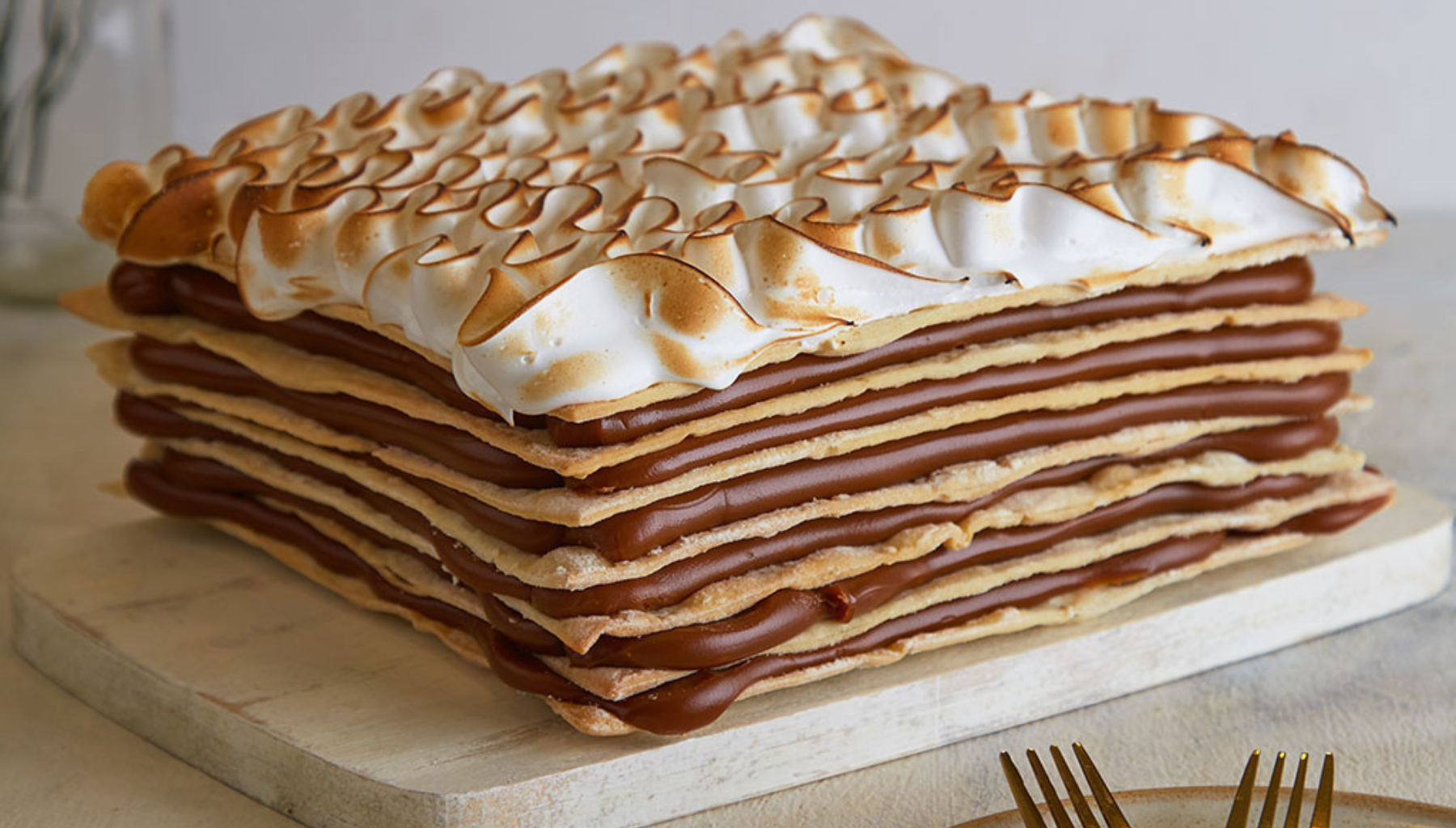
Rogel
Multiple layers of thin pastry + dulce de leche + Italian meringue, stop everything
Few Argentine sweets are as visually dramatic, or as rewarding, as a well-made rogel. It consists of multiple ultra-thin layers of crispy pastry dough (made with flour, butter, and egg yolks, rolled to near transparency) separated by generous amounts of dulce de leche repostero, then crowned with a cloud of glossy Italian meringue, often toasted at the edges. Every bite delivers a concert of contrasts: the delicate shattering crunch of the pastry, the deep caramel warmth of dulce de leche, the cool airy sweetness of meringue.
Making rogel properly is a genuine labor of love. Each pastry layer must be rolled paper-thin and baked separately, then assembled with patience and generosity. It is not a café dessert, it is a confitería dessert, one that requires craft and time. When you find a good one, you stop mid-conversation. Nothing else matters for a moment.
📖 Origin, Spanish colonial tradition
Rogel is believed to have Spanish colonial origins, likely descended from European mille-feuille-style pastries that were adapted to River Plate ingredients and tastes in the 18th and 19th centuries. What makes the Argentine version entirely its own is the obligatory dulce de leche filling and the Italian meringue crown, no other tradition combines these three elements in this way. Today, rogel is a fixture at Argentine weddings, quinceañeras, and upscale confiterías, where it often replaces the wedding cake itself.
Rogel is believed to have Spanish colonial origins, likely descended from European mille-feuille-style pastries that were adapted to River Plate ingredients and tastes in the 18th and 19th centuries. What makes the Argentine version entirely its own is the obligatory dulce de leche filling and the Italian meringue crown, no other tradition combines these three elements in this way. Today, rogel is a fixture at Argentine weddings, quinceañeras, and upscale confiterías, where it often replaces the wedding cake itself.
Quality varies enormously. A proper rogel should have at least 6 distinct pastry layers, real dulce de leche repostero (not pastry cream), and meringue that holds its shape without weeping. If it’s soft and uniform, it wasn’t made by hand. Ask if they make it in-house.
Confitería Ideal (Suipacha 384, open since 1912, legendary), Las Violetas (Medrano 899, Almagro, stunning art nouveau setting), and artisan pastry shops in Recoleta and Belgrano. Worth calling ahead to confirm availability.
📍 Where to find it in Buenos Aires Confitería Ideal (Suipacha 384, open since 1912, legendary), Las Violetas (Medrano 899, Almagro, stunning art nouveau setting), and artisan pastry shops in Recoleta and Belgrano. Worth calling ahead to confirm availability.
🧀 4. Postre Vigilante, The Sweet-Salty Dessert with a Police Story
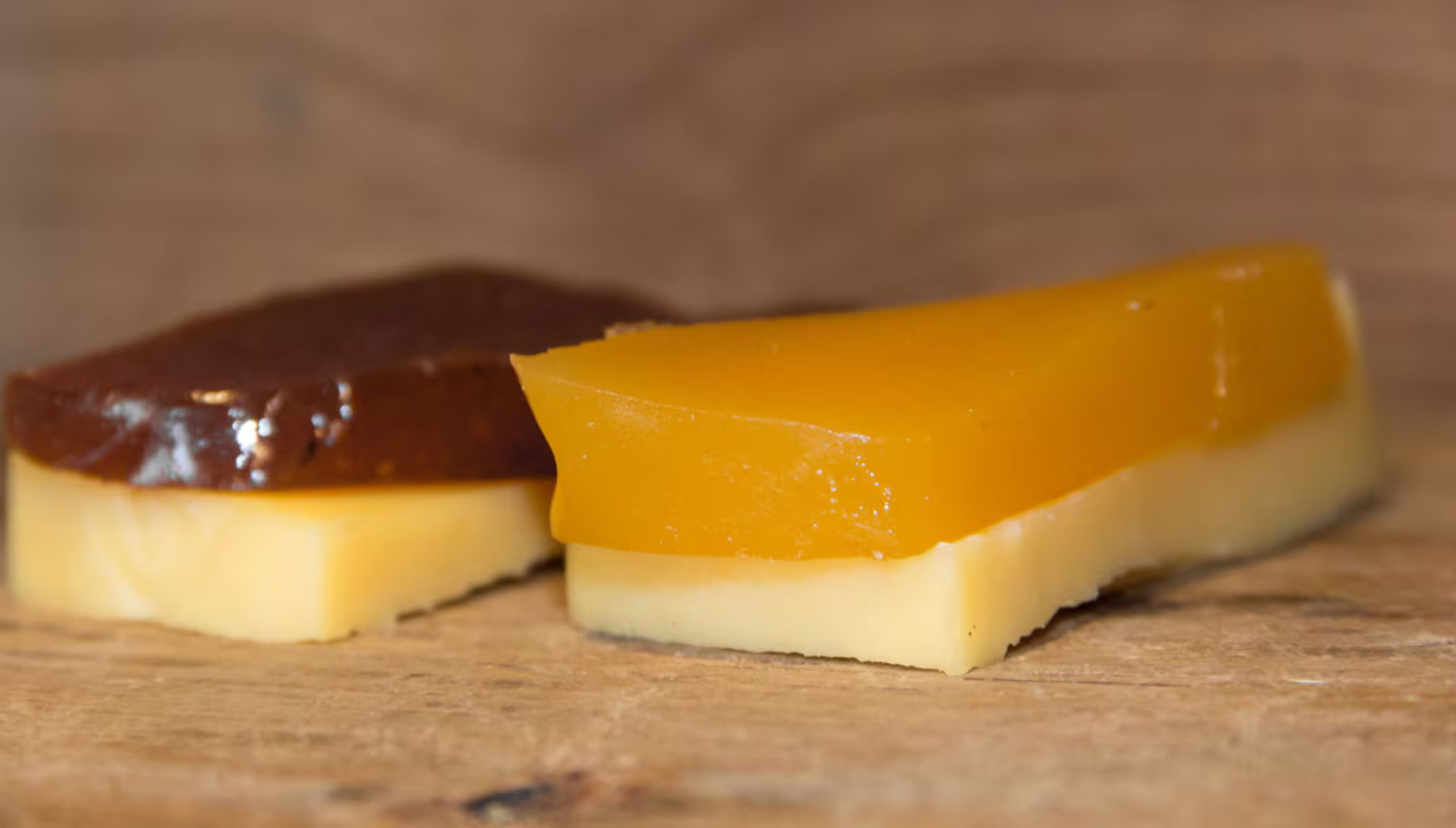
Postre Vigilante
Firm cheese + quince paste, the most honest dessert in Argentina
There are few things more essentially Argentine than a slice of firm white cheese paired with quince paste (dulce de membrillo) or sweet potato paste (dulce de batata). No garnish. No sauce. No performance. Just the striking combination of salty, milky cheese against sweet, dense fruit paste, a flavor pairing that feels ancient, because it genuinely is. This is postre vigilante, Argentina’s most humble and most honest dessert, and it has been on tables across the country for well over a century.
The salt of the cheese amplifies the sweetness of the membrillo. The density of the paste contrasts with the creaminess of the cheese. You eat it and wonder, briefly, why every dessert isn’t this simple. On menus, it usually appears as “queso y dulce”, cheese and sweet, which tells you everything about what it is and nothing about why it’s so addictive.
📖 Origin, Buenos Aires police legend
The name vigilante is the Argentine Spanish word for police officer or watchman. Popular legend holds that night-shift police officers patrolling Buenos Aires in the late 19th and early 20th centuries would stop at street vendors to buy slices of cheese and quince paste, cheap, sustaining, portable, requiring no utensils. The combination became so associated with these workers that it entered the city’s culinary vocabulary as the “vigilante’s dessert,” eventually shortened to postre vigilante. Whether the legend is fully accurate or not, the name stuck, and the dessert never left.
The name vigilante is the Argentine Spanish word for police officer or watchman. Popular legend holds that night-shift police officers patrolling Buenos Aires in the late 19th and early 20th centuries would stop at street vendors to buy slices of cheese and quince paste, cheap, sustaining, portable, requiring no utensils. The combination became so associated with these workers that it entered the city’s culinary vocabulary as the “vigilante’s dessert,” eventually shortened to postre vigilante. Whether the legend is fully accurate or not, the name stuck, and the dessert never left.
Any traditional bodegón or parrilla in the city, look for “queso y dulce” on the menu. Also widely available in supermarkets: pair Mendicrim or Mar Chiquita cream cheese with Arcor or San Ignacio brand membrillo or dulce de batata for the full experience at home.
📍 Where to find it in Buenos Aires Any traditional bodegón or parrilla in the city, look for “queso y dulce” on the menu. Also widely available in supermarkets: pair Mendicrim or Mar Chiquita cream cheese with Arcor or San Ignacio brand membrillo or dulce de batata for the full experience at home.
🥄 5. Dulce de Leche, The National Flavor of Argentina
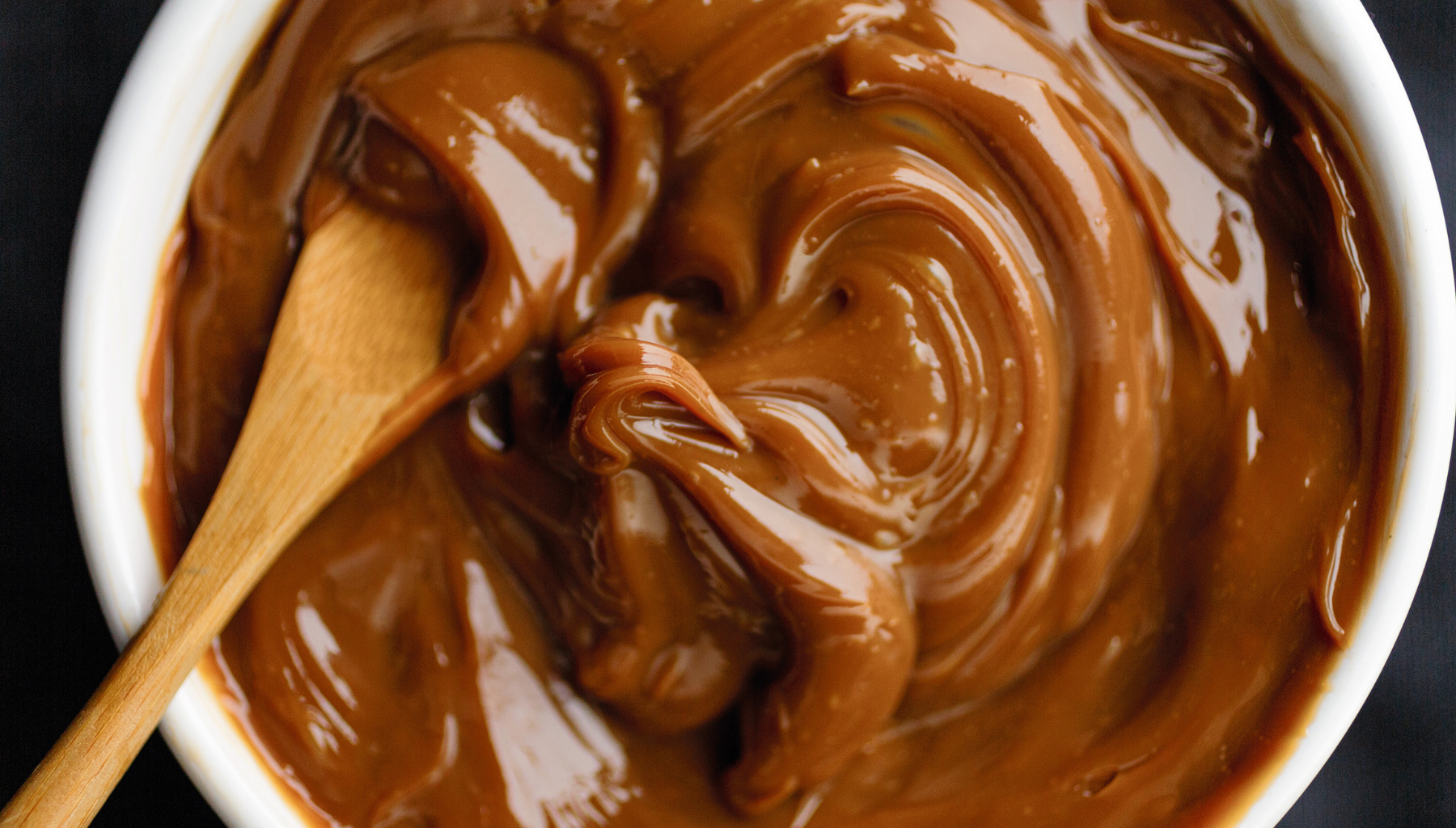
Dulce de Leche
Argentina’s national flavor, the foundation of every sweet in this guide
Dulce de leche is not merely a dessert, it is the cornerstone of Argentine sweet culture. This thick, deeply caramelized spread, made by slow-cooking milk with sugar until it transforms into a dark, glossy paste, is the backbone of chocotorta, rogel, flan mixto, alfajores, medialunas, ice cream, pancakes, and hundreds of other Argentine sweets. You cannot fully understand the food of Buenos Aires without understanding dulce de leche first.
It is richer and more complex than caramel, the extended slow cooking of milk creates Maillard reactions that produce warmth, depth, and a faint note of cooked milk that caramel, made from sugar alone, simply cannot replicate. Argentines spread it on toast at breakfast, stir it into yogurt, drizzle it over pancakes, fold it into crepes, and, not infrequently, eat it directly from the jar with a spoon, standing in front of an open fridge at midnight. No judgment.
📖 Origin, 1829 legend vs history
Argentina and Uruguay have long disputed who invented dulce de leche. The Argentine legend attributes it to 1829, when a maid left a pot of sweetened milk (lechada) boiling unattended at General Juan Manuel de Rosas’ estancia, and returned to find a thick, caramelized paste. Historians are skeptical of this specific story, noting that similar preparations existed across Latin America and in Napoleonic France (confiture de lait). What is undeniable, however, is that no country has made dulce de leche as central to its culinary identity as Argentina. It belongs to the country in the way that butter belongs to France.
Argentina and Uruguay have long disputed who invented dulce de leche. The Argentine legend attributes it to 1829, when a maid left a pot of sweetened milk (lechada) boiling unattended at General Juan Manuel de Rosas’ estancia, and returned to find a thick, caramelized paste. Historians are skeptical of this specific story, noting that similar preparations existed across Latin America and in Napoleonic France (confiture de lait). What is undeniable, however, is that no country has made dulce de leche as central to its culinary identity as Argentina. It belongs to the country in the way that butter belongs to France.
In Argentine supermarkets you’ll find three main varieties: familiar (slightly runny, ideal for spreading on toast), repostero (firmer and less sweet, designed for baking and filling cakes), and light (for those who have made poor choices). The two flagship brands are La Serenísima and Mastellone. Havanna also produces an excellent version sold at their cafés and airport shops.
Bring home jars of dulce de leche, La Serenísima or Havanna brand travel well in checked luggage. 250g jars are the ideal size. Alfajores Havanna (filled with dulce de leche and coated in chocolate or white chocolate) are sold at the airport and throughout the city, the best edible souvenir Argentina offers.
🍠 6. Dulce de Batata, Ancient Sweetness, Purely Argentine
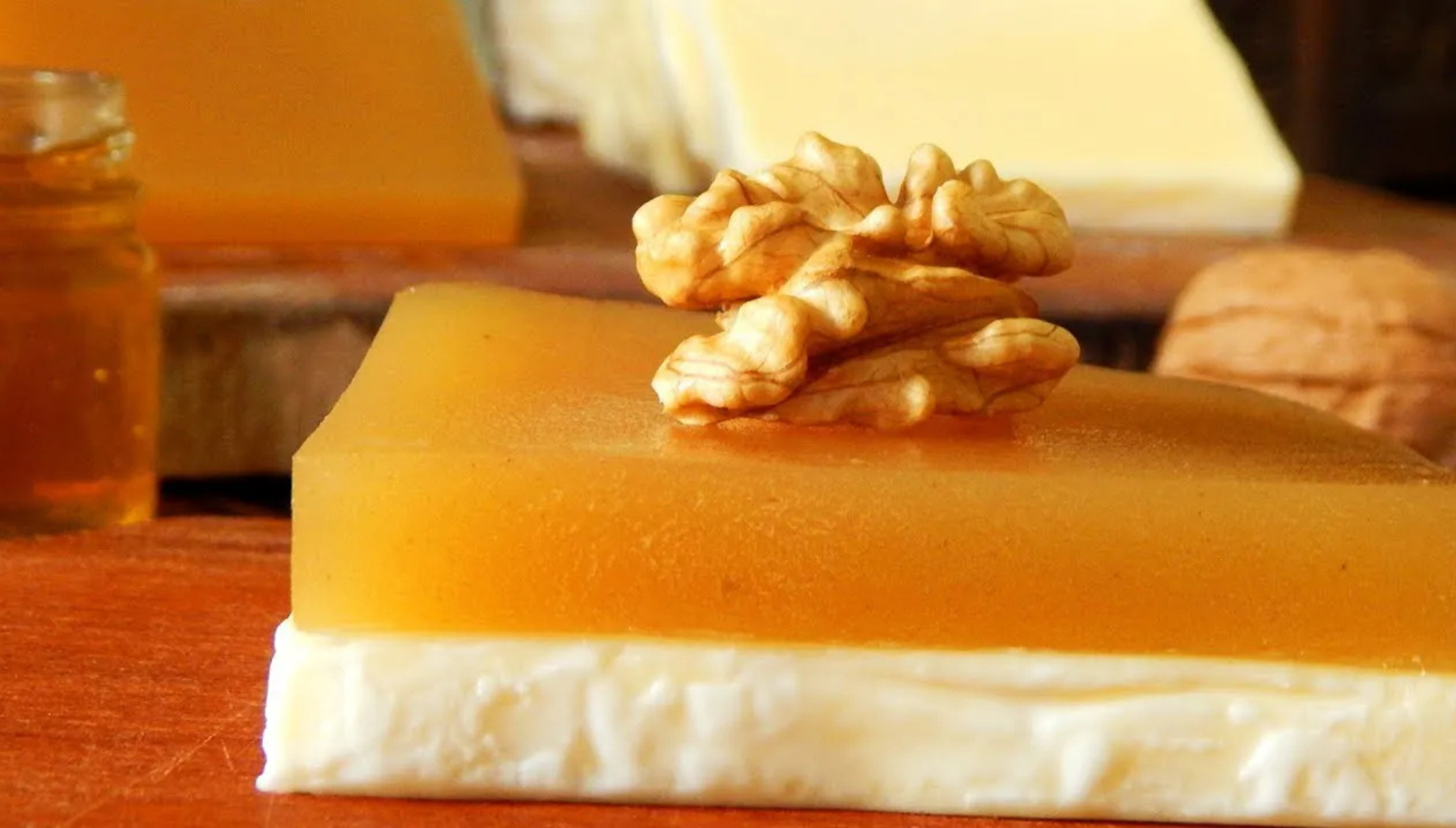
Dulce de Batata
A sweet potato preserve with pre-Columbian roots, and a deeply Argentine soul
Dulce de batata is a firm, glossy sweet potato preserve with a deep amber color and a quiet, earthy sweetness. Made by slow-cooking sweet potatoes with sugar until they reach a dense, gelatinous consistency, it is then set in molds and sliced like a terrine. Most commonly eaten alongside firm cheese as a variation of postre vigilante, it can also be enjoyed on its own, with crackers, or as a filling in pastries and cakes.
Its flavor is subtler than quince paste, less tangy, slightly more mineral, with the comforting warmth of a root vegetable transformed by time and sugar. Dulce de batata doesn’t announce itself. It settles in quietly, and then you realize you’ve eaten most of it without quite noticing. That quiet sweetness is exactly what makes it so enduring on Argentine tables.
📖 Origin, pre-Columbian South America
The sweet potato (batata) was cultivated by indigenous peoples across South America thousands of years before European colonization. Spanish settlers in the River Plate region learned preservation techniques from local communities, cooking the sweet potato harvest with sugar to extend its shelf life and create a dense, stable preserve. The practice passed seamlessly into everyday cuisine and became a staple of Argentine sweets culture. Dulce de batata today is as Argentine as the asado, even if it rarely earns the same international recognition.
The sweet potato (batata) was cultivated by indigenous peoples across South America thousands of years before European colonization. Spanish settlers in the River Plate region learned preservation techniques from local communities, cooking the sweet potato harvest with sugar to extend its shelf life and create a dense, stable preserve. The practice passed seamlessly into everyday cuisine and became a staple of Argentine sweets culture. Dulce de batata today is as Argentine as the asado, even if it rarely earns the same international recognition.
Traditional restaurants and parrillas (often paired with cheese as postre vigilante), and supermarkets throughout the city. Look for Arcor, San Ignacio, and Cachafaz brands, usually shelved alongside dulce de leche and dulce de membrillo.
📍 Where to find it in Buenos Aires Traditional restaurants and parrillas (often paired with cheese as postre vigilante), and supermarkets throughout the city. Look for Arcor, San Ignacio, and Cachafaz brands, usually shelved alongside dulce de leche and dulce de membrillo.
📍 Best Places to Try Traditional Desserts in Buenos Aires
❓ Frequently Asked Questions
What is the most popular traditional dessert in Buenos Aires?
Flan mixto is the most universally ordered dessert in Buenos Aires restaurants, it appears on virtually every traditional parrilla and bodegón menu across the city. Chocotorta holds the title of most beloved home dessert, and could be considered Argentina’s unofficial national cake. Both are essential experiences.
Is dulce de leche the same as caramel?
No, though they look similar, they’re made differently and taste quite distinct. Caramel is produced by heating sugar alone to high temperatures. Dulce de leche is made by slow-cooking milk with sugar, which creates a richer, more complex flavor with notes of cooked milk and a deeper, rounder sweetness. Most Argentines would consider the comparison a mild offense. They are not the same thing.
Where can I buy Argentine sweets to take home?
Dulce de leche jars (La Serenísima, Havanna) are available at any supermarket and travel well in checked luggage. Alfajores Havanna, Argentina’s most famous cookie, filled with dulce de leche, are sold at their cafés throughout the city and at Ezeiza and Aeroparque airports. For dulce de membrillo and dulce de batata, look for Arcor or San Ignacio brands in any supermarket.
What does “postre vigilante” mean?
Postre vigilante translates literally as “the policeman’s dessert.” The name comes from the legend that Buenos Aires police officers (vigilantes) on night patrol in the late 19th century would buy slices of cheese and quince paste from street vendors as a quick, sustaining snack. The combination became so associated with these workers that it entered the city’s food vocabulary, and has never left Argentine menus since.
Are there gluten-free options among traditional Argentine desserts?
Yes, flan mixto and postre vigilante (queso y dulce) are naturally gluten-free, as is dulce de leche itself. Enjoyed with gluten-free crackers or fresh fruit, dulce de leche and dulce de batata are fully accessible. Chocotorta and rogel both contain gluten (wheat flour is integral to both). Always confirm with the restaurant if cross-contamination is a concern.
When do Argentines eat dessert?
Dessert in Argentina is almost exclusively eaten after a meal, lunch or dinner, and very rarely between meals as a standalone snack. The great Argentine dessert occasion is Sunday family lunch after asado: expect chocotorta, flan, or ensalada de frutas with dulce de leche on virtually every Argentine family table on a Sunday. Birthdays are chocotorta territory. Weddings belong to rogel.
Taste the real Buenos Aires, beyond the desserts
Our 4-hour private city tour takes you through the most iconic neighborhoods of Buenos Aires with an expert local guide and a private driver, from the cobblestones of San Telmo to the parks of Palermo, with insider tips on where to eat, what to order, and how to experience this city like a local. A tour for travelers who want more than monuments.
Buenos Aires desserts are more than sweets on a plate, they are stories, history, and identity. The chocotorta was born from a cookie advertisement and became a national ritual. Flan mixto has been ending Buenos Aires meals for 150 years. The rogel is Argentina’s answer to the mille-feuille, and, many would argue, its superior. And dulce de leche is the flavor that holds everything else together.
When you sit down at a porteño table and order one of these desserts, you’re not just eating. You’re participating in something that has mattered to Argentines for generations, across kitchens, bodegones, and Sunday lunches without number.
That’s the real sweetness of Buenos Aires. And we’d love to show you the rest of it. 🍮🇦🇷