NEIGHBOURHOODS · BELGRANO · 2026
A church built as a circle, a square that was once, briefly, the seat of the nation, and a Chinatown gate seven blocks from the metro. Belgrano in one unhurried day.
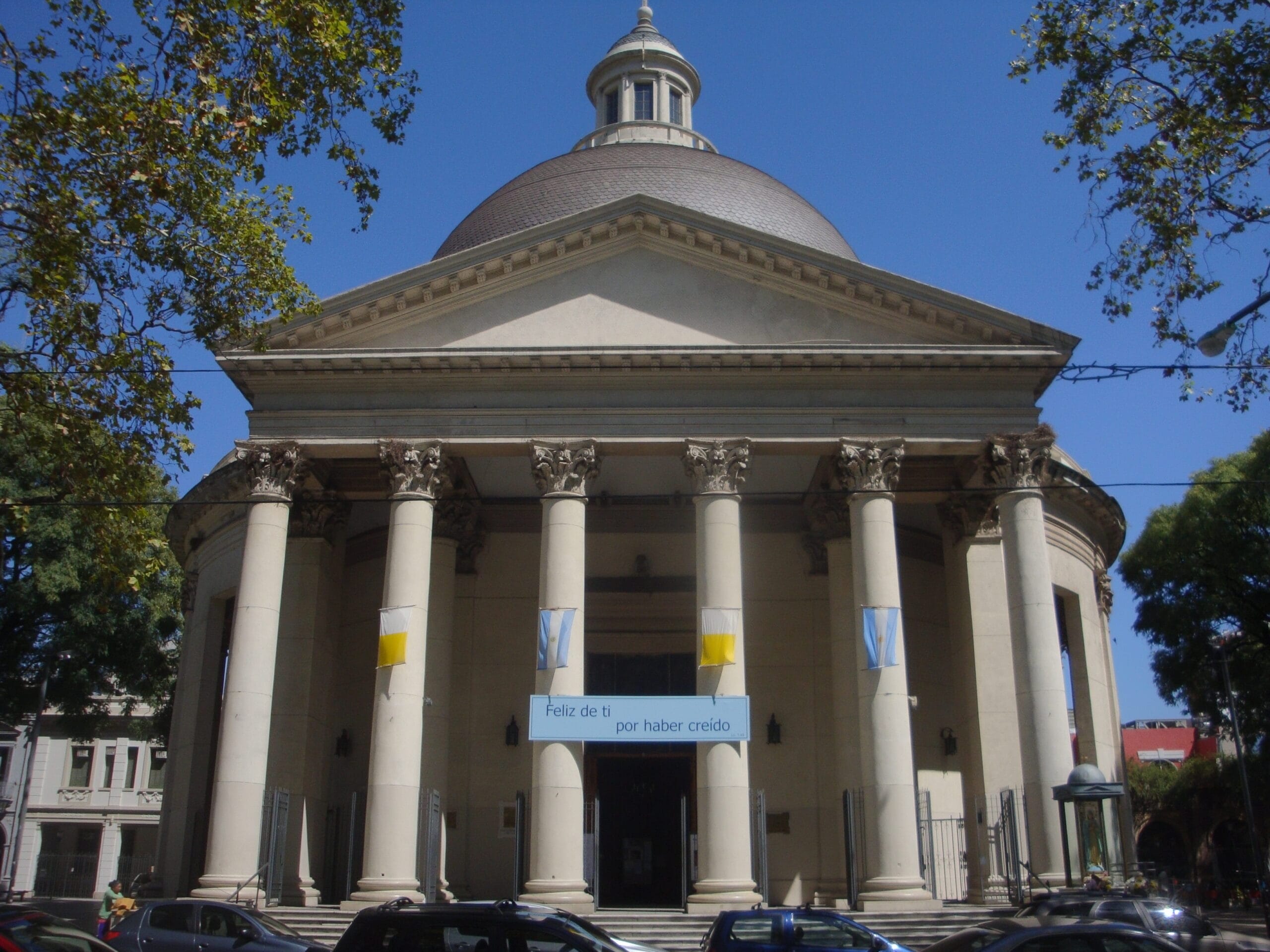
Most visitors never make it to Belgrano. It sits north of Palermo, past the point where the tourist map runs out, and it has no single monument that gets it onto a first-time itinerary. That is the case for going. Belgrano is where Buenos Aires lives when it is not performing for anyone: a leafy grid of embassies and old villas, a Sunday square, a metro station and, in the middle of all of it, a church that was built as a perfect circle in 1878 and still stops people on the pavement. Our drivers at Buenos Aires Transfers pass it most days on the way north, and it is the building they point at.
This is the practical version of a day there: what La Redonda actually is, when the doors are open, the two museums a block away that most people walk straight past, the Chinatown gate at the bottom of the hill, and how to do it all without an afternoon on the subte.
What is La Redonda?
Officially it is the Parroquia de la Inmaculada Concepción. Nobody in Buenos Aires calls it that. It is La Redonda, the round one, because it is built as a circle on the model of the Pantheon in Rome: a columned portico at the front, a drum of white marble columns set in pairs inside, and a dome that rises to nearly forty metres with a lantern at the top letting the light down into the middle of the floor.
The parish was created in 1860, when Belgrano was still a separate town, and the church was inaugurated on 8 December 1878 with President Nicolás Avellaneda in attendance. Three Italians built it: the engineer Nicolás Canale drew it up, his son José carried on after his death, and the architect Juan Antonio Buschiazzo, whose name is on public buildings all over the city, finished it. In 2004 the city legislature declared it a site of cultural interest, the city's formal way of saying a building is worth keeping.
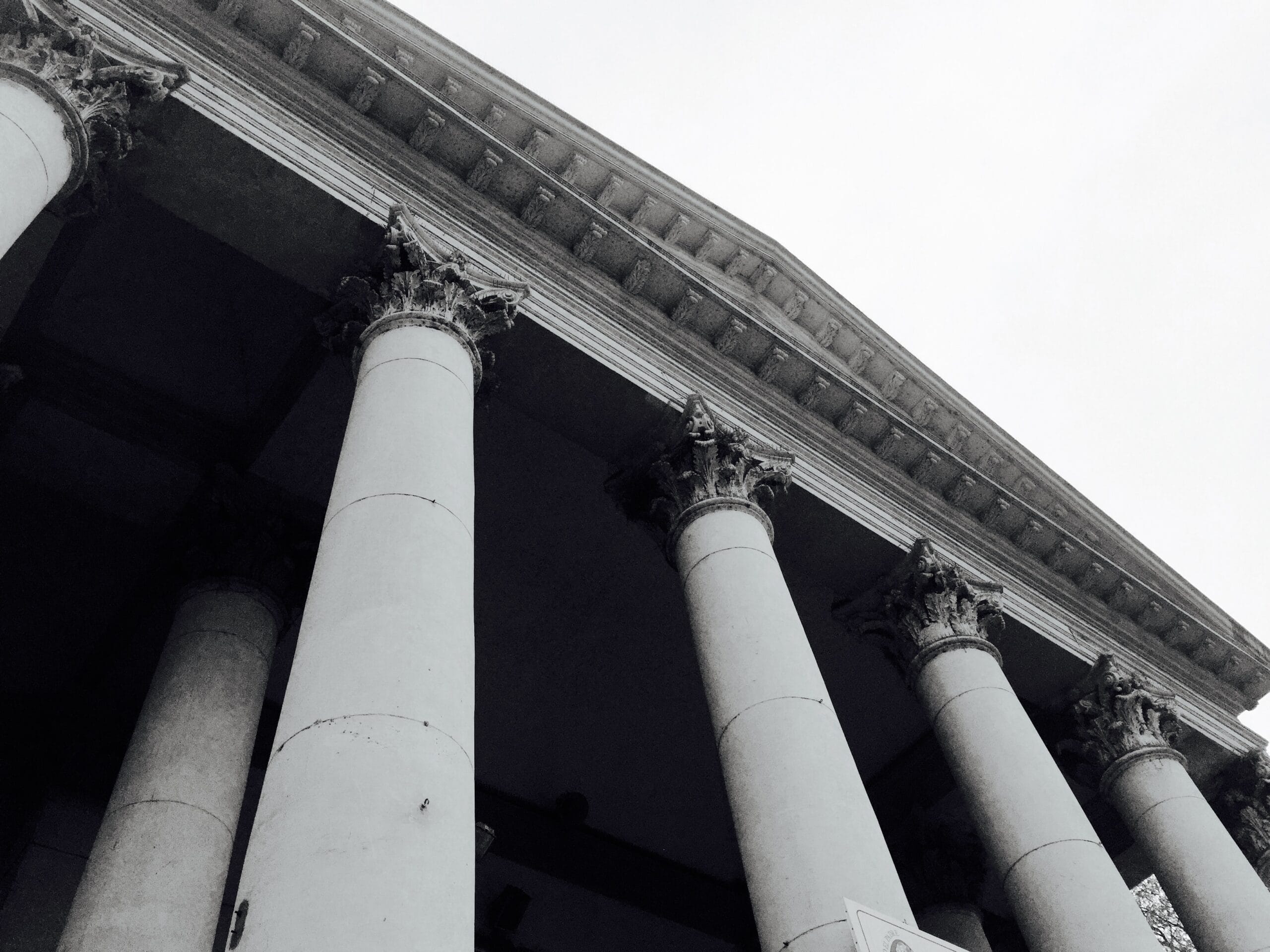
There is a literary footnote, and it is a dark one. In Sobre héroes y tumbas, Ernesto Sabato set the start of the descent in the "Informe sobre ciegos" chapter in a row of old two-storey houses built hard against the church's circle. If you have read the book, you will recognise the corner. If you have not, it is still one of the stranger addresses in Argentine literature, and it is right here.
→ VUELTA DE OBLIGADO 2042, BELGRANO
Can you go inside?
Yes, and this is the part most guides get wrong. It is a working parish church, not a museum: there is no ticket, no queue and no tour to book. The parish does not publish visiting hours as such. What it publishes are mass times, 10:00, 17:30 and 19:30 from Monday to Saturday and seven masses on Sunday from 8:00 to 20:30, and the hours at which it receives donations at the church, 9:00 to 21:00 Monday to Saturday and 7:30 to 21:30 on Sunday, which is the practical window for a visit. The only rule is the obvious one: if a service is on, sit at the back and keep quiet.
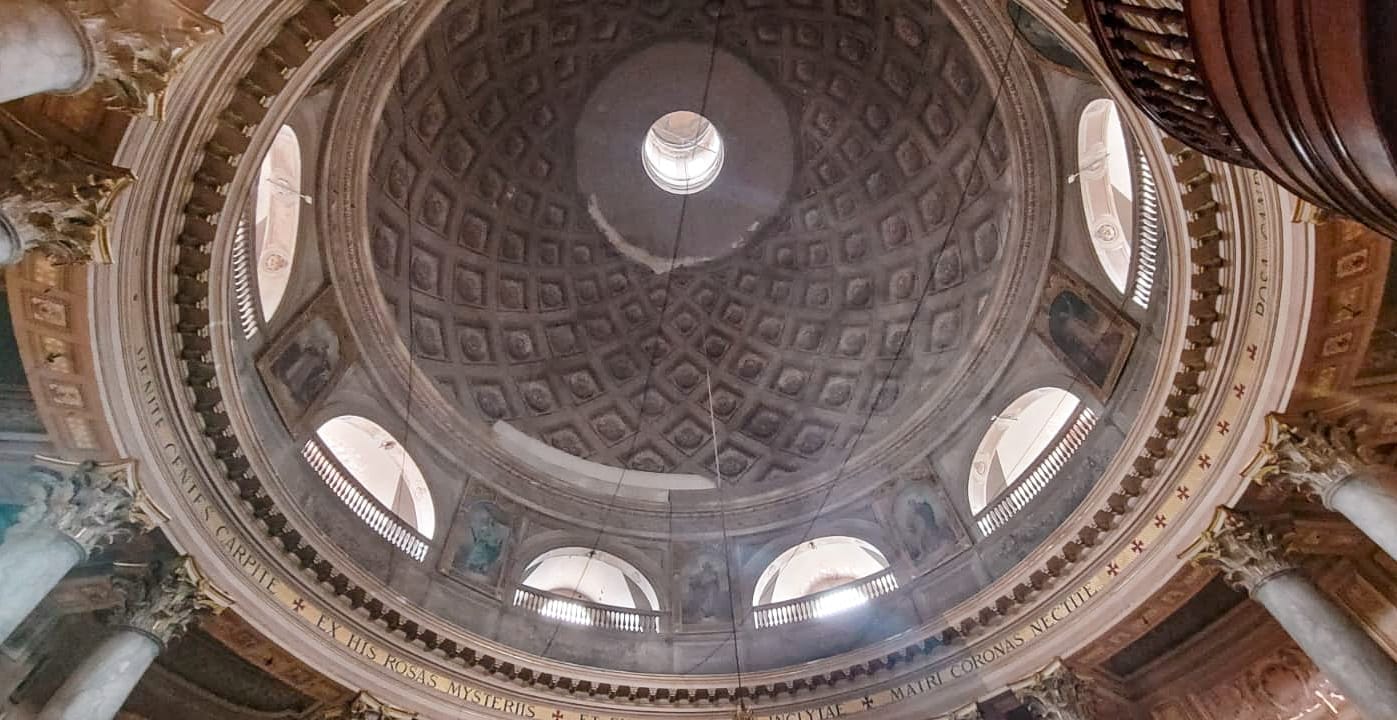
Go in, walk to the centre and look up. The dome is coffered like the Pantheon's, lit from the lantern at its crown and from a ring of arched windows in the drum beneath it, and the ring of paired columns around you is what makes the building feel larger inside than it looks from the square. The organ, a German Laukhuff installed in 1908, has been restored. Late morning on a weekday, once the 10:00 mass has ended, you will usually have the whole circle to yourself.
What is on the square?
The church looks across Vuelta de Obligado at Plaza Manuel Belgrano, and within a block of it there are two museums that have nothing to do with each other and are both worth an hour.
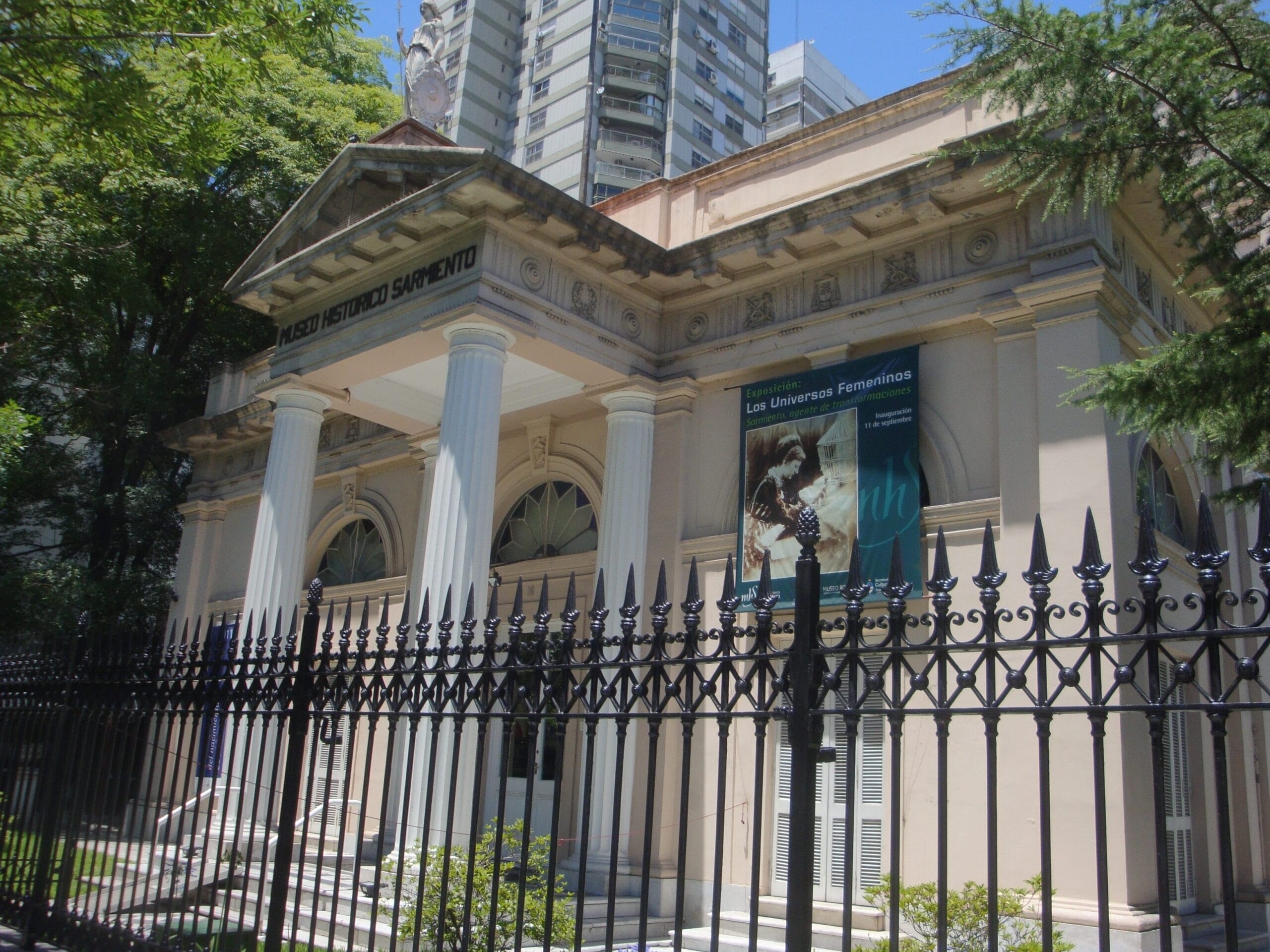
Museo Histórico Sarmiento. The Italianate building on the corner of Cuba was Belgrano's town hall, designed by the same Buschiazzo who finished the church. For a few months in 1880, while the national government and the province of Buenos Aires were fighting over who owned the city, the national Congress moved out here and sat in this building: Belgrano was, briefly, the seat of the national government. Today it holds the personal collections of two presidents, Domingo Faustino Sarmiento and Nicolás Avellaneda, the same Avellaneda who was at the inauguration across the square in 1878. Open Tuesday to Sunday, 11:00 to 19:00, closed Monday, and free.
→ CUBA 2079, BELGRANO
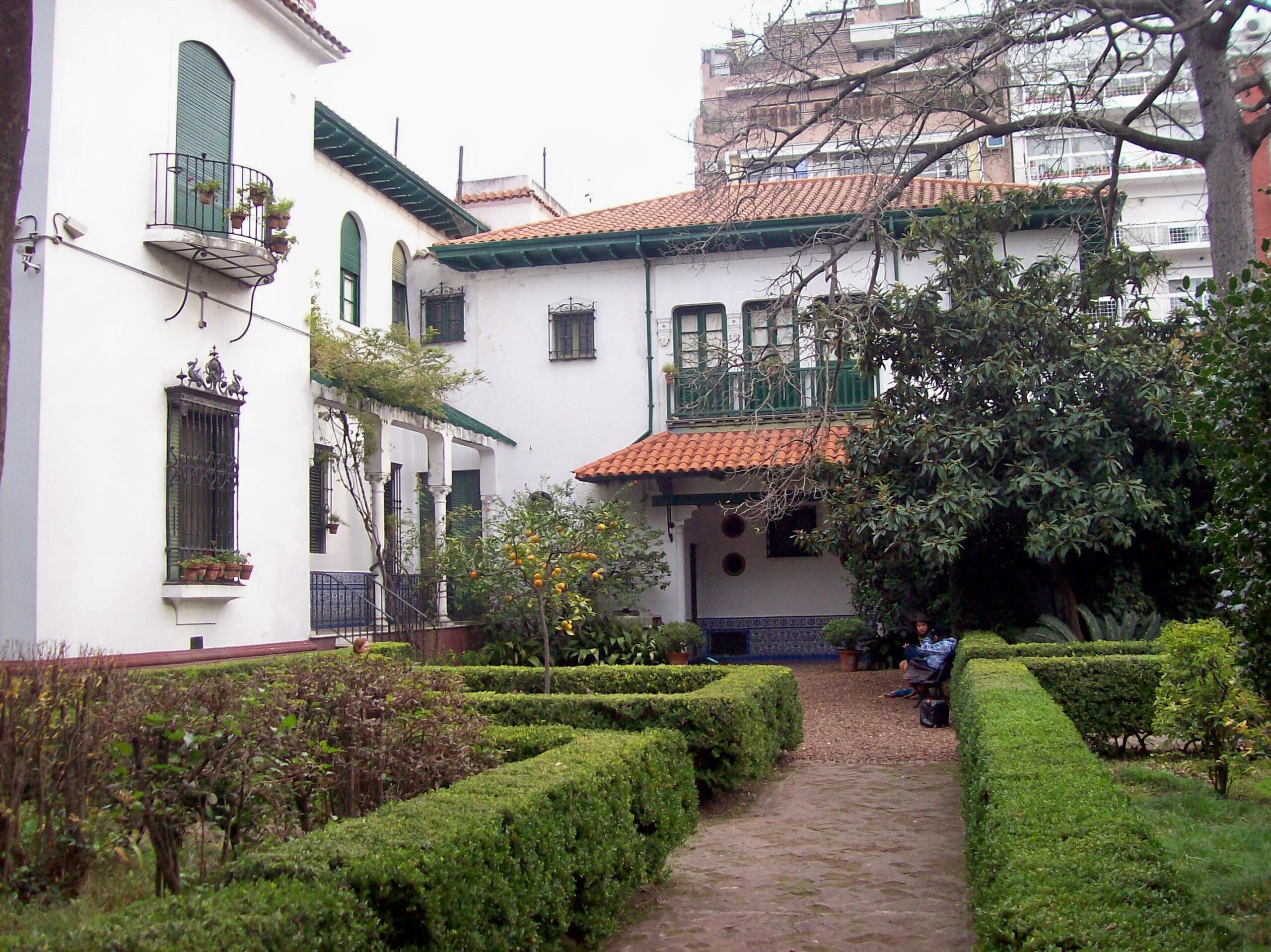
Museo de Arte Español Enrique Larreta. Across the corner on Juramento, the house of the writer Enrique Larreta, remodelled in 1916 to look like a Castilian palace and filled with the Spanish art he collected: sixteenth and seventeenth century paintings, religious sculpture, carved furniture. The real reason to come is the garden behind it, laid out in the Andalusian manner with clipped box hedges, orange trees and a fountain, and on a hot afternoon the coolest place in the neighbourhood. It is closed on Tuesday and open the other days from 11:00 (to 19:00 on weekdays, 20:00 at weekends). There is an entry fee, higher for foreign visitors than for residents, so check the day's price at the door. If houses of this kind are your thing, the Belle Époque palaces of Recoleta are the next step up.
→ JURAMENTO 2291, BELGRANO
Is Chinatown worth the walk?
Yes, as long as you know what it is. Buenos Aires' Barrio Chino is two or three blocks of Arribeños street running north from Juramento, at the bottom of the hill by the Belgrano C railway station. It is not a district; it is a street. But it is a good one: supermarkets stacked to the ceiling with things you cannot buy anywhere else in the city, dumpling counters, bubble tea, and, at the entrance on Juramento, the arch.
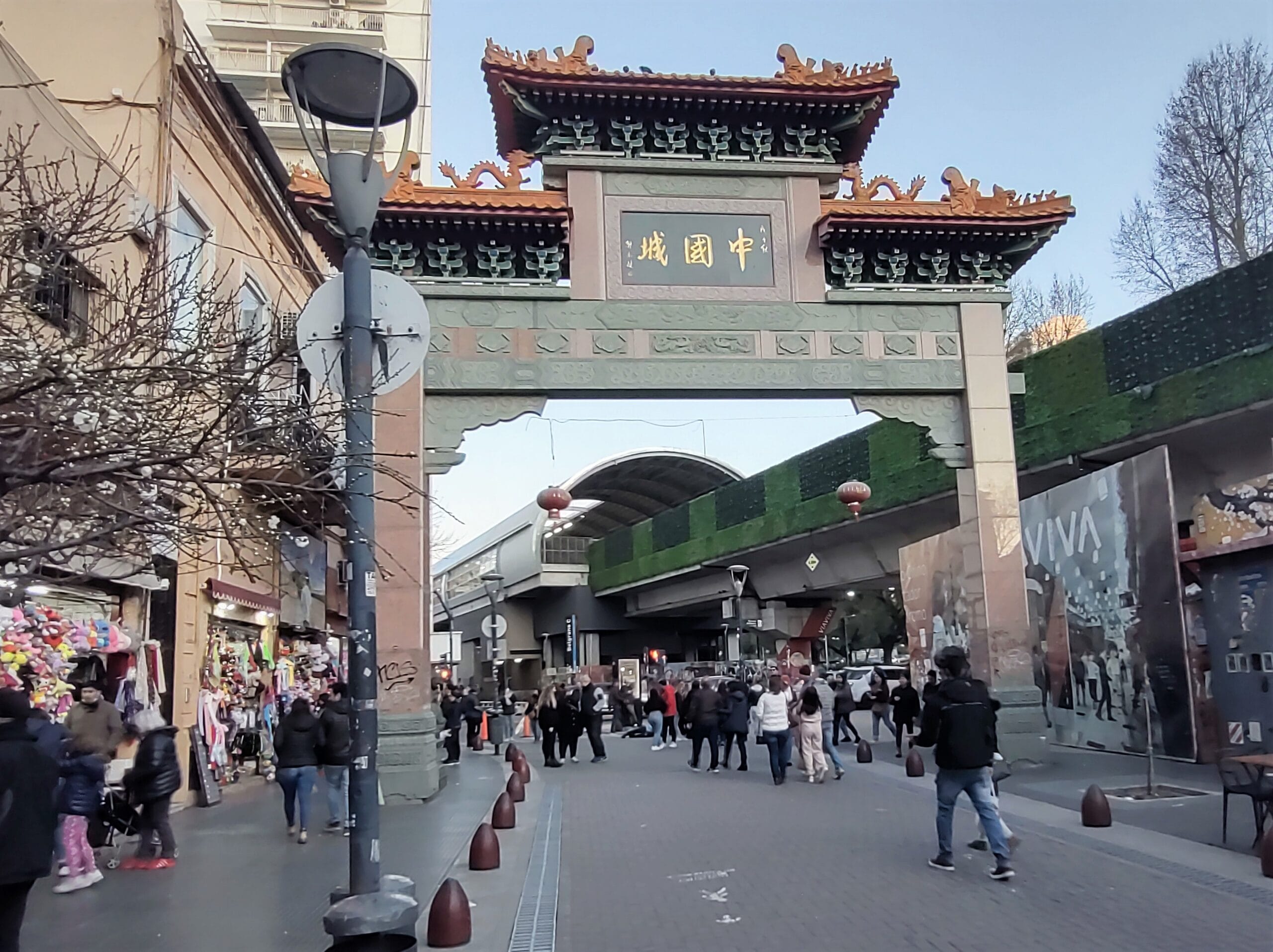
The gate was inaugurated in 2009, paid for by the Chinese government and the local Chinese community as a gift to the city, and it is the photograph everyone takes. From La Redonda it is a straight walk down Juramento, six blocks past the square, and it gets you to the noisiest part of the day at the right moment: lunchtime. At weekends the street is packed, which is either the point or the reason to come on a Thursday.
→ ARRIBEÑOS AND JURAMENTO, BELGRANO
How do you get to Belgrano?
By metro, the D line to Juramento station, which comes up on Avenida Cabildo a block from the church. From the centre that is a straight run, and from Palermo it is a few stops. The subte is the honest answer for a solo traveller with a light day.
The case for a car is the shape of the day rather than the distance. Belgrano is the northern end of a line of places, Palermo's parks and the Recoleta cemetery among them, that a visitor tends to do on the same day, and the subte does not connect them well. A private car for the afternoon means the driver waits at the church while you go in, takes you down to Chinatown for lunch, and has you back in Recoleta or Puerto Madero before the light goes, with the bags of Chinese groceries you did not plan to buy in the boot.
A day in Belgrano, in order
| When | Where | The practical bit |
|---|---|---|
| 10:45 | La Redonda | Once the 10:00 mass has ended the church empties out. Stand in the centre and look up |
| 11:00 | Museo Histórico Sarmiento | Opens at 11:00, free, closed Monday. The Avellaneda room is the one to see |
| 12:00 | Museo Larreta | Closed Tuesday. The garden first, then the house |
| 13:30 | Barrio Chino | Six blocks down Juramento. Lunch, then the supermarkets |
| 15:30 | Back south | Palermo, Recoleta or the cafés notables for the afternoon |
Pick a Wednesday, Thursday or Friday: both museums are open, and Chinatown is not yet full.
Questions we get asked
Is La Redonda free to visit?
Yes. It is a parish church, open every day, with no ticket and no booking. Mass is said several times a day, so if you arrive during a service, wait at the back or come back in half an hour.
Why is the church in Belgrano round?
Because it was designed on the model of the Pantheon in Rome, in the late Italian Renaissance manner, by Italian builders, and finished in 1878. The circular plan and the coffered dome with its single lantern are both taken directly from that building.
Which day should I go to Belgrano?
Wednesday to Friday. The Museo Histórico Sarmiento closes on Monday, the Museo Larreta closes on Tuesday, and Chinatown is at its most crowded on Saturday and Sunday.
How far is Belgrano from the centre of Buenos Aires?
It is near the northern end of the D line: Juramento station is a straight metro ride from downtown, and by car from Recoleta it is a short run up Avenida del Libertador, traffic permitting.
Start at the church
Do Belgrano at your own pace. Message us on WhatsApp at +54 9 11 2404-0448 or book a private car for the day, and start at the church with the driver waiting outside.