FOOD · POLO · PALERMO CHICO · 2026
The most famous name in polo now has a dining room in Buenos Aires, and it sits inside a 1928 building that was designed with a car track on its roof.
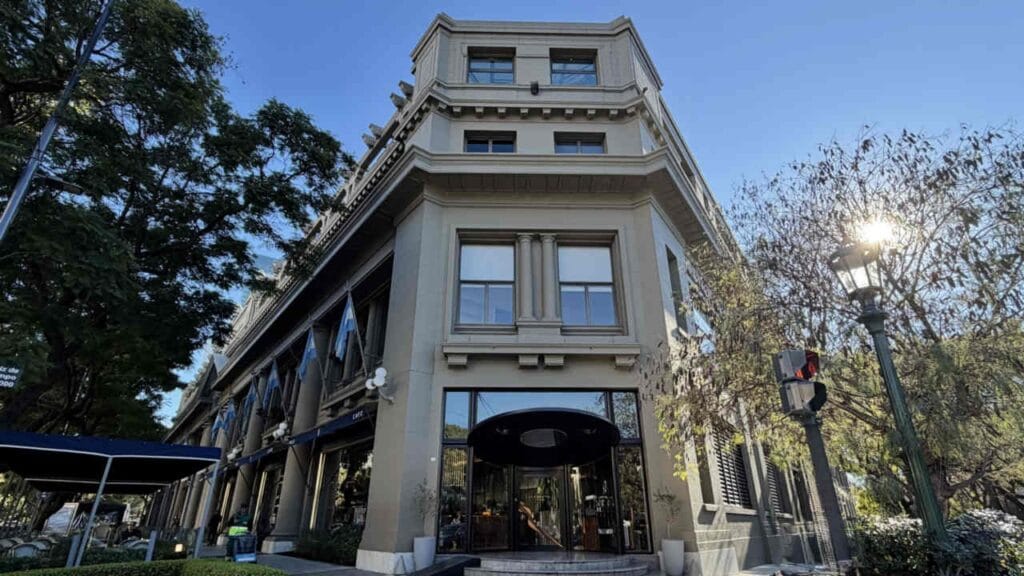
The Palacio Alcorta today, on the corner where La Dolfina Polo Café opened, with the terrace under the awnings on the left.
In November and December, Buenos Aires smells of cut grass and charcoal. The Argentine Open is on at Palermo, the stands fill up, and after the last chukker everyone goes somewhere to eat meat. Since the winter of 2026, the polo world has its own table in the city.
La Dolfina Polo Café is the first restaurant from La Dolfina, the polo team founded in 2000 by Adolfo Cambiaso and Bartolomé Castagnola, and the brand that grew around it. It opened a few steps from MALBA, in Palermo Chico, and it is open from breakfast through dinner, which makes it easy to fit into a day. We drive guests to the polo every season, and it is a good address to have when someone asks where to eat before or after the match.
01 · THE BUILDING
PALERMO CHICO · 1928 · A TRACK ON THE ROOF
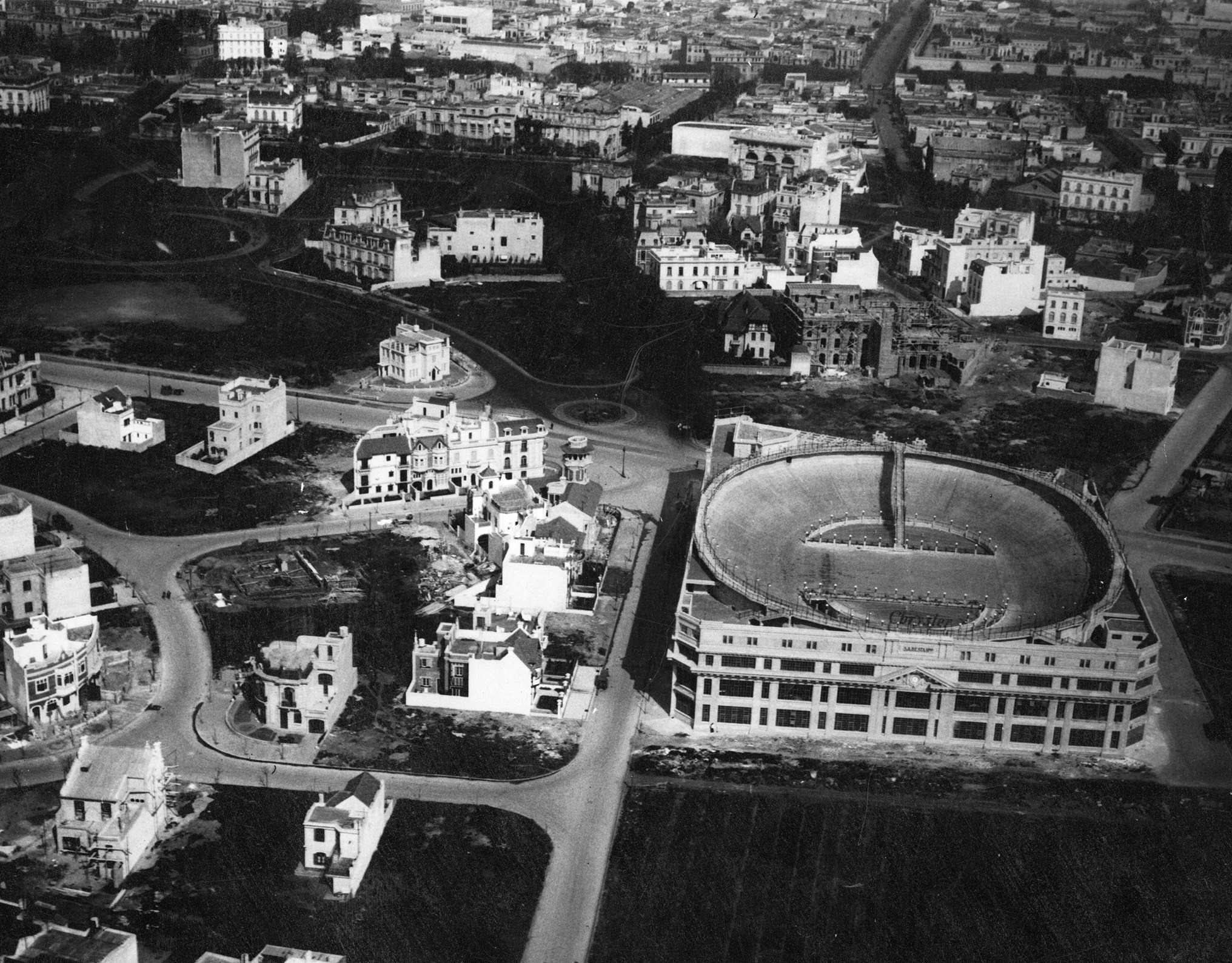
The Palacio Alcorta in 1929, when it was the Chrysler dealership and the oval on the roof was a test track. Photo: public domain, via Wikimedia Commons.
Before the food, look up. The restaurant is on the ground floor of the Palacio Alcorta, designed by Mario Palanti, the Italian architect behind the Palacio Barolo on Avenida de Mayo. It opened on 1 December 1928 as the showroom of Resta Hermanos, the Chrysler dealer in Argentina, and on the roof it had the Estadio Olimpo: a banked oval track of 1,700 metres where new cars were tested, with room for 3,000 spectators. It was inspired by the Fiat Lingotto factory in Turin, which had its own rooftop track.
The dealership closed in 1931. The army later took over the building, the city bank auctioned it in 1993, and a year later it was converted into lofts. The roof track is gone, but the round plan is still there, and from the air the building is easy to recognise: the oval where cars once raced is now a courtyard.
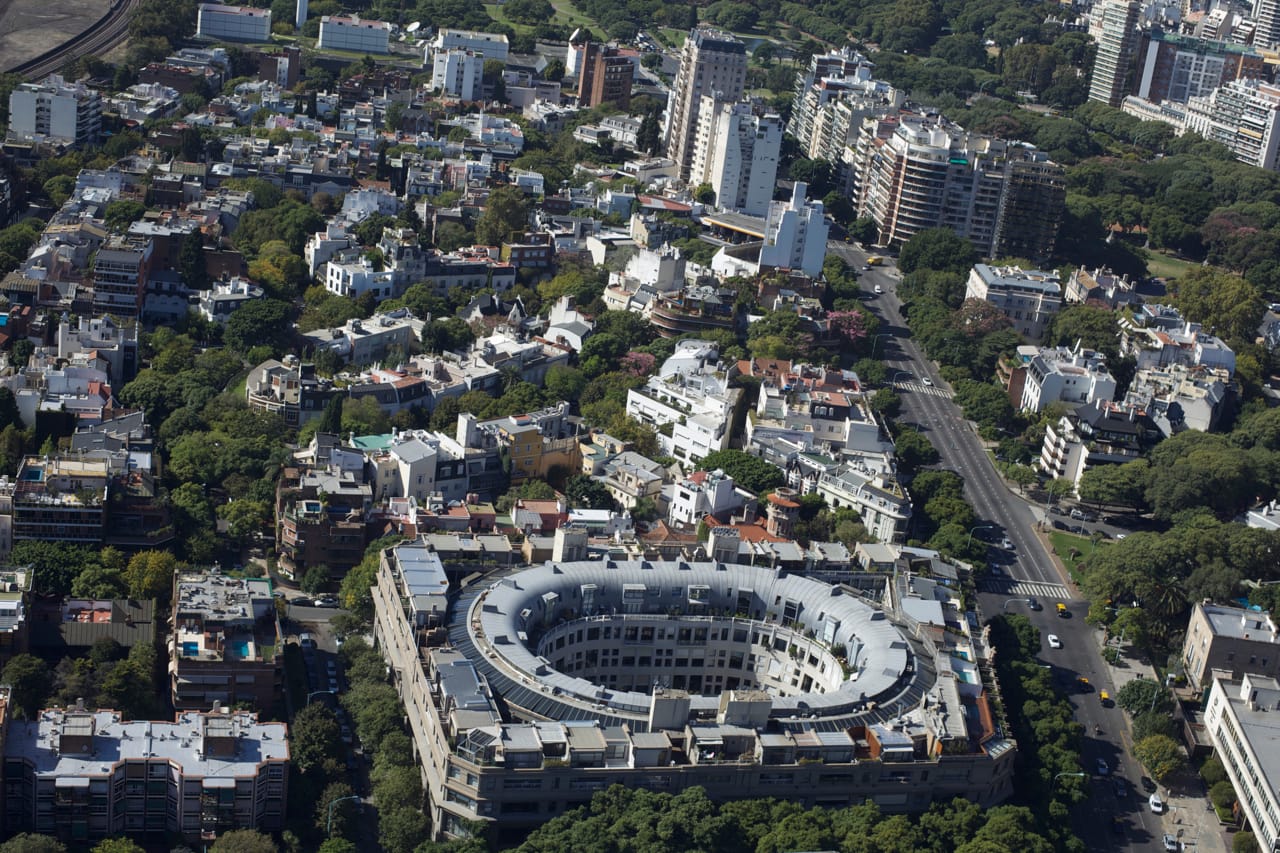
The same building from the air in 2010, with the old track turned into a courtyard. Photo: Jimmy Baikovicius / Wikimedia Commons (CC BY-SA 2.0).

→ AV. PRESIDENTE FIGUEROA ALCORTA 3301, PALERMO CHICO
02 · THE ROOM
TERRACE · CENTRAL BAR · PRIVATE CORNERS
The architect, Diana Lisman, stayed away from anything literal. Instead of polo clichés there is wood, leather, stone and natural textiles, with paintings, saddles and a few pieces of riding gear that do the work quietly.
The space has three parts. A terrace faces the avenue and is the place to be on a spring afternoon. The main dining room is organised around a central bar, with soft lighting. And there are private and semi-private rooms for business lunches and groups, which matters if you are travelling with six people and want a table where you can hear each other.
The feel is that of a club house at a polo ground, moved into the city.
03 · WHAT TO ORDER
ARGENTINE CLASSICS · CHARCOAL · LONG STOCKS
The kitchen is led by chef Julieta Caruso, who wrote the menu, with Ramiro Schechtel as resident chef. The approach is simple to describe: the dishes every Argentine grew up with, cooked with more patience than usual.
The ribeye. The dish people come for is the ojo de bife demiglace. Ojo de bife is the Argentine ribeye. It is cooked over the coals until it has a dark, caramelised crust, and then served with a reduced beef stock that has been simmering for hours.
The milanesa. The other signature is the milanesa de bife de chorizo: a breaded, fried steak made with bife de chorizo (sirloin, or strip steak if you order in the US) instead of the usual leaner cuts, so it stays tender and juicy. It comes with three dips: a confit garlic aioli, a classic mustard and a hot sauce. The milanesa is the everyday dish of every Argentine home, and it is interesting to see it treated as a main event.
To start. Fried empanadas filled with shredded beef, a provoleta (grilled provolone) with roasted peppers and oregano, and fried mollejas, sweetbreads, served with a cured egg yolk, pickled chillies and rocket. If you have never tried sweetbreads, this is a friendly introduction. For the classic grill houses, see our guide to the best parrillas in Buenos Aires.
Lighter. A pastel de papa, the Argentine cottage pie, mushroom cannelloni au gratin, and a fish of the day with thin potatoes, butter, capers and dill.
Dessert. The classics, and they are worth it: flan with dulce de leche and cream, duraznos en almíbar (peaches in syrup, an old-school Argentine favourite), chocolate mousse and rice pudding.
Morning and afternoon. Breakfast and the afternoon merienda are built on two things every porteño recognises: cuernitos de grasa, small crescent pastries made with beef fat, and galletas marineras, plain crackers eaten with butter and dulce de leche. In the evening there are cocktails, cheese boards and small plates at the bar.
04 · PRACTICAL NOTES
HOURS · PRICES · RESERVATIONS
When it is open. Every day, from breakfast through dinner. The hours have changed since the opening, so check the restaurant's Instagram, @ladolfinapolocafe, on the day you go. The account links to WhatsApp and a phone number for bookings.
What it costs. In September 2026, local press reported main courses between roughly ARS 29,000 and 65,000, and an average bill of about ARS 70,000 per person during the day. Prices in Argentina move quickly, so treat these as a guide.
When to go. For lunch on the terrace in spring, or for a late afternoon merienda after MALBA. On polo weekends, book ahead.
05 · MAKE IT A POLO DAY
THE ARGENTINE OPEN · FINAL ON 12 DECEMBER 2026
The restaurant makes most sense as part of a longer day. The Argentine Open, the last and most important tournament of the Triple Crown, is played at the Campo Argentino de Polo in Palermo, a short drive away, with the final on 12 December 2026. The Argentine Polo Association has announced that the start will move because the first dates clashed with the Pope's visit, so check the official calendar before you plan. Before that, the Tortugas Open runs until 7 November at Tortugas Country Club, about 40 kilometres northwest of the city by road.
A plan that works: MALBA in the late morning (it is at Figueroa Alcorta 3415, a few steps away, and it is in our list of museums worth your time), lunch at La Dolfina Polo Café, then the match in the afternoon. Our guide to seeing the Triple Crown has the calendar, how a match works and what to bring.
Questions we get asked
Where is La Dolfina Polo Café?
On the ground floor of the Palacio Alcorta, at Avenida Presidente Figueroa Alcorta 3301, in Palermo Chico, a few steps from MALBA.
What are the opening hours?
It is open every day, from breakfast through dinner. The hours have changed since it opened in 2026, so check its Instagram, @ladolfinapolocafe, before you go.
How much does a meal cost?
In September 2026 main courses were between roughly ARS 29,000 and 65,000, and the average bill during the day was about ARS 70,000 per person.
What should I order?
The ojo de bife demiglace (ribeye with a reduced beef stock) and the milanesa de bife de chorizo with three dips. For dessert, flan with dulce de leche.
Is it connected to the La Dolfina polo team?
Yes. It is the first restaurant of La Dolfina, the polo brand created by Adolfo Cambiaso around the team he founded in 2000 with Bartolomé Castagnola. It was developed with the hospitality company Grupo Abridor.
Can I combine it with the Argentine Open?
Yes. The Campo Argentino de Polo in Palermo is a short drive away, so lunch here and a match in the afternoon fit in the same day.
Polo, lunch and the drive home, arranged
The grounds, the restaurant and your hotel are in three different places, and when a match ends everyone is looking for a ride at the same time. We can keep a car and a driver with you for the whole day: hire a private driver by the hour, or see our day at the polo in Buenos Aires, with hotel pickup, the wait during the match, and the ride back.
If you would rather see the city first, our private city tour can end with a table at La Dolfina.
Welcome to Buenos Aires. Come hungry.